Zinnia
Benary's Giant
“Grow from seed, cut armfuls, and put them where someone needs cheering up. They've never failed. Summer's most joyful flower.”
— ROSIE
Rosie's Take
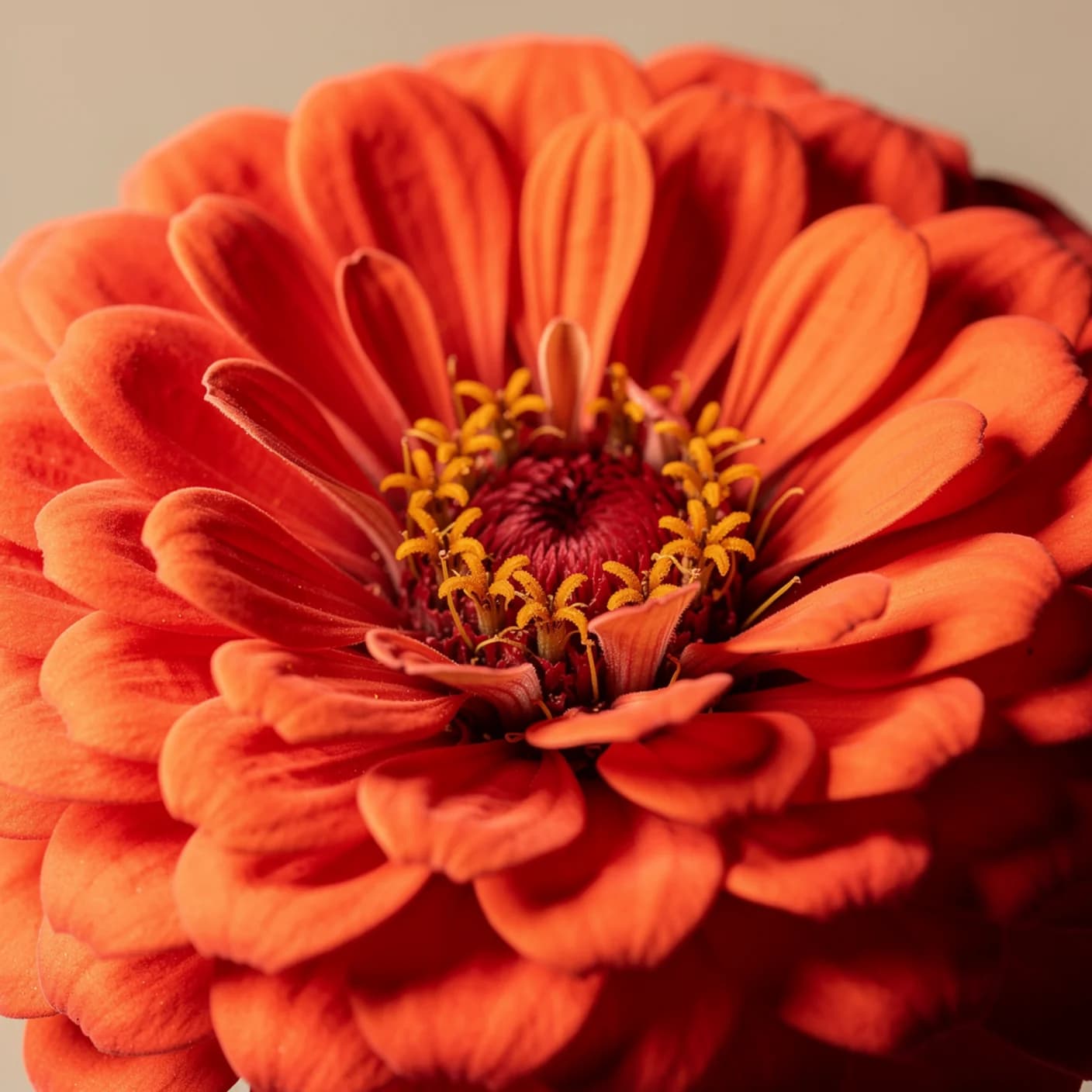
Zinnias are the flower I grow when I need to be reminded that more is more. After months of carefully curated pastels and tasteful muted tones, I plant zinnias and let them shout. Benary's Giant does the shouting better than any other variety — enormous, three-to-four-inch dahlia-shaped blooms in the most unapologetically vivid colours: hot coral, magenta, deep orange, lime green, scarlet, golden yellow. Subtlety is not the point.
They're Mexican in origin, which explains the colour palette — these are flowers from a culture that understands that bold is beautiful. I grow mine from seed sown directly into warm soil in May, and by August they're chest-high and covered in flowers that practically vibrate with colour.
The flower form is surprisingly complex for something so cheerful. Layer upon layer of broad petals, each one slightly cupped and overlapping, building into a dense, rounded bloom that has more in common with a dahlia than you'd expect. They're weighty flowers — pick one and you feel it in your hand. There's substance here, not just colour.
As cut flowers, they're outstanding. They last over a week in a vase, they keep producing more flowers the more you cut, and a mixed bunch of Benary's Giants in a bright ceramic jug is the most joyful thing you can put on a table. I bring them out when someone needs cheering up. They've never failed.
They're annuals, killed by the first frost, which makes them feel like summer distilled — temporary, vivid, and better for being brief. I look forward to them all year. When the first buds open in August, something in me relaxes. Summer is doing its job.
Where to Buy
If you want to try zinnia for yourself, here's where I'd point you:
We may earn a small commission from purchases made through our links, at no extra cost to you.
✿ From the folklore cabinet
Zinnias were named after the German botanist Johann Gottfried Zinn, who was one of the first Europeans to describe them. The Aztecs called them 'plants that are hard to look at' — not because they were ugly, but because the colours were so intense they were overwhelming. I think the Aztecs and I would have got along.