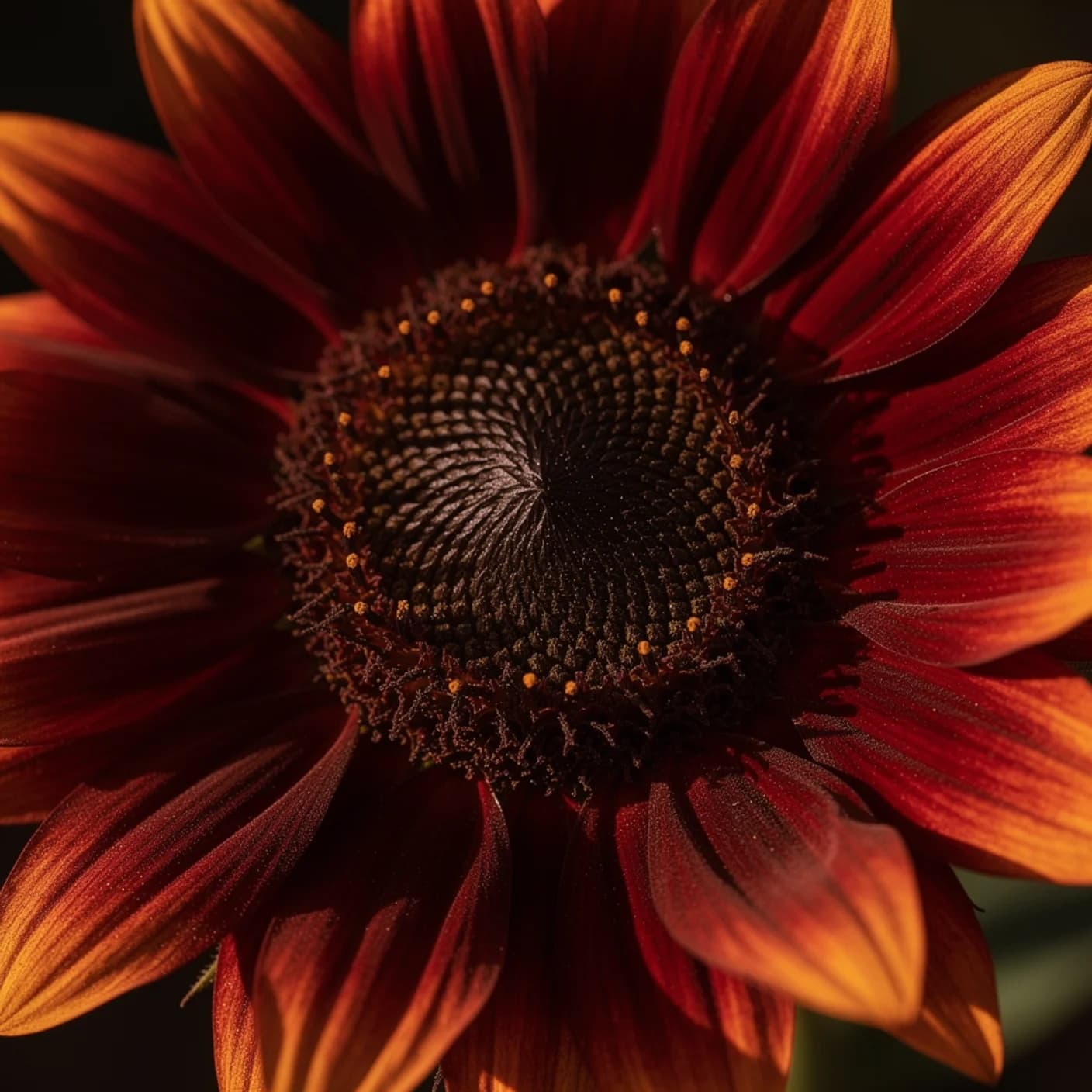
Sunflower
Velvet Queen
“Grow from seed, cut armfuls for the kitchen, and watch people say 'that's a sunflower?' The best value flower you'll grow all year.”
— ROSIE
Rosie's Take
I need to say this upfront — Velvet Queen is not the sunflower you're picturing. Forget the cheerful yellow giant on the seed packet. This one is a revelation. Deep, smouldering burgundy-red petals darkening to almost black at the centre, on branching stems that produce armfuls of flowers rather than one big solitary head. She's the sunflower that makes people say 'that's a sunflower?'
The colour is what stopped me the first time. That velvety, wine-dark red that catches late summer light and glows from the inside. In the morning she looks almost brown. By late afternoon, with the sun low behind her, she's on fire — layers of crimson, amber, and burnt orange that shift as you move around her.
I grow mine along the back fence every year from seed. They're ridiculously easy — push a seed into warm soil in May, water it, and stand back. By August you've got these magnificent, branching, slightly wild-looking plants covered in flowers. They're magnets for bees and goldfinches, and the seed heads feed the birds well into autumn.
As a cut flower, Velvet Queen is extraordinary value. One plant gives you dozens of stems over weeks. A few in a stoneware jug with some dried grasses and a stem of rosehips, and you've got an arrangement that looks like it cost thirty quid from a florist. It cost you nothing.
She bridges that gap between summer and autumn in a way I find really satisfying — still clearly a flower of warmth and light, but with colours that nod towards the turn of the year.
Where to Buy
If you want to try sunflower for yourself, here's where I'd point you:
We may earn a small commission from purchases made through our links, at no extra cost to you.
✿ From the folklore cabinet
Sunflowers turn to follow the sun across the sky — but only when they're young. Once they mature, they face permanently east, warming their faces in the morning sun. Scientists found this attracts more pollinators because the warm face draws in bees. I love that — even when they stop chasing the light, they've worked out the most useful place to settle.