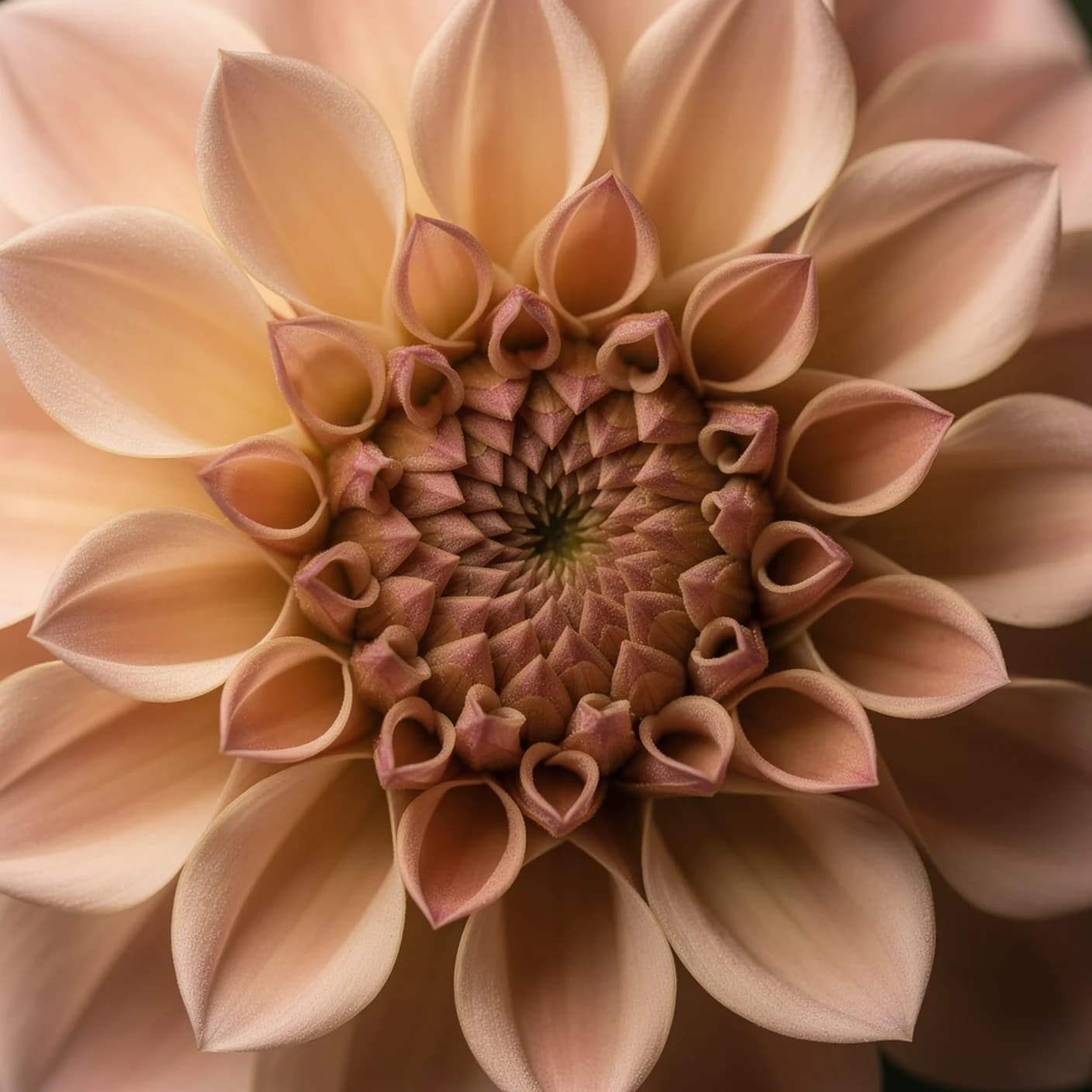
Dahlia
Café au Lait
“One stem in a heavy glass vase is all you need. She's the kind of flower that makes people walk into a room and say something.”
— ROSIE
Rosie's Take
I resisted dahlias for years. I thought they were my nan's flower — a bit municipal, a bit stiff, the kind of thing you see in round beds at the park entrance. Then someone handed me a Café au Lait and I had to completely rethink everything.
She's dinner-plate sized — easily eight inches across when she's fully open — but despite the scale, there's nothing heavy about her. The colour is this impossible, shifting thing — creamy pink, peachy blush, sometimes with lavender undertones, occasionally pulling towards a warm champagne. No two blooms are quite the same, which means every bunch looks slightly different.
I grow mine from tubers that I overwinter in the shed, and the anticipation between planting in May and the first blooms in August is genuinely difficult. But then they arrive and they just don't stop until the first frost. That sustained generosity — months of flowers — is remarkable.
As a cut flower, Café au Lait is astonishing. She's the kind of flower that makes people walk into a room and say something. One stem in a heavy glass vase. That's all you need. Maybe two if you're feeling extravagant.
She's become the flower of choice for weddings and I understand why, but I think she's even better in a kitchen — on a wooden table, in a vintage jug, with toast crumbs and a cup of tea. That's where flowers are meant to live.
Where to Buy
If you want to try dahlia for yourself, here's where I'd point you:
We may earn a small commission from purchases made through our links, at no extra cost to you.
✿ From the folklore cabinet
Dahlias are native to Mexico, where the Aztecs grew them for food — the tubers are edible. They arrived in Europe as a vegetable, not an ornamental. I love that this flower, now synonymous with late-summer luxury, started life as someone's dinner.