Coreopsis
verticillata 'Moonbeam' (Tickseed)
“The ultimate easy perennial. Pale-yellow daisies from June to October on fine, airy foliage. Self-cleaning, weed-suppressing, and available for the price of a coffee. The border's quiet hero.”
— ROSIE
Rosie's Take
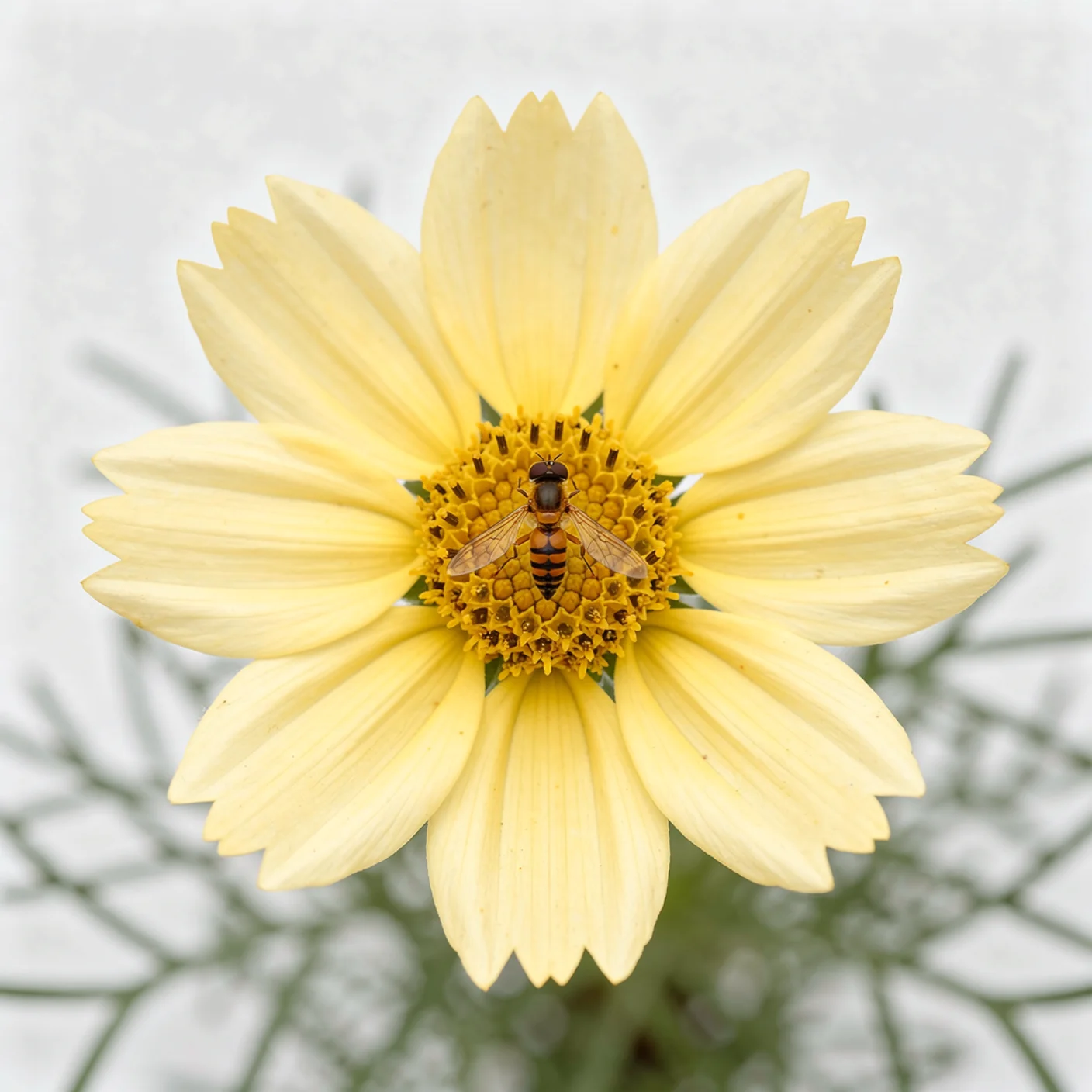
Coreopsis 'Moonbeam' is one of those plants that does something very simple, very well, for a very long time. It flowers. Small, soft-yellow, daisy-like flowers, about an inch across, with a slightly deeper yellow centre. Nothing complicated, nothing dramatic, nothing that would make a plantsman raise an eyebrow. Just an endless succession of cheerful, pale-lemon daisies from June until October — five solid months of gentle, undemanding colour.
The foliage is fine and feathery — thread-like leaves so delicate they create an airy, hazy texture in the border, almost like a green mist beneath the flowers. It's this combination of soft flowers and fine foliage that gives 'Moonbeam' its distinctive quality — it looks light, weightless, as if it might float away. In a border full of heavy, structural plants, 'Moonbeam' is the palate cleanser. The space between the bold gestures.
It grows about eighteen inches tall and spreads steadily by underground runners, forming a broad, dense clump that suppresses weeds and fills gaps with quiet efficiency. I planted three in a sunny border five years ago and they've merged into a single, continuous drift that hums with hoverflies all summer. The dead flowers drop cleanly, so there's almost no deadheading required — it just keeps going, a self-maintaining machine of soft yellow.
This is a budget-friendly plant by anyone's standards. Garden centres sell it for a few pounds. It needs no staking, minimal watering, no feeding, and only occasional division every three or four years when the centre starts to thin. The Perennial Plant Association in America named it Plant of the Year in 1992, which tells you everything about its reliability. It's not the most exciting plant in the border. It's not supposed to be. It's the one that makes everything else look better.
Where to Buy
If you want to try coreopsis for yourself, here's where I'd point you:
We may earn a small commission from purchases made through our links, at no extra cost to you.
✿ From the folklore cabinet
Coreopsis gets its name from the Greek 'koris' (bedbug) and 'opsis' (resembling) — the seeds apparently look like small insects. Not the most flattering etymology, but the common name 'tickseed' doubles down on the insect connection. The genus is native to the Americas, particularly the prairies and open woodlands of the central United States. 'Moonbeam' was discovered as a seedling in a Connecticut garden in the 1980s and was propagated by the nurseryman who spotted it. It went from unknown seedling to Plant of the Year in under a decade. Sometimes the most ordinary-looking things turn out to be extraordinary. The gardening world just needed a moment to notice.