Flame Creeper
Tropaeolum speciosum (Scottish Flame Flower)
“The north's secret treasure. Flame Creeper threads scarlet through dark hedges with effortless drama. Cool, damp gardens only — which for once means Scotland gets the best of it.”
— ROSIE
Rosie's Take
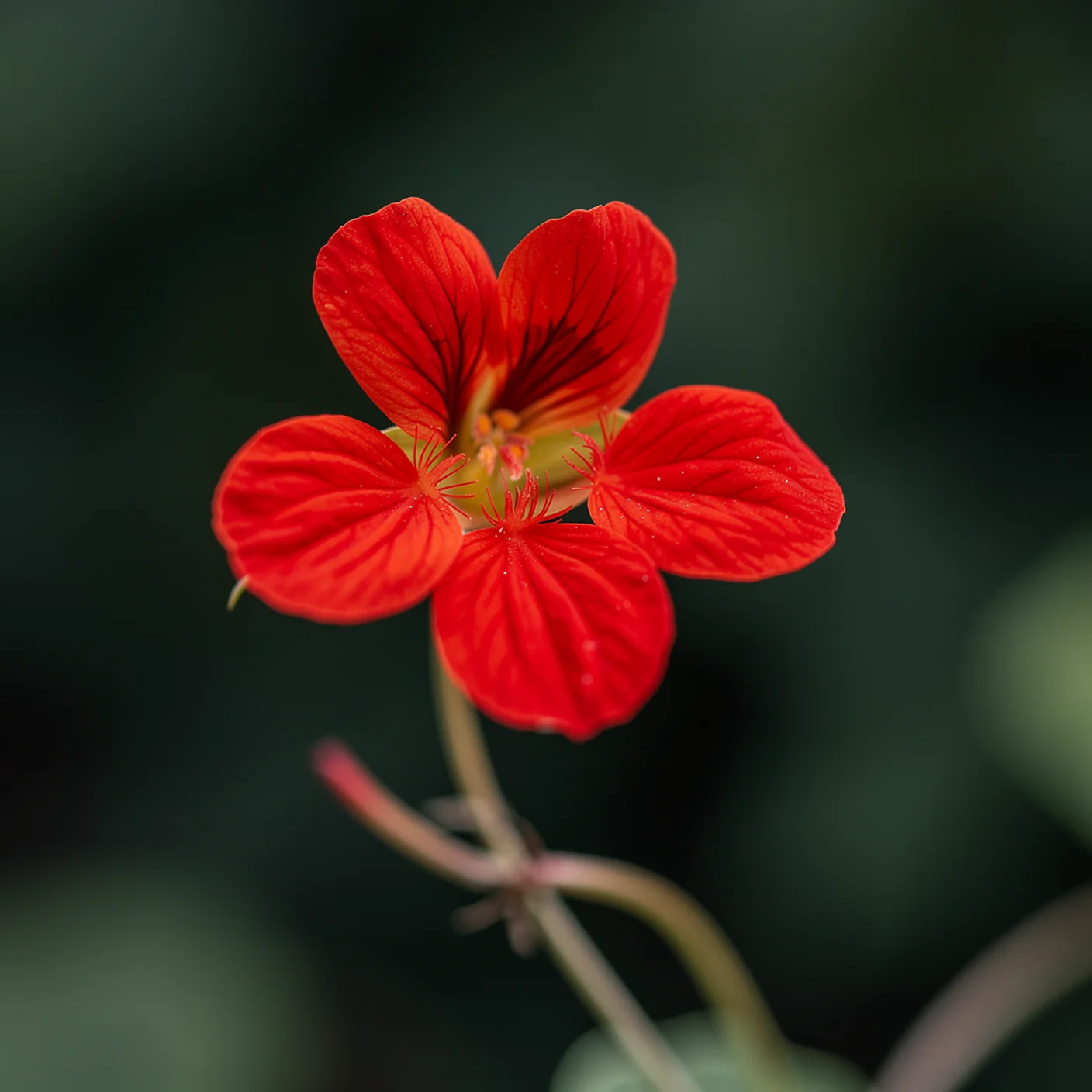
I first saw Tropaeolum speciosum threading through a dark yew hedge in a Scottish garden, and the effect was so extraordinary I thought it was artificial. Small, vivid, scarlet-vermilion flowers — nasturtium-shaped but half the size and ten times the intensity — scattered across the dark green yew like embers caught in a net. The contrast was almost violent. That deep, sombre green and that blazing, singing red. I stood there for five minutes trying to understand how something that beautiful had escaped my attention for thirty years.
It's a herbaceous climber — a thin, twining, delicate thing that emerges from fleshy underground rhizomes each spring and threads its way upward through whatever support it can find. In Scotland and the west of Britain, where the summers are cool and damp, it's spectacular. In the hot, dry south-east, it struggles. This is one of the few plants that genuinely performs better the further north you go, which feels like justice.
The flowers appear from July through to October, followed by bright blue berries that look like tiny turquoise beads. Red flowers and blue berries — it's a colour combination no garden designer would dare propose, and yet the plant carries it off with complete confidence. The berries are almost as good as the flowers.
It's called the Scottish Flame Flower because Scotland is where it truly thrives. The cool, moist, acid conditions of the west Highlands suit it perfectly, and some of the finest displays I've seen have been in gardens around Inverness and the west coast, where it turns dark hedges into tapestries. If you garden in the north or west of Britain, this is your birthright. Grow it through a dark hedge and let it do what it was born to do.
Where to Buy
If you want to try flame creeper for yourself, here's where I'd point you:
Also available as seeds — Climbing Flame Lily - House Plant Seeds →
We may earn a small commission from purchases made through our links, at no extra cost to you.
✿ From the folklore cabinet
Tropaeolum speciosum is native to the cool, damp forests of southern Chile and Argentina — Patagonia — which is why it loves the Scottish climate but sulks in the English south-east. It was introduced to Britain in 1847 and quickly established itself as a garden favourite in Scotland, where conditions mirrored its South American homeland. The genus name comes from the Greek 'tropaion' — trophy — because the round leaves and spurred flowers were thought to resemble the shields and helmets displayed on a trophy pillar after battle. The specific name 'speciosum' means showy, and for once the botanical Latin is guilty of understatement.