Crocosmia
Lucifer
“Flame-red and fearless. 'Lucifer' is the drama your July border needs, and it'll thank you by spreading with wild enthusiasm.”
— ROSIE
Rosie's Take
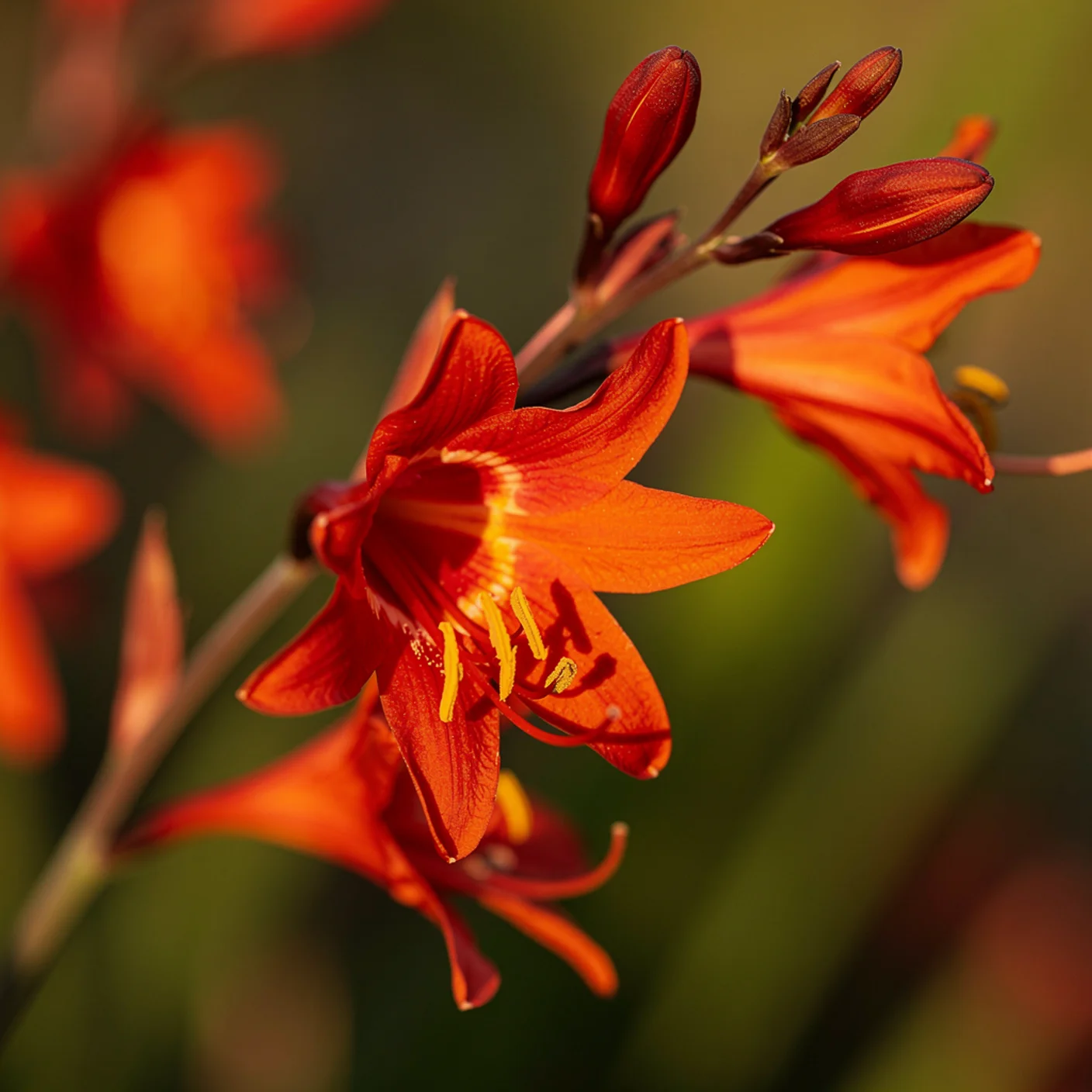
If I had to pick one flower that completely transforms a garden border in July, it might be 'Lucifer.' Those arching sprays of flame-red flowers against sword-shaped leaves — it's like the garden suddenly decided to stop being polite and start being dramatic.
Crocosmia is one of those plants that just gets on with it. Plant the corms, stand back, and within a couple of years you'll have great sweeping drifts of the stuff. It spreads generously, which some people call invasive and I call enthusiastic. You can always dig up a clump and give it to someone.
The colour is what makes it. That specific red — not quite orange, not quite scarlet, somewhere between a lit match and a rowan berry — is incredibly hard to find elsewhere. It practically glows in the late afternoon light, and against dark foliage or a deep green hedge, it's genuinely arresting.
I cut a few stems for the house every July and they look fantastic in a simple glass vase. They have this natural, arching habit that means you barely need to arrange them — just let them do their thing. They're not long-lived as a cut flower, maybe five days, but those five days are worth it.
Where to Buy
If you want to try crocosmia for yourself, here's where I'd point you:
We may earn a small commission from purchases made through our links, at no extra cost to you.
✿ From the folklore cabinet
Despite the devilish name, 'Lucifer' was bred by Alan Bloom in Bressingham, Norfolk in the 1960s. The name simply means 'light-bearer' in Latin, which feels right when you see those stems catching the afternoon sun. Crocosmia itself is a South African native that's made itself thoroughly at home in British gardens.