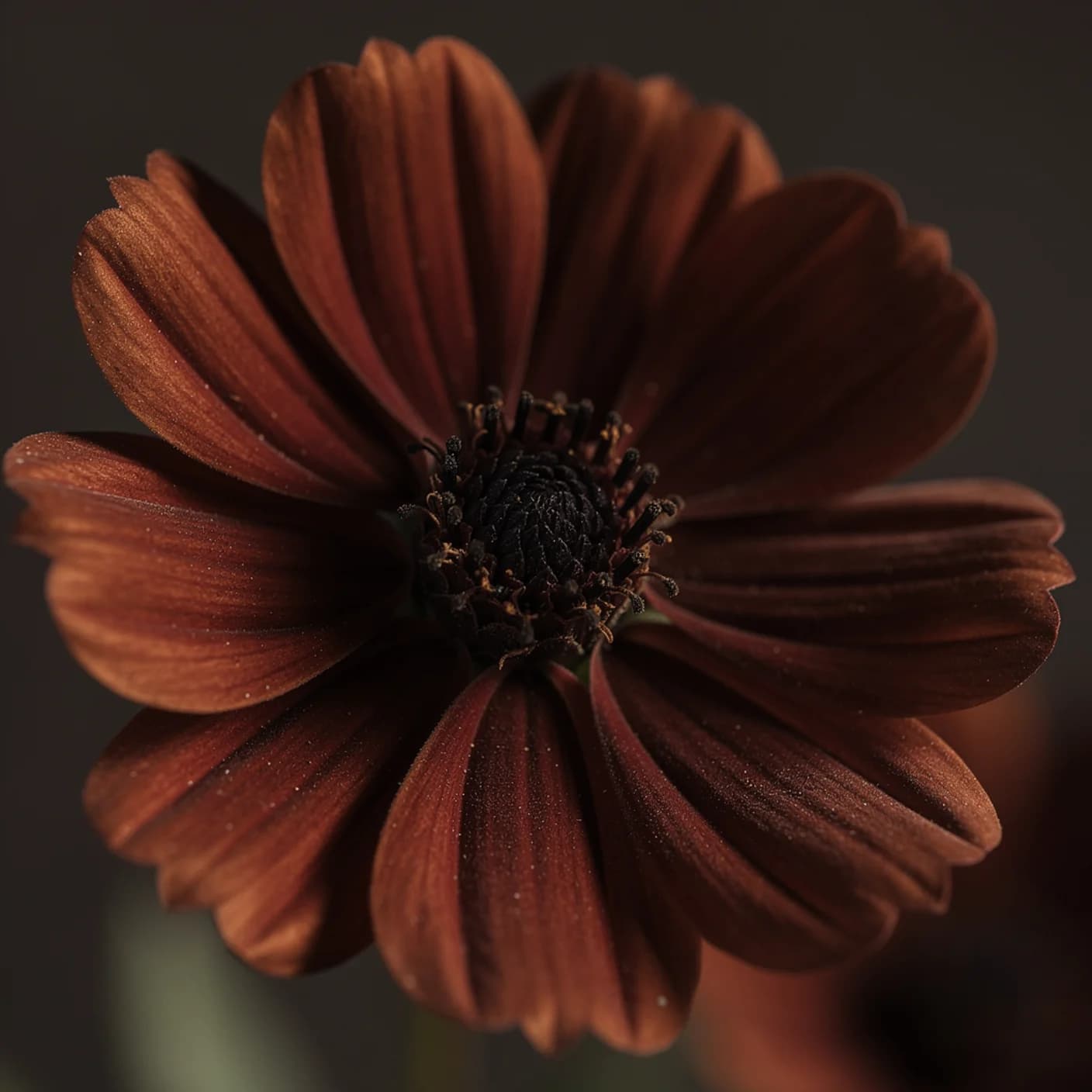
Chocolate Cosmos
Cosmos atrosanguineus
“Grow it in a pot near where you sit. The scent of warm dark chocolate from a flower is one of the most extraordinary things the garden world offers.”
— ROSIE
Rosie's Take
The first time someone told me there was a flower that smells of chocolate, I assumed they were exaggerating. Then I leaned in to a Cosmos atrosanguineus on a warm July afternoon and had to completely reassess my understanding of what flowers are capable of.
It genuinely smells of dark chocolate. Not vaguely, not if-you-squint. Warm, rich, cocoa-bitter chocolate with a vanillin sweetness underneath. On a hot day, you can catch it from a foot away. I once watched a visitor at an open garden actually close her eyes and say 'brownies.' She wasn't wrong.
The flowers themselves are remarkable — deep, dark, velvety brownish-red, almost maroon, about two inches across, on wiry stems. The colour is difficult to describe and impossible to photograph accurately. In real life, they have this warm, near-black depth that makes them look like they've been carved from dark chocolate. Which, given the scent, feels deliberate.
They're tender perennials, which means they need a bit of care — lifting the tubers in autumn or mulching heavily — but they're not difficult. I grow mine in pots so I can bring them close to where I sit in the garden. There's no point growing a flower that smells this remarkable and planting it somewhere you never go.
They're nearly extinct in the wild. The cultivated plants we grow are all clones of a single surviving Mexican specimen. Every chocolate cosmos in every British garden traces back to one plant. I find that both wonderful and slightly heartbreaking.
Where to Buy
If you want to try chocolate cosmos for yourself, here's where I'd point you:
Also available as seeds — Cosmos bipinnatus 'Psyche Mixed' - Seeds →
We may earn a small commission from purchases made through our links, at no extra cost to you.
✿ From the folklore cabinet
Cosmos atrosanguineus is nearly extinct in its native Mexico — every cultivated plant descends from a single surviving specimen saved by a botanist in the early 1900s. I think about that when I lean in to smell mine — the entire existence of this extraordinary flower hangs by a single thread of botanical luck.