Astilbe
Fanal
“The shade garden's secret weapon. 'Fanal' is feathery, dark-toned, and gorgeous in ways most people haven't noticed yet.”
— ROSIE
Rosie's Take
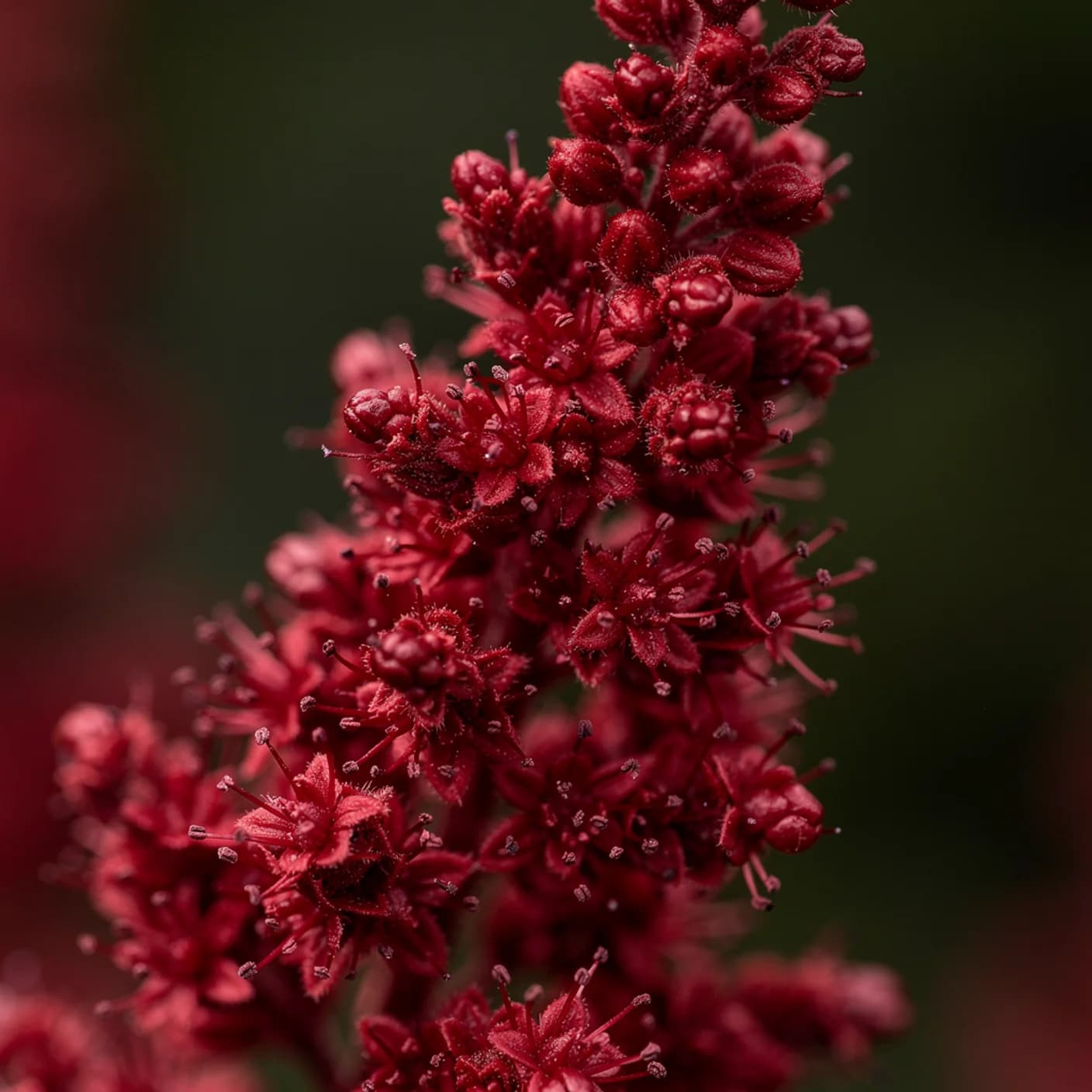
Astilbe is one of those flowers that people walk past in the garden centre without a second glance, which is their loss. 'Fanal' is the one that changed my mind about them — those deep crimson, feathery plumes rising up from dark bronze-green foliage like tiny, very elegant bottle brushes.
What I love about them is the texture. In a world of round, open-faced flowers, astilbe brings something completely different — all that fine, ferny detail in the plumes, and the leaves themselves are gorgeous, deeply cut and often flushed with bronze when they first emerge.
They're brilliant in shade, which is where most gardeners are desperate for colour. If you've got a damp, shady corner that feels like a problem, astilbe turns it into a feature. 'Fanal' is particularly good because that dark red doesn't wash out in low light the way paler varieties can.
As a cut flower, the plumes add lovely movement and texture to an arrangement. I pair them with garden roses and astrantia, or with ferns for something more woodland. They also dry well — the plumes turn a warm coppery brown and hold their shape, which extends the season beautifully. They're one of those plants that look good at every stage — emerging, flowering, drying, and standing through winter frost. That's a rare quality.
Where to Buy
If you want to try astilbe for yourself, here's where I'd point you:
We may earn a small commission from purchases made through our links, at no extra cost to you.
✿ From the folklore cabinet
The name 'astilbe' comes from the Greek for 'without brilliance,' which was a botanical description of the individually tiny flowers. It's possibly the worst name anyone has given a perfectly lovely plant. Each of those plumes is actually made up of hundreds of minuscule flowers, which is rather more brilliant than the name suggests.