Echinacea
Magnus
“Leave the seed heads standing through winter. She's beautiful in flower, beautiful in death, and everything in between. The garden's most dignified ageing.”
— ROSIE
Rosie's Take
I came to echinacea late, and I wish I hadn't. For years I associated it only with those dubious cold remedy supplements from the health food shop. Then I actually looked at the flower — really looked — and realised I'd been missing something remarkable.
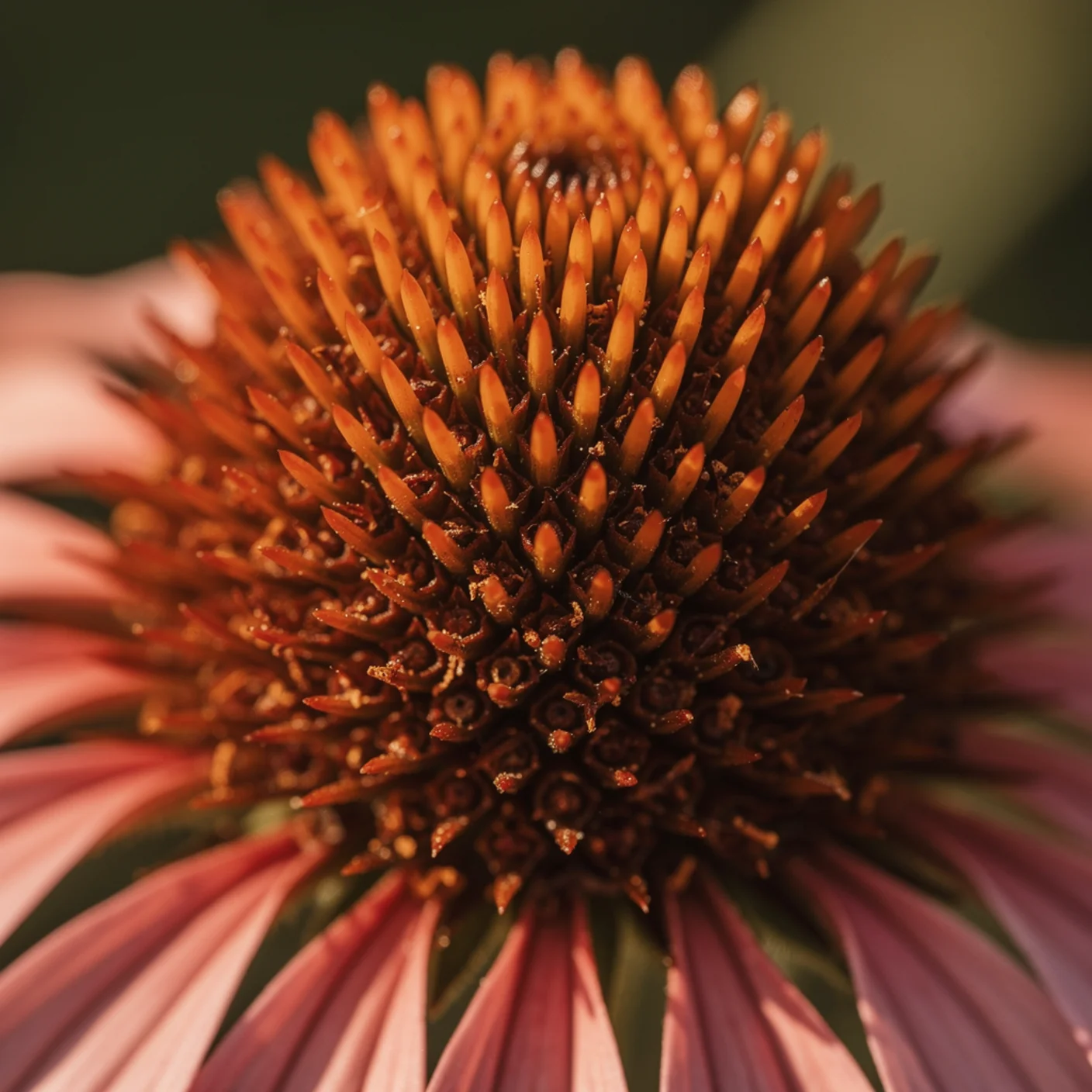
Magnus is the classic variety: large, daisy-like flowers with broad, slightly drooping petals in a warm, rosy-mauve pink radiating from an extraordinary raised central cone. That cone is the thing. It's architectural, almost spiky, like a tiny copper-brown hedgehog sitting in the middle of a pink skirt. As the flower matures, the cone darkens and the petals droop further, giving the whole thing a sculptural, slightly melancholy beauty that's even better than the fresh bloom.
She flowers from July right through to October, which makes her one of the longest-performing perennials in the border. By September, when the garden is beginning to tire, echinacea is still going strong — holding her own alongside the last of the dahlias and the first of the chrysanthemums. She bridges the seasons with quiet determination.
The dead seed heads are extraordinary through winter — those dark, spiky cones standing on stiff stems above the frost. I leave all of mine standing. They feed the birds, they look sculptural, and they remind me that there's beauty in every stage of a flower's life.
Butterflies and bees are devoted to her. On a warm September afternoon, the echinacea patch hums. It's become one of my favourite places to stand with a cup of tea and feel like the garden and I are both winding down together, but not finished yet. Not quite.
Where to Buy
If you want to try echinacea for yourself, here's where I'd point you:
Also available as seeds — Echinacea purpurea 'Magnus' - Seeds →
We may earn a small commission from purchases made through our links, at no extra cost to you.
✿ From the folklore cabinet
Echinacea gets its name from the Greek 'echinos' meaning hedgehog — because of that spiky central cone. Native Americans used it for centuries as medicine for everything from toothache to snake bites. Whether or not it cures your cold, I can confirm it cures a tired-looking October border.