Knautia
Macedonica
“The flower that teaches you about the space between flowers. Deep crimson pincushions on wiry stems, bobbing for months, beloved by butterflies.”
— ROSIE
Rosie's Take
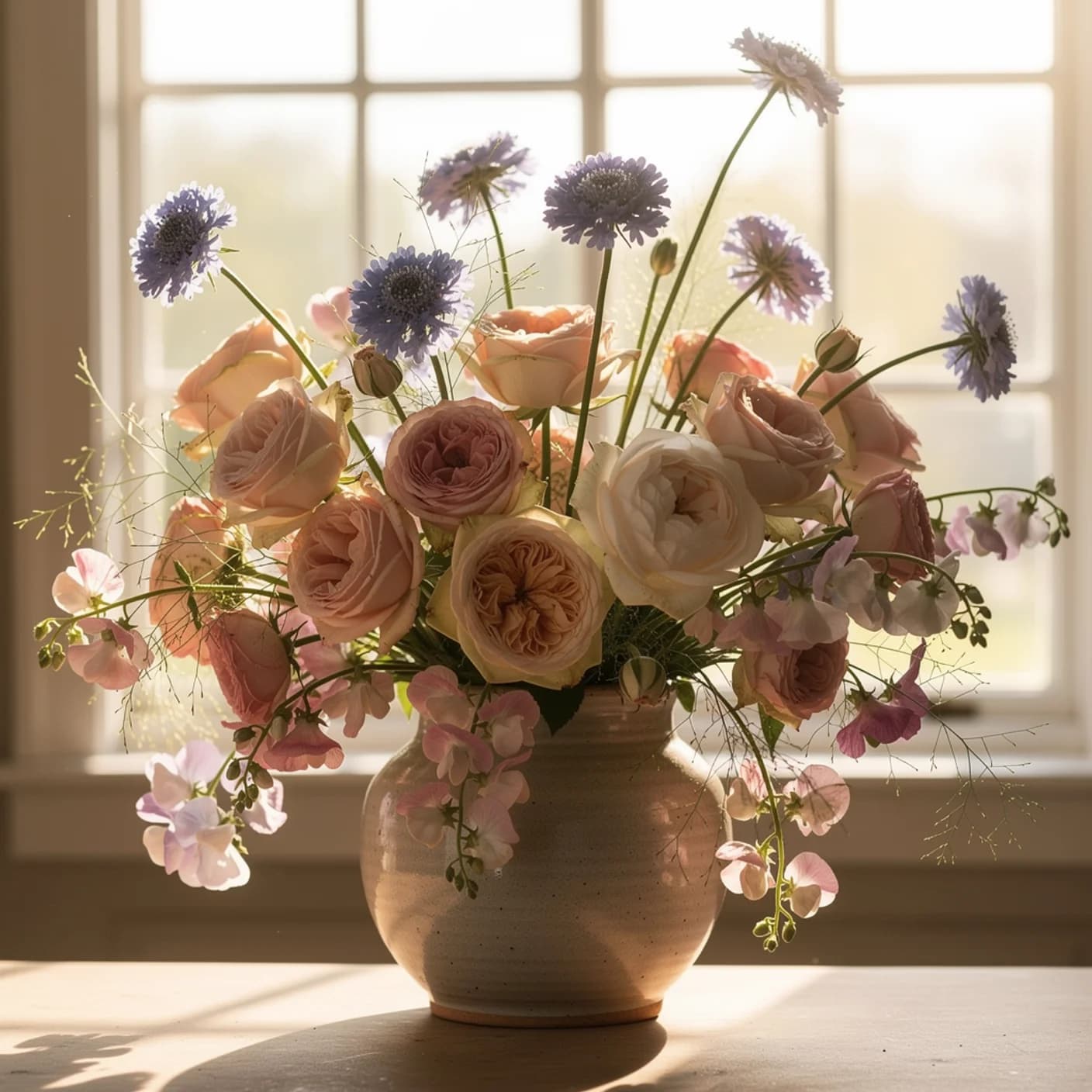
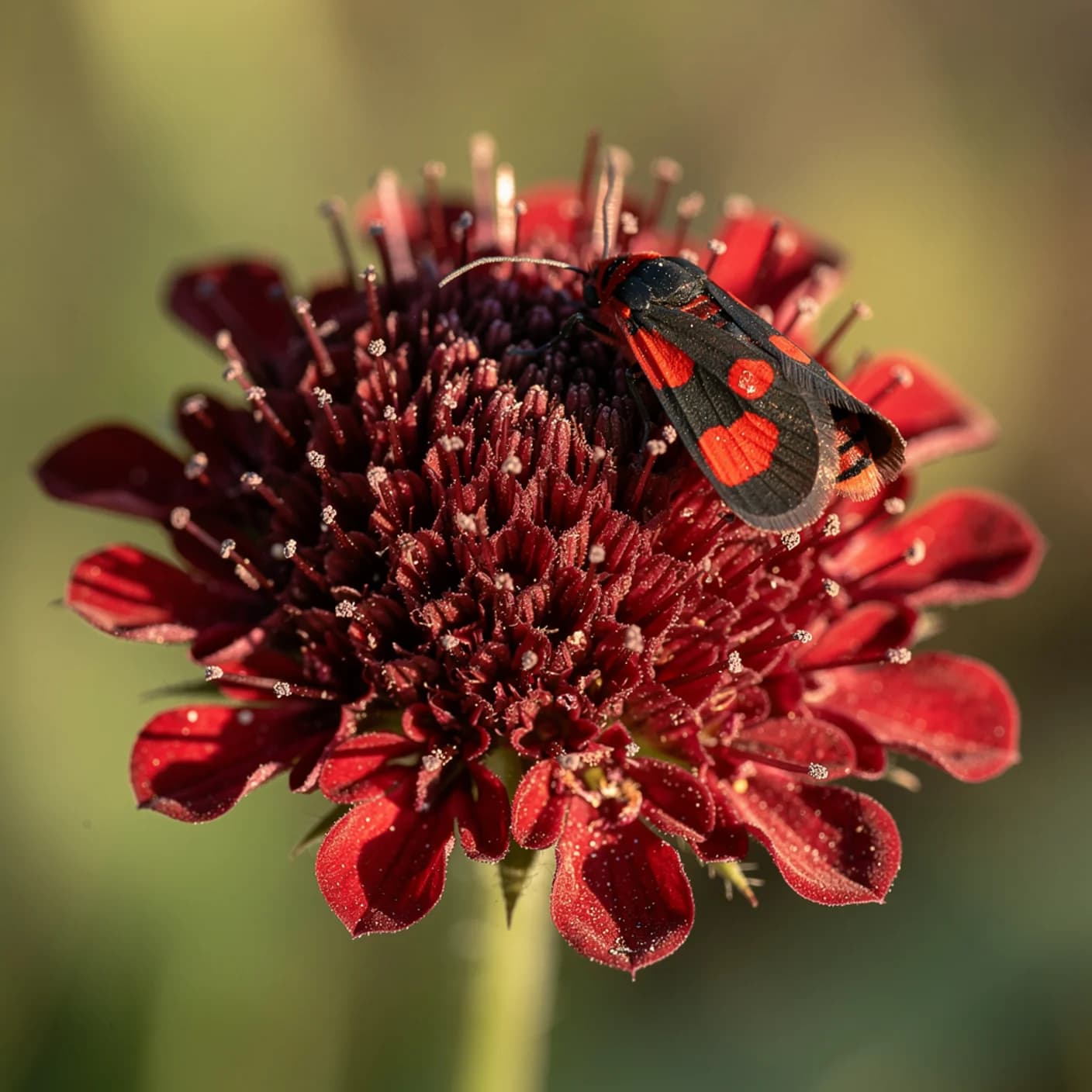
Knautia macedonica is the flower that taught me about the space between flowers — the air, the movement, the way some plants let the garden breathe. It grows to about two feet with wiry, branching stems that hold small, pincushion-like flower heads well above the foliage. Those flowers bob and weave in the slightest breeze on stems so thin they're almost invisible. The effect is less like a planted border and more like a constellation — dark red dots floating in space.
The colour is a deep, complex crimson — not quite red, not quite maroon, with a slight plum undertone that changes depending on the light. In full sun it's a warm, glowing claret. In shade or under cloud it darkens to something closer to dried blood. Against the silver of artemisia or the blue of scabious, it's a pairing that looks effortless and took nature millions of years to perfect.
Butterflies and bees work these flowers constantly. The pincushion shape provides a perfect landing platform, and the nectar is apparently excellent — I've seen six-spot burnets and marbled whites on mine in high summer, which always feels like a reward for choosing the right plant.
It flowers for months — June to September without a pause — and self-seeds generously into gravel paths and gaps in paving. I let the seedlings stay wherever they appear, because a knautia that's chosen its own spot always looks better than one you planted. There's a lesson in that. The best gardens have a little wildness in them.
Where to Buy
If you want to try knautia for yourself, here's where I'd point you:
Also available as seeds — Knautia macedonica - Seeds →
We may earn a small commission from purchases made through our links, at no extra cost to you.
✿ From the folklore cabinet
Knautia is named after Christoph Knaut, a seventeenth-century German botanist. The plant is closely related to scabious and was historically used in similar medicinal ways — the name 'scabious' comes from the Latin for 'itch,' because related plants were used to treat skin conditions. Knautia macedonica is native to the Balkans and was introduced to British gardens in the early twentieth century, where it's been quietly self-seeding itself into the affections of discerning gardeners ever since. It's one of those plants that never appears in headlines but always appears in the best gardens.