Amsonia
Tabernaemontana (Blue Star)
“The best-kept secret in autumn gardening. Modest blue flowers in summer, then weeks of luminous golden foliage that outperforms most trees. Barely known in Britain. That needs to change.”
— ROSIE
Rosie's Take
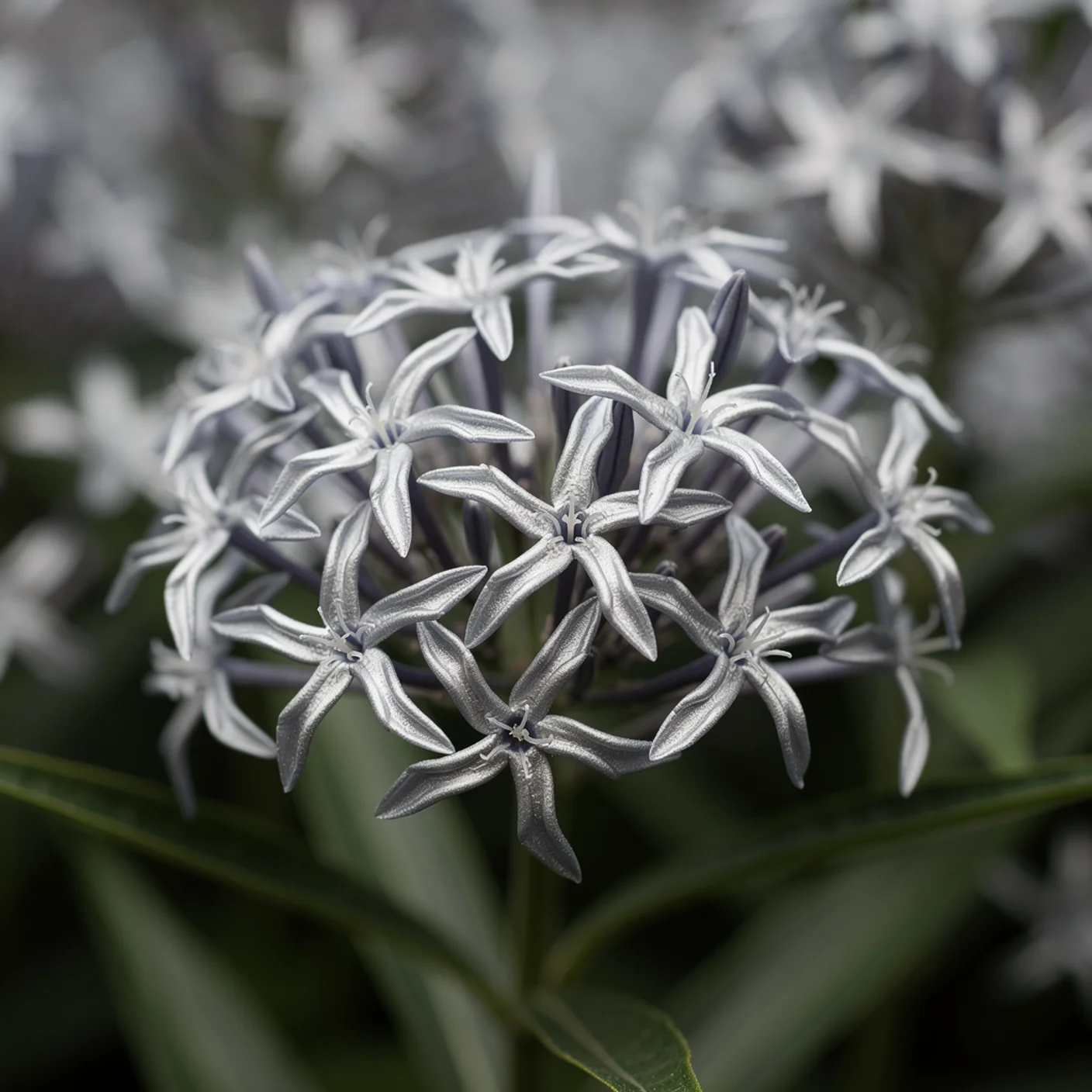
Amsonia is a two-act plant, and which act you prefer depends on what you value. In June, it produces clusters of small, star-shaped, pale steel-blue flowers — delicate, airy, and quietly lovely. Not shouting, not demanding attention, just contributing a cool blue to the early summer border in a way that most people walk past without registering. That's act one.
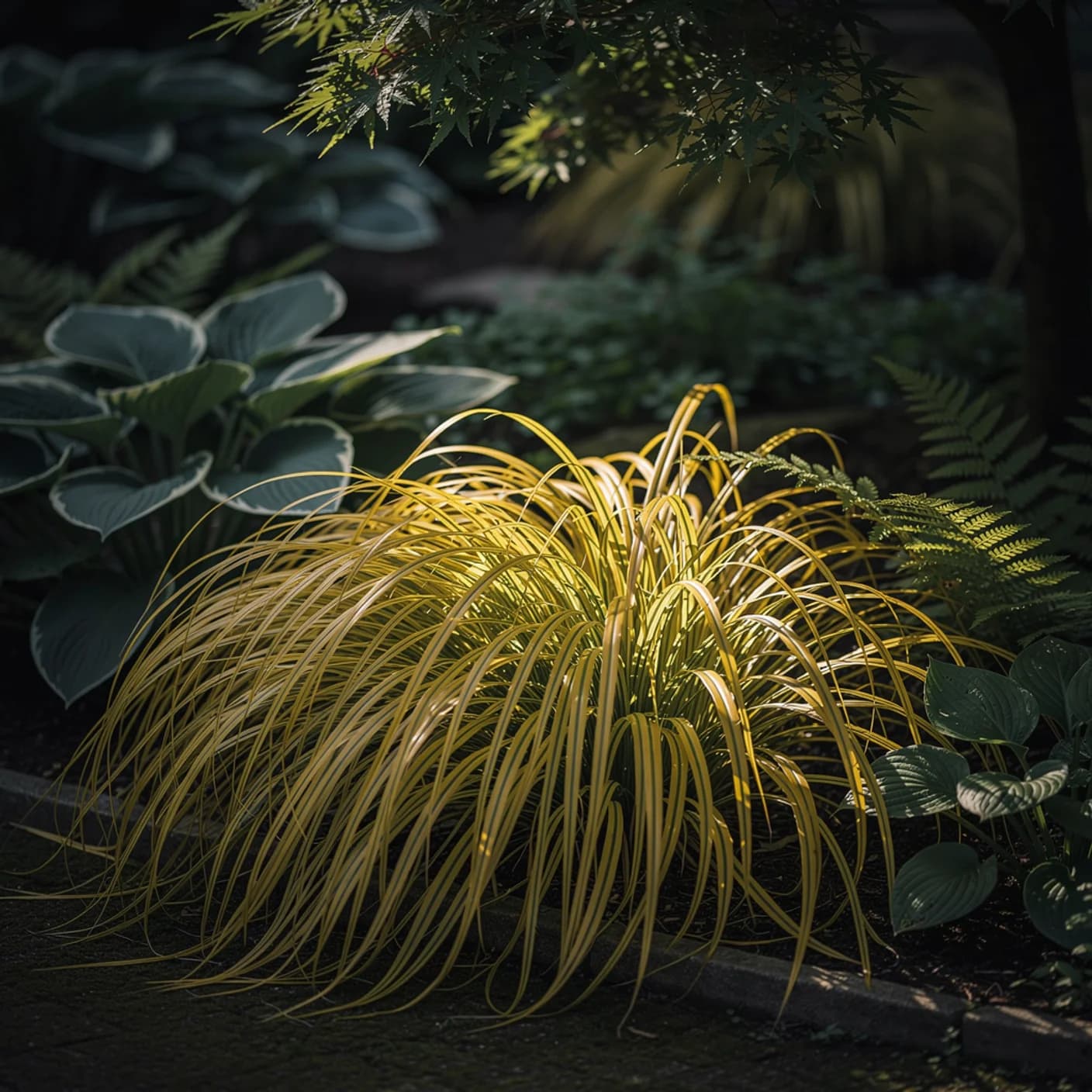
Act two arrives in October, and act two is the reason you grow it. The narrow, willow-like leaves turn the most extraordinary golden yellow — clear, bright, luminous, and lasting for weeks. Not the coppery-bronze of most autumn foliage, not the fleeting blaze-and-drop of Japanese maples. A sustained, clear, buttery gold that holds and holds, week after week, until the first hard frosts. It's the best autumn foliage colour of any herbaceous perennial I grow, and it's the act that earns standing ovations.
The plant forms a bushy, well-shaped clump about two and a half feet tall, with those narrow, elegant leaves densely clothing the stems. In summer, the foliage effect is similar to a well-behaved willow — graceful, fine-textured, architectural. It's one of those rare plants that looks intentional even when it's not doing anything particularly dramatic.
It's barely known in Britain. American gardeners have grown it for decades — it's native to the eastern United States — but it's still a rarity in British borders, which I find baffling. A plant with two seasons of interest, no pest or disease problems, no staking required, and autumn colour that outperforms most trees. I have a suspicion that its very modesty has held it back. The quiet performers always take longer to be noticed.
Where to Buy
If you want to try amsonia for yourself, here's where I'd point you:
We may earn a small commission from purchases made through our links, at no extra cost to you.
✿ From the folklore cabinet
Amsonia is named after Dr Charles Amson, an eighteenth-century Virginian physician. The specific name 'tabernaemontana' honours Jakob Theodor von Bergzabern — a sixteenth-century German herbalist who Latinised his name to Tabernaemontanus because his town name meant 'mountain tavern.' So the plant is named after a doctor and a man who renamed himself after a pub on a hill. The genus is native to the eastern United States, where it grows in damp woodland edges and meadows. It's a member of the dogbane family, and like many family members, the stems exude a milky latex when cut. In American gardening, amsonia has become a staple of the low-maintenance, four-season border. In Britain, it remains frustratingly obscure. Consider this my small campaign.