Hakonechloa
Aureola (Golden Japanese Forest Grass)
“The most beautiful grass for shade. Golden leaves that flow like water, autumn colour that shifts to copper-bronze, and a luminous quality that brightens the darkest corner. Slow, but transformative.”
— ROSIE
Rosie's Take
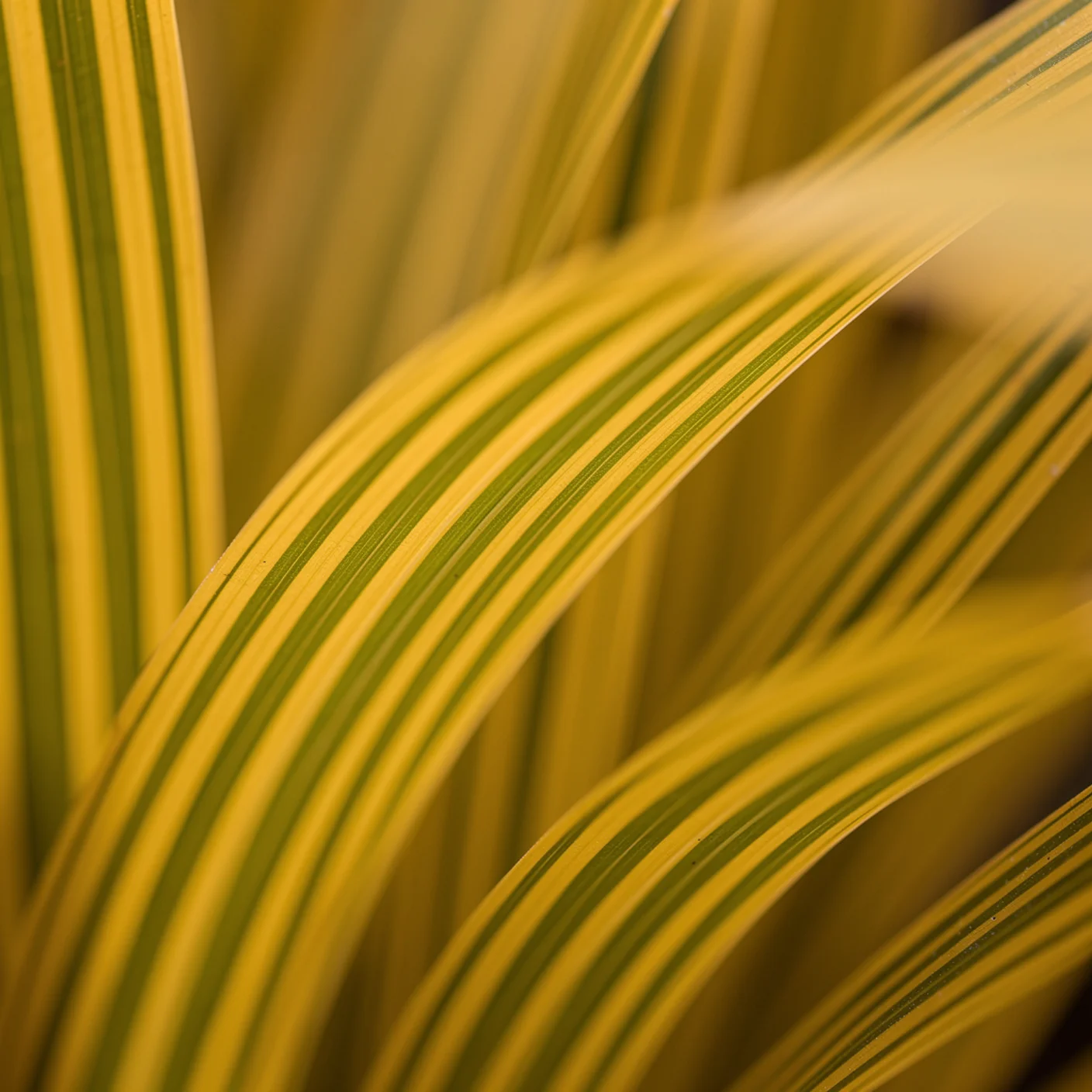
Hakonechloa macra 'Aureola' moves like water. That's the first thing you notice — the way the arching, golden-striped leaves cascade in one direction, creating a flowing, pouring effect that's more liquid than vegetable. A single pot of it looks like a golden waterfall. A sweep of it along a shady border looks like a stream of molten gold finding its way downhill.
The leaves are narrow, elegantly arched, striped bright gold and green, and they catch the light in a way that seems to amplify it. In a shady corner — and this is a shade-loving grass, which is unusual — it glows. It genuinely appears to generate its own luminosity, brightening dark spots without any of the harshness that yellow plants can sometimes have. The gold is warm, buttery, soft. Not acid yellow, not lime green. The kind of gold that makes shadows feel cosy rather than gloomy.
In autumn, the whole plant turns pink and then rich copper-bronze, which is a second act that most people don't expect. A plant that's been a warm golden cascade all summer suddenly shifts into burnished copper, and the autumn version is arguably even more beautiful than the summer one. It holds its autumn colour for weeks before finally fading to straw.
It's slow. Painfully slow to establish — a small pot will take three or four years to make a decent clump. But the wait is part of the investment. Each year the mound gets wider, the cascade longer, the effect more complete. I have a five-year-old clump at the base of a Japanese maple that's now about two feet across, and on an October afternoon when the maple is crimson and the hakonechloa is copper, the whole corner looks like it's on fire. Slow plants teach you something. Speed isn't everything.
Where to Buy
If you want to try hakonechloa for yourself, here's where I'd point you:
We may earn a small commission from purchases made through our links, at no extra cost to you.
✿ From the folklore cabinet
Hakonechloa macra is native to only one place on earth — the rocky, moist cliffs of Mount Hakone near Fuji in Japan. It grows on steep volcanic slopes in the understory of deciduous forest, which explains its preference for shade and its cascading habit — it evolved to grow on inclines. 'Aureola' means 'golden,' and this form was selected in Japanese gardens where it has been cultivated for centuries as a contemplative, texture-rich ground cover. The grass has won practically every horticultural award available, including the RHS Award of Garden Merit and the Perennial Plant of the Year in America. Some plants accumulate praise because there's simply nothing bad to say about them.