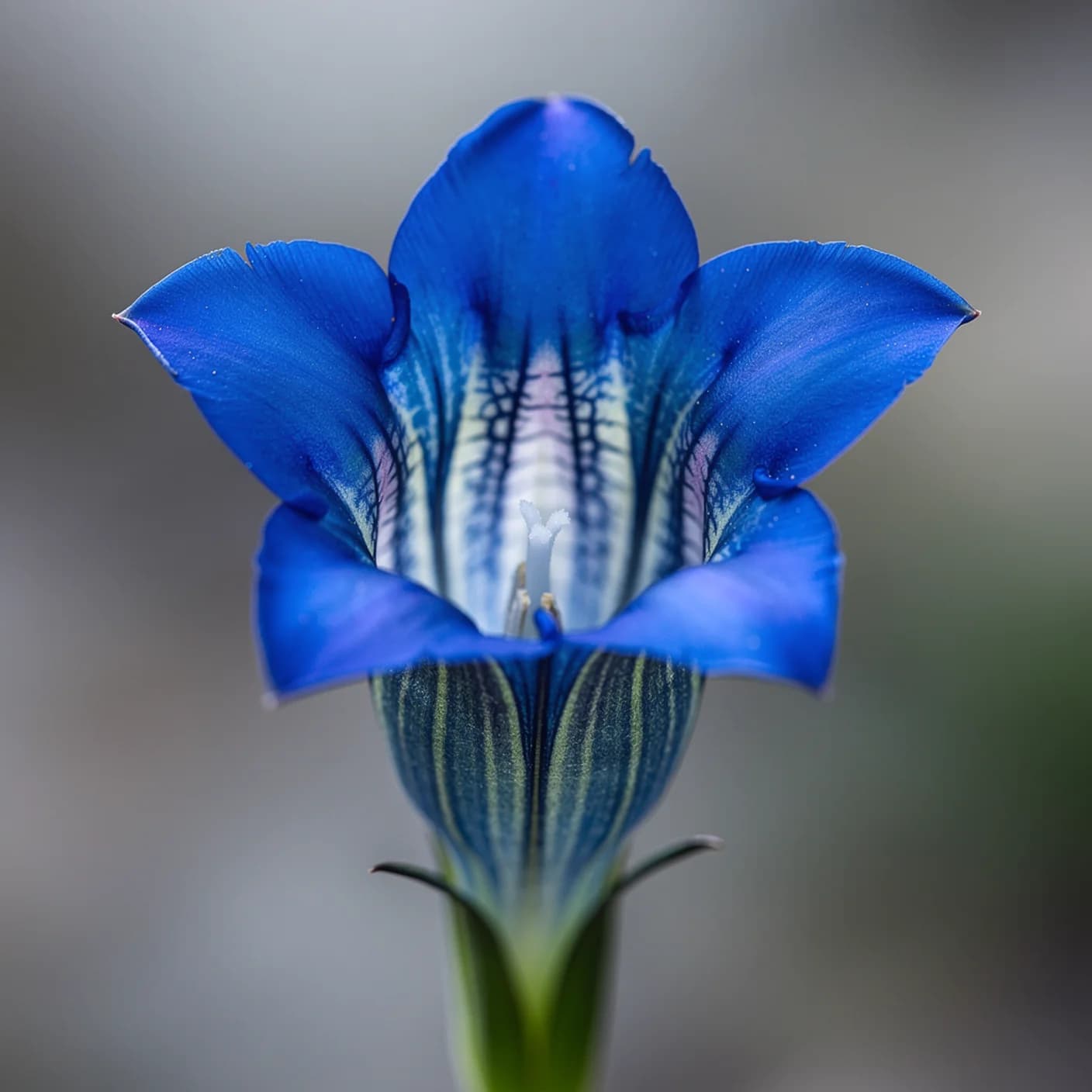
Gentian
Gentiana sino-ornata (Autumn Gentian)
“The most intense blue in the plant kingdom. Autumn-flowering gentian in acid soil is fussy but worth every effort. Grow it in a trough and prepare to answer questions.”
— ROSIE
Rosie's Take
If you've never seen a gentian in flower, you haven't experienced blue. I don't say that lightly — I've grown delphiniums, meconopsis, agapanthus, every blue flower the British garden offers. Gentiana sino-ornata makes them all look like they're trying. This is blue at its absolute, undiluted, electric maximum. A trumpet-shaped flower, maybe two inches long, in a colour so intense it seems to generate its own light. Cobalt, ultramarine, something beyond both — a blue that doesn't exist in any paint chart.
The flowers appear in September and October, lying close to the ground on trailing stems, opening their trumpets to the low autumn sun. Each flower has fine stripes of darker blue and greenish-white running along the outside of the trumpet, which adds complexity to what could otherwise be overwhelming. From a distance, a patch of flowering gentian looks like someone has scattered fragments of autumn sky across the ground.
It's not the easiest plant. It wants acid soil — lime will kill it — and it wants moisture but not waterlogging. In practice, this means a peaty, humus-rich soil in a position that gets sun but doesn't bake dry. A rock garden, a raised bed with ericaceous compost, or the edge of a woodland garden where the soil is leafy and damp. It's worth the fuss.
I grow mine in a shallow stone trough with ericaceous compost and a top-dressing of fine grit. In October, when the rest of the garden is winding down into browns and golds, those impossible blue trumpets open and every visitor stops and stares. It's the most asked-about plant in my garden. Everyone wants to know what it is, and nobody believes me when I tell them it's easy.
✿ From the folklore cabinet
Gentians are named after Gentius, king of ancient Illyria, who is said to have discovered the medicinal properties of the plant's roots. Gentiana sino-ornata was first collected by George Forrest in Yunnan, China, in 1904 — another treasure from those extraordinary Chinese mountains. The genus is associated with the Alps and the Himalayas, and the blue gentian has become a symbol of mountain wildflowers worldwide. In traditional Chinese medicine, gentian roots are used as a bitter tonic. The 'sino-ornata' name means 'Chinese ornamental,' which for once the Latin undersells — 'Chinese miracle' would have been closer. It's the autumn-flowering species that changed rock gardening in Britain.