Rowan
Joseph Rock
“The small-garden tree that earns its space in October. Yellow berries, spectacular autumn colour, and enough folklore to fill a book. Plant one and wait for the blackbirds.”
— ROSIE
Rosie's Take
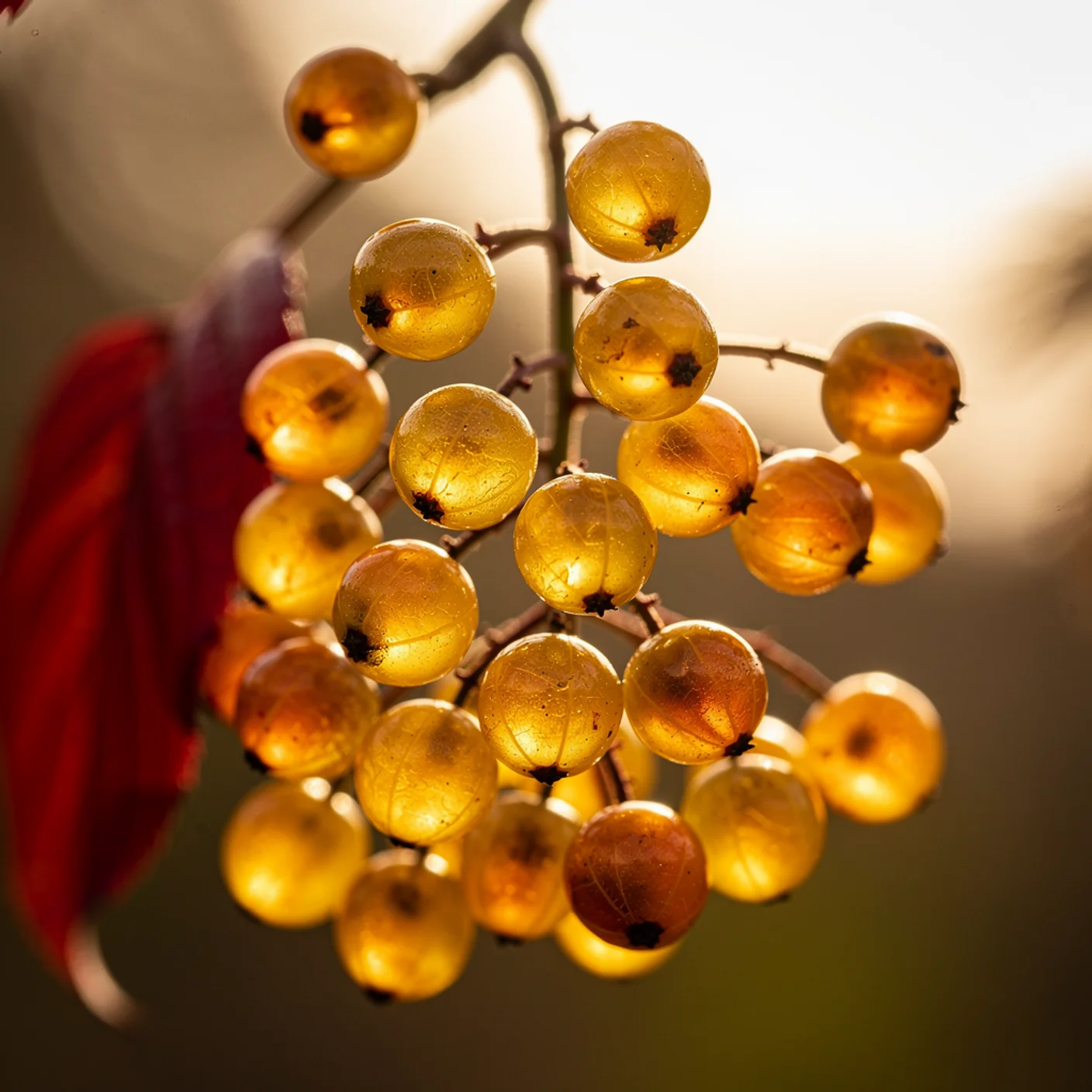
Most people know rowans for their red berries, but Sorbus 'Joseph Rock' does something far more interesting — its berries are yellow. A clear, warm, amber-yellow that's unlike anything else in the autumn garden. They hang in heavy clusters against foliage that turns the most extraordinary sequence of colours as autumn progresses: green to orange to crimson to deep purple, sometimes all at once on the same tree. The combination of yellow berries and multicoloured autumn leaves is one of the finest displays any small tree produces.
It's a modest tree — maybe seven or eight metres at maturity — with an upright, slightly compact habit that makes it ideal for smaller gardens. The pinnate leaves are feathery and elegant, casting a light, dappled shade that's easy to plant beneath. In spring it produces flat heads of creamy-white flowers that smell faintly of hawthorn — pleasant, not remarkable. But you forgive the spring modesty because of what comes in October.
I planted mine in the front garden five years ago, and the first autumn it fruited properly was a revelation. The berries start green, transition through cream to pale lemon, and reach that final glowing amber-yellow by mid-October. Blackbirds go mad for them — usually stripping the tree within a fortnight of the berries ripening, which makes the display frustratingly brief but also rather precious. You pay attention because you know it won't last.
Rowans have more folklore attached to them than almost any British tree, and 'Joseph Rock' carries all that accumulated magic and meaning. It was found by the plant hunter Joseph Rock in Yunnan, China, in 1932 — growing wild in the mountains. That a tree from a Chinese mountainside is now one of the most-planted small garden trees in Britain is the kind of plant-migration story I never tire of.
Where to Buy
If you want to try rowan for yourself, here's where I'd point you:
We may earn a small commission from purchases made through our links, at no extra cost to you.
✿ From the folklore cabinet
Rowan has deeper roots in British folklore than almost any tree. It was believed to protect against witchcraft — rowan crosses were hung above doorways on May Eve, and a rowan growing near the house was thought to keep evil at bay. The old rhyme goes 'Rowan tree and red thread / Put the witches to their speed.' Sailors carried rowan wood for protection at sea. 'Joseph Rock' was discovered by the Austrian-American explorer and botanist Joseph Rock in the mountains of Yunnan province, China, in 1932. Rock was an extraordinary character — he lived for decades among the Naxi people of Lijiang and sent thousands of plant specimens back to the West. His yellow-berried rowan is among the most beautiful of them all.