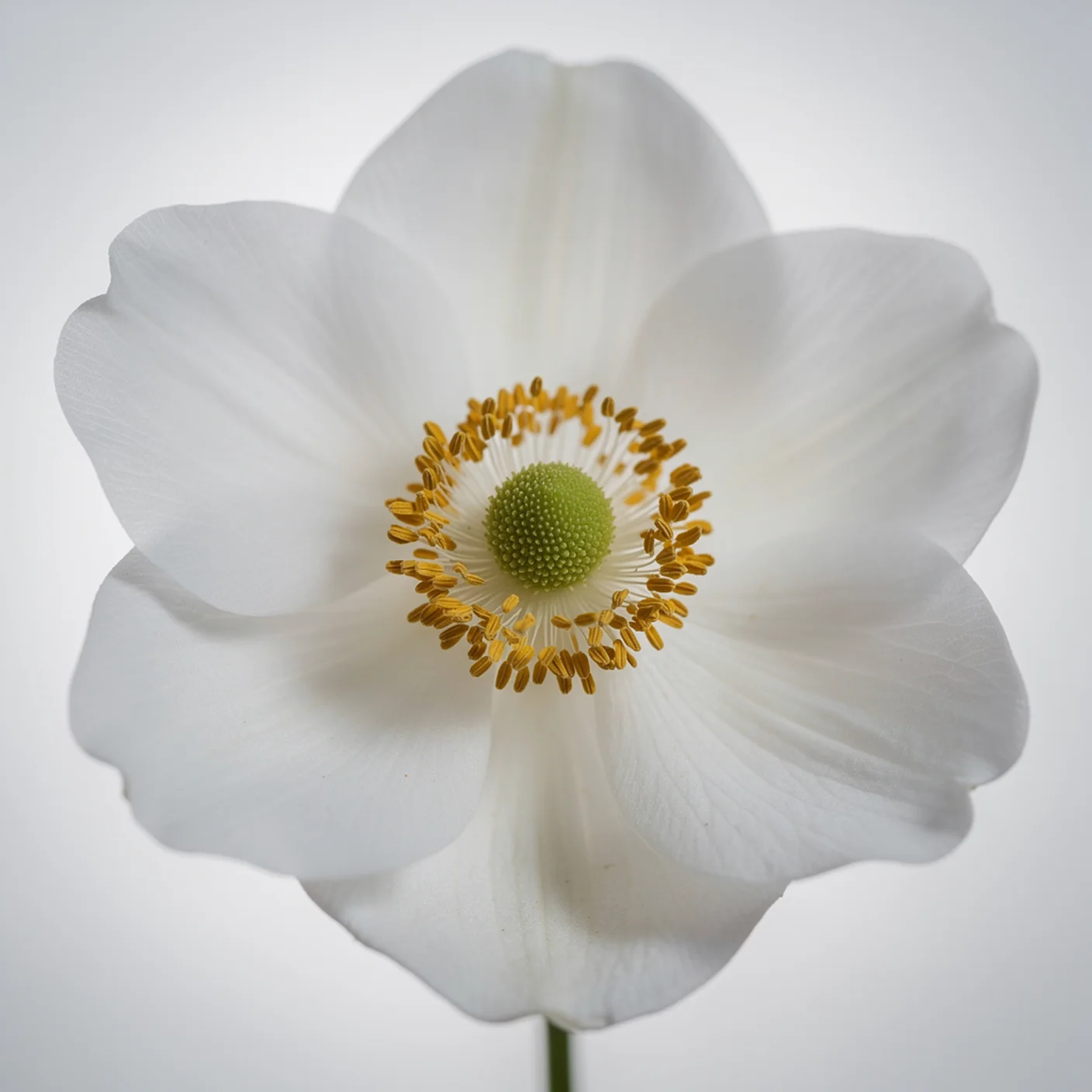
Japanese Anemone
Honorine Jobert
“She'll colonise your border and you'll thank her for it. The most elegant thing flowering in any garden in October.”
— ROSIE
Rosie's Take
September is the month when most of the garden is winding down, looking a bit tired, starting to think about sleep. And then Honorine Jobert opens her first flower and the whole mood shifts. She's a Japanese anemone — though she's actually from China, one of those delightful botanical misnomers — and she's been a fixture in English gardens since the 1850s. There's a reason she's survived that long.
The flowers are simple and perfect. Pure white, single, with a ring of golden stamens at the centre, held on tall, wiry stems that sway in the slightest breeze. They have the same graphic clarity as the spring anemones but softer, more ethereal, like someone projected them onto the autumn air. In late afternoon light, with the stems silhouetted against a darkening garden, they're genuinely haunting.
She spreads — I should warn you about that. Once established, she'll colonise, sending runners out through the border and popping up where you didn't plant her. Some people find this a problem. I find it a gift. More Honorine Jobert is never a complaint in my garden.
The flowers come in waves through September and October, sometimes into November if the weather's kind. Combined with that extraordinary height — easily three or four feet — she towers over the late border like a series of white lanterns marking the path between summer and winter.
As a cut flower, she's lovely — delicate, long-lasting, and those clean white faces look wonderful in a simple glass jar. I pair her with a few stems of the buds too, which are perfectly round and furry and beautiful in their own right.
Where to Buy
If you want to try japanese anemone for yourself, here's where I'd point you:
We may earn a small commission from purchases made through our links, at no extra cost to you.
✿ From the folklore cabinet
Honorine Jobert was named after the daughter of a nurseryman in Verdun, France, who discovered this white sport growing in his garden around 1858. I love that this flower, grown in millions of gardens worldwide, carries one particular young woman's name. Honorine herself probably had no idea she'd be remembered in every autumn border in England.