Miscanthus
Morning Light
“The finest ornamental grass for a single specimen. Silvery summer foliage, glowing autumn plumes, and structural winter presence. Backlit on an October evening, nothing in the garden comes close.”
— ROSIE
Rosie's Take
Miscanthus sinensis 'Morning Light' earns its name every single day. The narrow leaves have fine white margins that, from a distance, make the entire plant appear silvery — a shimmering, luminous column of pale green and silver that catches every passing breeze. When the morning sun hits it, the white leaf edges glow, and the whole grass seems to be wrapped in light. It's one of those names that isn't marketing — it's description.
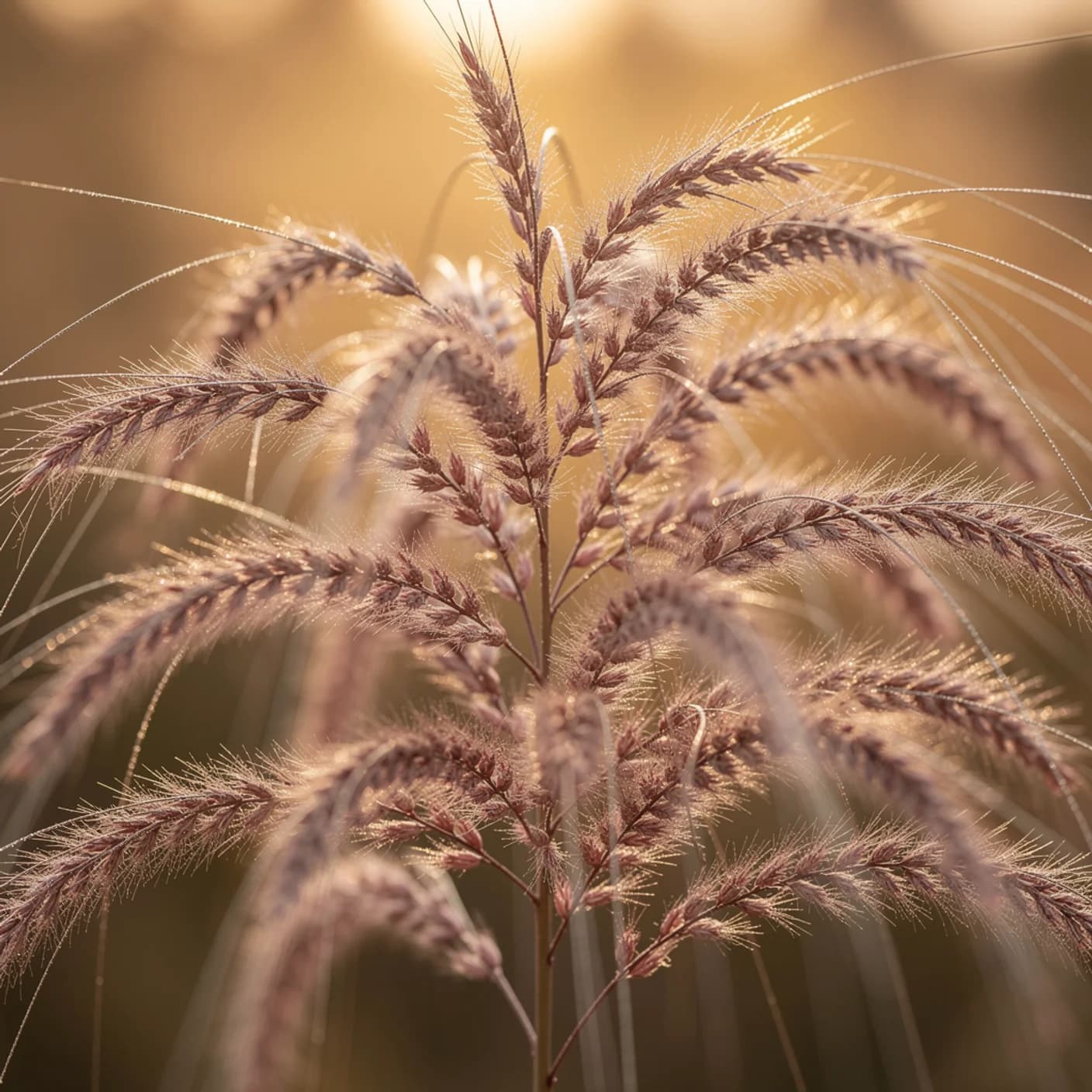
It forms a tall, upright, vase-shaped clump — five to six feet by late summer — that's architecturally perfect. Narrow at the base, widening at the top, the leaves arching outward like the spray of a fountain. In autumn, silky, pinkish flower plumes emerge above the foliage, catching the low October sun and turning the whole plant into a beacon of warm light. The plumes fade to silver and persist through winter, when they catch frost and look like something from a Japanese woodblock print.
I grow it as a specimen — a single clump at the corner of the terrace where it catches the afternoon sun. Backlit, it's transcendent. The silvery leaves become translucent, the flower plumes glow, and on a still autumn evening the whole plant seems to be made of light rather than matter. It's one of those garden effects that makes visitors fall silent, which is the highest compliment.
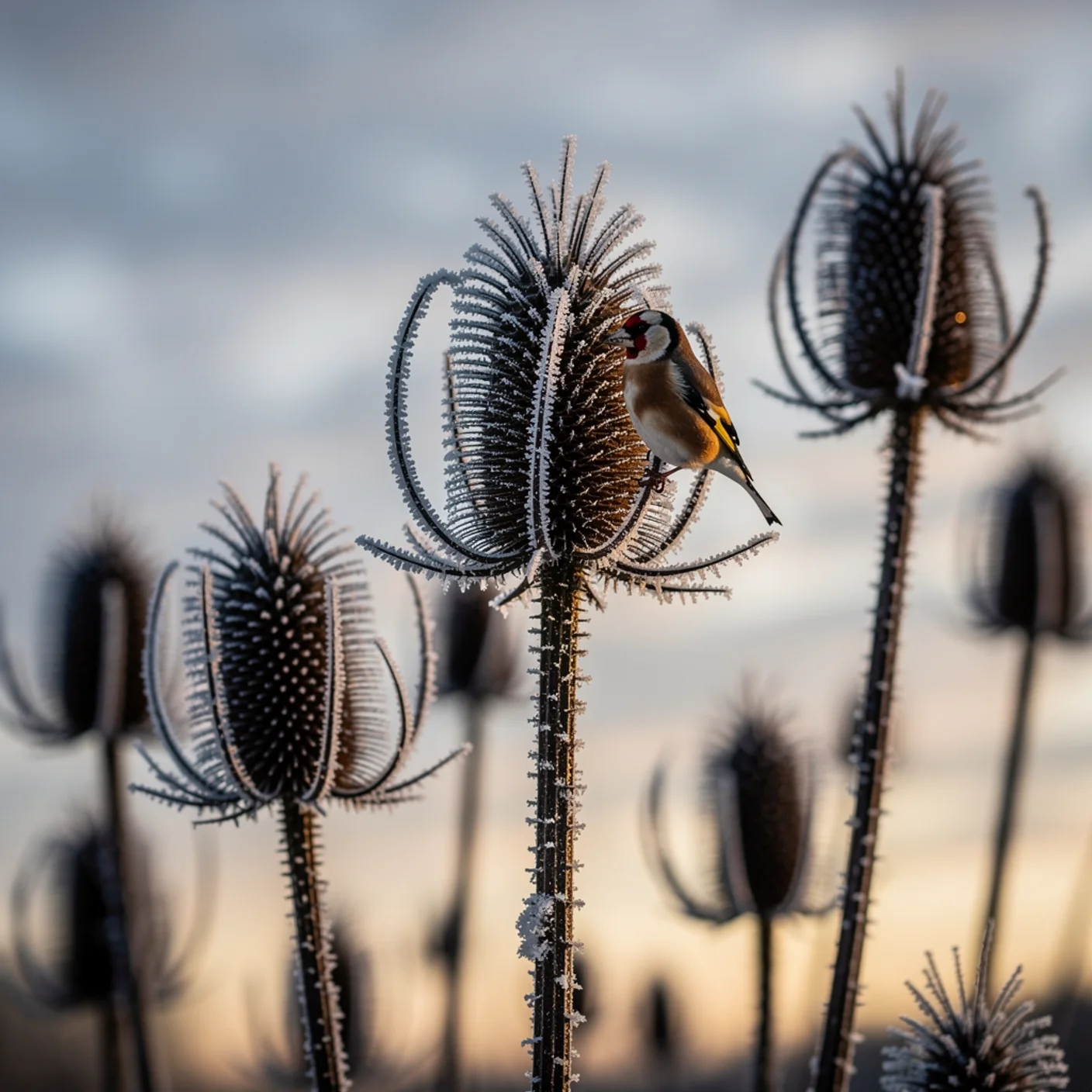
In winter, I leave the stems standing. A miscanthus in January, frosted and straw-coloured, the plumes still intact, is a structural presence that gives the sleeping garden a skeleton. The dried stems rattle in the wind — a papery, rushing sound that's the voice of winter. I cut them back hard in March, just as the new growth begins to push through, and the whole cycle starts again. A plant for all twelve months.
Where to Buy
If you want to try miscanthus for yourself, here's where I'd point you:
We may earn a small commission from purchases made through our links, at no extra cost to you.
✿ From the folklore cabinet
Miscanthus sinensis is native to Japan, China, and Korea, where it grows in meadows and on mountain slopes. In Japan, it's called 'susuki' and is one of the seven grasses of autumn in traditional culture — depicted in art, poetry, and the moon-viewing festival of Tsukimi. Japanese aesthetics consider the sight of miscanthus plumes in autumn moonlight to be one of nature's most beautiful images. 'Morning Light' was introduced to Western gardens by the great grass guru Kurt Bluemel in the 1970s and quickly became one of the most popular ornamental grasses in the world. The Japanese had known about it for centuries. As usual, the West was late to the party.