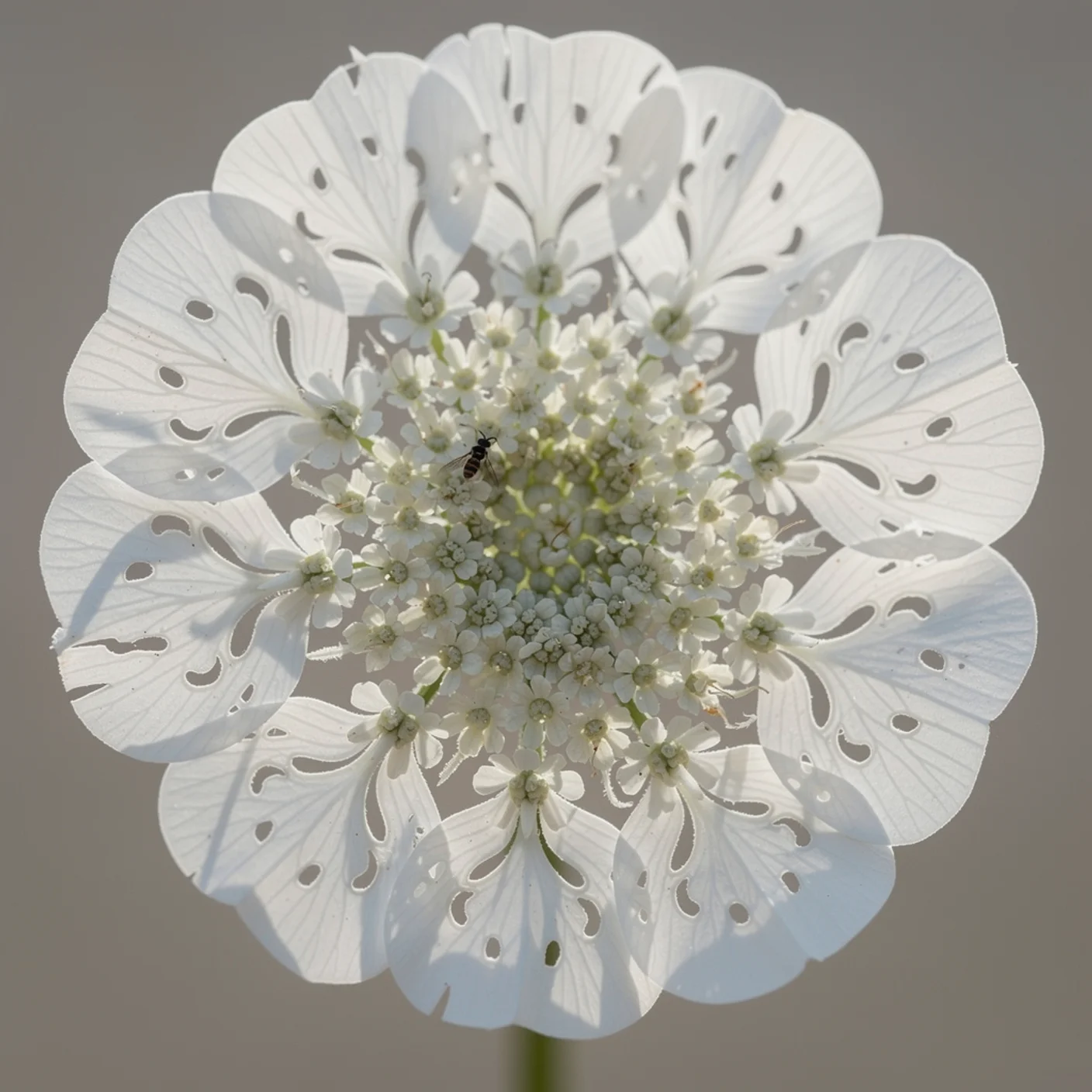
Orlaya
Grandiflora (White Lace Flower)
“The florist's secret weapon. Orlaya is cow parsley's elegant, better-dressed cousin, and it makes everything it touches look more beautiful.”
— ROSIE
Rosie's Take
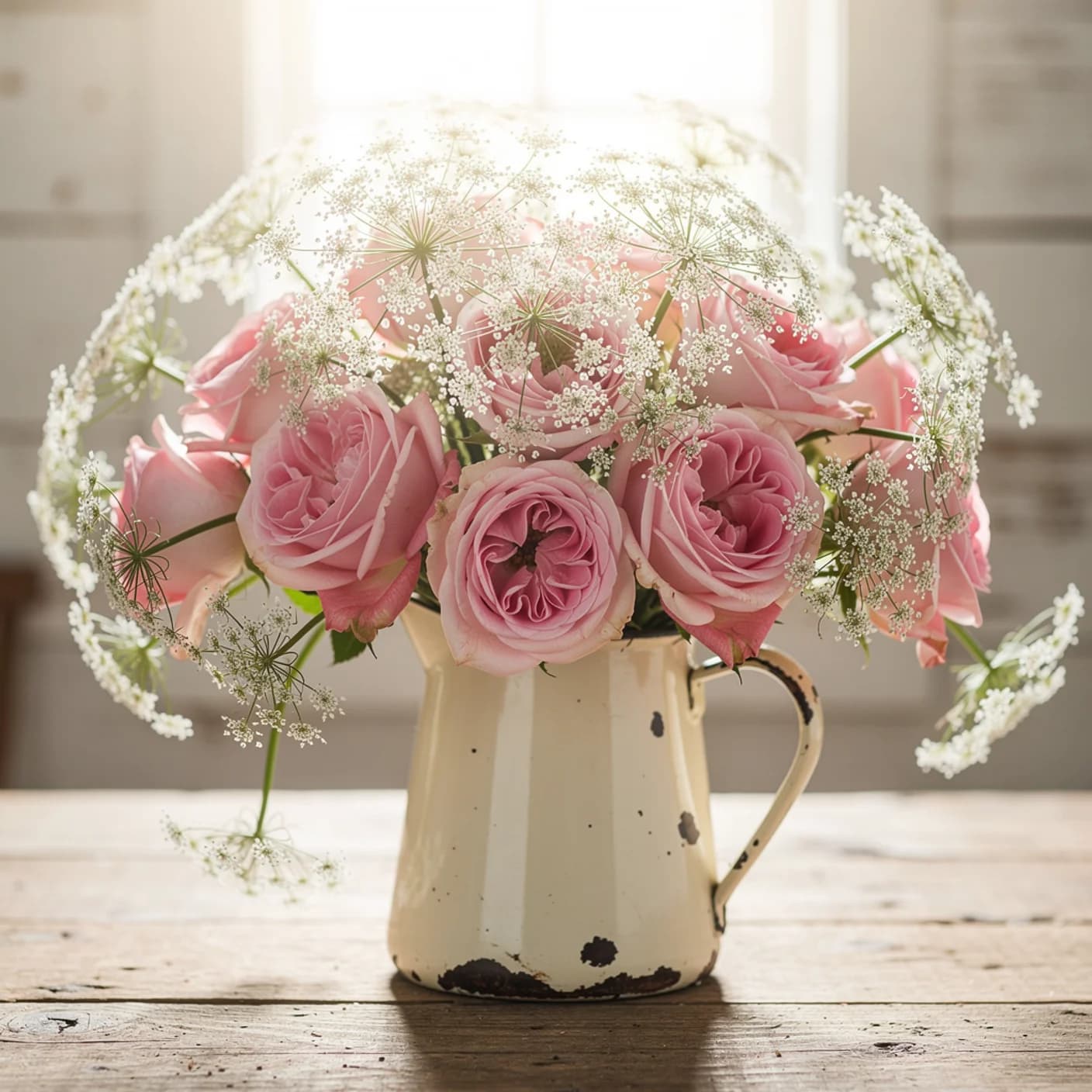
Orlaya grandiflora is the flower that every florist secretly wishes grew more freely. Those flat, lacy umbels of white flowers — like a more refined, more architectural version of cow parsley — have become the darling of the natural flower movement, and with good reason. Each flower head is a wide, flat disc of tiny flowers surrounded by a ring of large, deeply notched outer petals that look like they've been cut from the finest white paper with tiny scissors.
The effect in a border is transformative. Thread orlaya through roses and peonies and it ties everything together with that airy, transparent quality that makes a planting look both wild and designed simultaneously. It's the connective tissue of the summer garden — the thing that fills the spaces between other plants and makes the whole composition sing.
As a cut flower, it's exceptional. The flat heads float above an arrangement like white clouds, and they combine with almost anything — roses, sweet peas, peonies, dahlias, grasses. Florists charge a premium for it, which tells you something about its value. A handful of orlaya turns a competent arrangement into something that looks like it came from a magazine.
It's a hardy annual, which means you sow it in autumn where you want it to flower, and it sorts itself out over winter. The seedlings are fine and grass-like, easily mistaken for weeds, so mark where you've sown. Once established it self-seeds, and after a few years you'll have it appearing through the border in exactly the spots it looks best. The plant has better taste than most gardeners.
Where to Buy
If you want to try orlaya for yourself, here's where I'd point you:
We may earn a small commission from purchases made through our links, at no extra cost to you.
✿ From the folklore cabinet
Orlaya is named after Johann Orlay, an eighteenth-century Russian physician, which is about as unromantic an origin story as a flower can have. The plant is native to Mediterranean Europe, growing in dry grassland and rocky places. It was relatively obscure in British gardening until the natural flower movement brought it to wider attention in the 2010s. Now it's one of the most sought-after annuals among serious flower arrangers. From obscurity to fame in a decade — the horticultural equivalent of a late-blooming artist finally being recognised.