Fuchsia
Mrs Popple
“The hardy fuchsia that keeps going until frost. 'Mrs Popple' is pure, unapologetic joy for the shadiest corner of the garden.”
— ROSIE
Rosie's Take
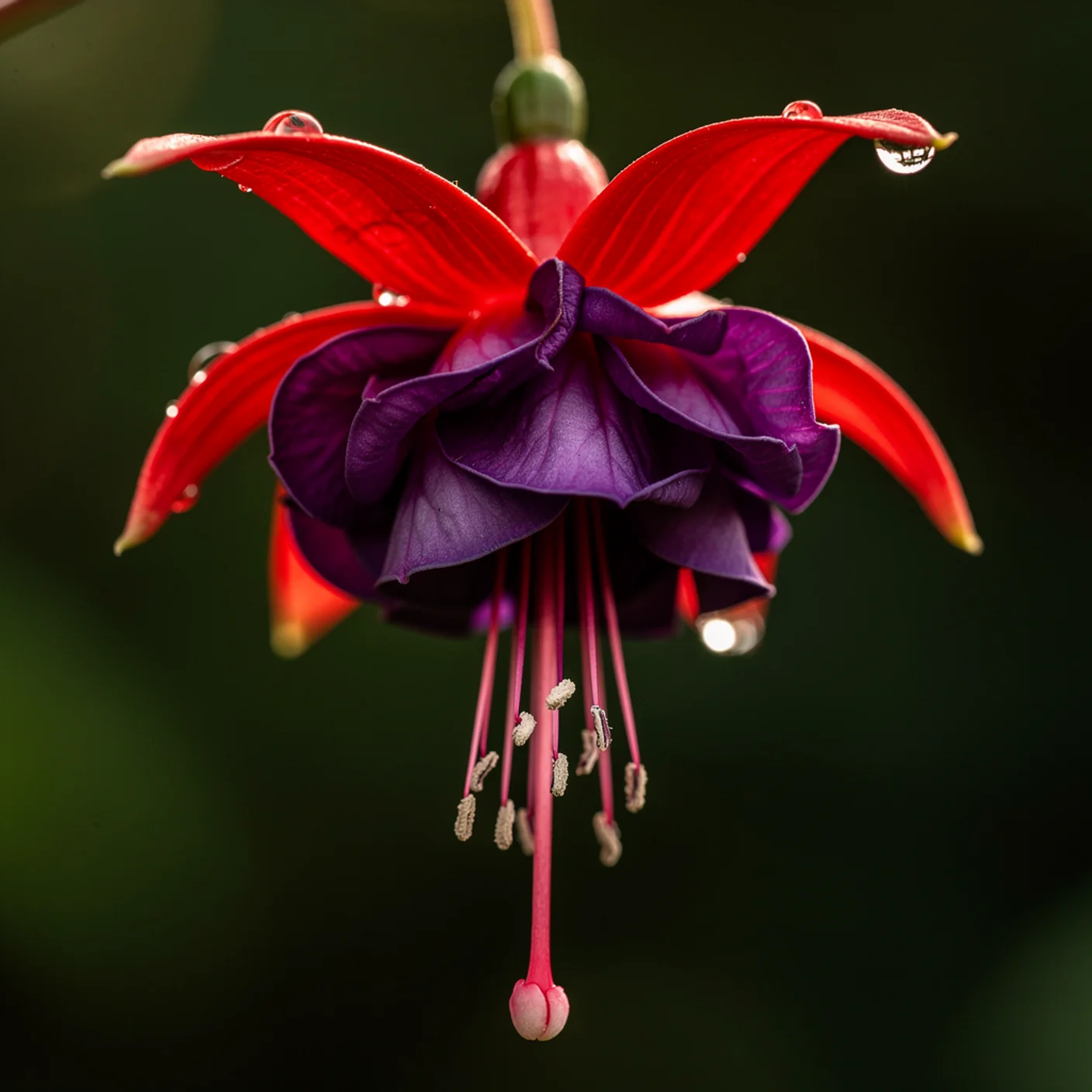
Fuchsias are so familiar that people stop seeing them, which is a shame because looked at properly — really properly — they're extraordinary. Those dangling, two-toned flowers are like tiny, elaborate lanterns. Scarlet sepals flare back to reveal a full skirt of deep violet-purple petals, with long stamens and a pistil hanging below like a pendulum. The engineering of it is mad. Nature showing off.
'Mrs Popple' is the hardy one — the fuchsia that survives British winters and comes back year after year, getting bigger and more floriferous with each season. Mine is about four feet tall now, an established shrub that produces hundreds of flowers from July right through to the first hard frost. Sometimes beyond. I've picked fuchsia flowers in November, which feels like getting away with something.
They're a gift for shady spots that need colour. North-facing borders, under trees, that awkward side passage — 'Mrs Popple' will flower there when most plants would sulk. The combination of scarlet and violet isn't subtle, but it's joyful. Absolutely, unapologetically joyful. In a world of muted, tasteful planting schemes, sometimes you need a plant that's simply having a good time.
I associate fuchsias with my grandmother's garden — she had them everywhere, in pots by the back door, along the path, in hanging baskets. 'Mrs Popple' is the one that connects me back to that. Hardy, generous, and making the garden feel alive right up until winter puts a stop to things.
Where to Buy
If you want to try fuchsia for yourself, here's where I'd point you:
We may earn a small commission from purchases made through our links, at no extra cost to you.
✿ From the folklore cabinet
Fuchsia is named after the sixteenth-century German botanist Leonhart Fuchs, and was first brought to Europe from South America. The identity of the mysterious 'Mrs Popple' has been lost to time — she was presumably a keen gardener in whose garden this variety was first noticed. Hardy fuchsias were enormously popular in Victorian and Edwardian cottage gardens, and in parts of western Ireland and Cornwall they've naturalised into the hedgerows, colouring entire lanes scarlet and purple through late summer.