Cornus
kousa var. chinensis (Chinese Dogwood)
“One of the most spectacular small trees for a British garden. Tiered white bracts in June, crimson autumn colour, edible fruits, and ornamental peeling bark. Needs acid soil but repays the effort tenfold.”
— ROSIE
Rosie's Take
The first time I saw Cornus kousa in full flower I thought someone had decorated a tree with white handkerchiefs. The effect is extraordinary — thousands of four-pointed, white bracts held horizontally along every branch, layer upon layer, creating a tiered canopy of white that lasts for three to four weeks in June. From a distance, the tree appears to be covered in enormous white flowers. Up close, you realise the 'petals' are bracts — modified leaves surrounding a small, tight, green button of true flowers at the centre. The deception is so convincing that most people never question it.
The bracts of the Chinese variety are larger and more pointed than the Japanese form, and they age gracefully — starting pure white, sometimes blushing pink at the edges as they mature, before turning papery and falling in a slow, elegant scatter. Standing under a cornus kousa in late June, with the bracts drifting down, is one of those garden moments that makes you go very quiet.
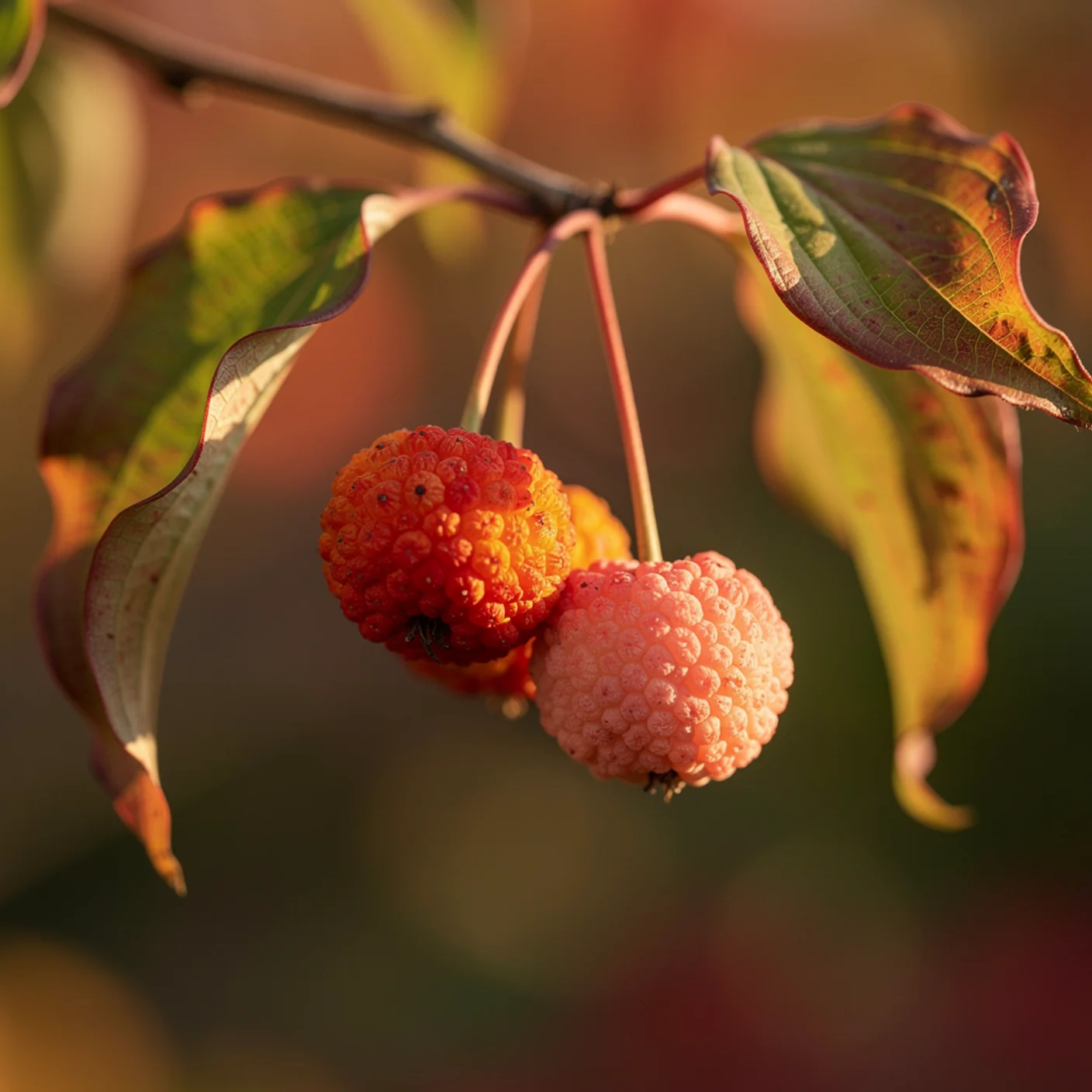
In autumn, the tree puts on a second performance. The foliage turns a deep, burnished crimson-red that rivals any Japanese maple, and strange, spherical, strawberry-like fruits hang from the branches — bumpy, red-orange, and surprisingly edible, though the flavour is unusual. Custard-like, tropical, not unpleasant.
The bark on mature specimens develops a beautiful mottled, peeling pattern in shades of grey, tan, and cinnamon — attractive in winter when the branches are bare. So you get white bracts in summer, crimson foliage and peculiar fruits in autumn, and ornamental bark in winter. A small tree that earns its place in every season. It needs acid to neutral soil and a position sheltered from cold winds, but give it what it wants and it will reward you with a spectacle that no photograph quite prepares you for.
Where to Buy
If you want to try cornus for yourself, here's where I'd point you:
We may earn a small commission from purchases made through our links, at no extra cost to you.
✿ From the folklore cabinet
Cornus kousa is native to Japan, Korea, and China, where it has been cultivated in temple gardens for centuries. The Japanese call it 'yamaboushi,' meaning 'mountain priest' — supposedly the four-pointed white bracts resemble the cowl worn by ascetic monks on mountain pilgrimages. In Chinese medicine, the fruits were used as a tonic, and in Korea the hard, dense wood was prized for making shuttles and tool handles. The species was introduced to Western gardens in 1875, but it took decades to become popular — overshadowed by its American cousin, Cornus florida. It's one of those plants that had to wait for gardeners to catch up with it. I think we're still catching up.