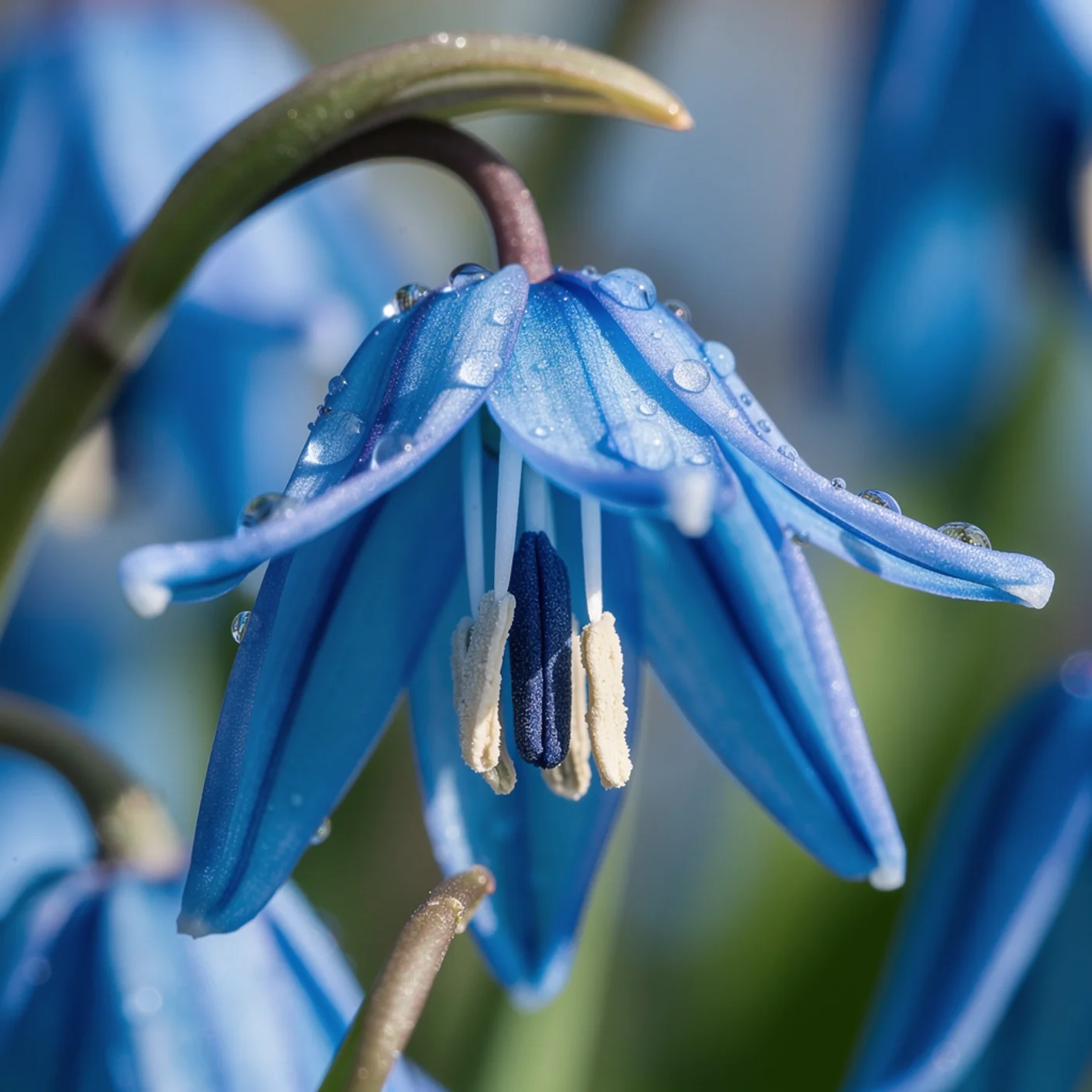
Scilla
siberica (Siberian Squill)
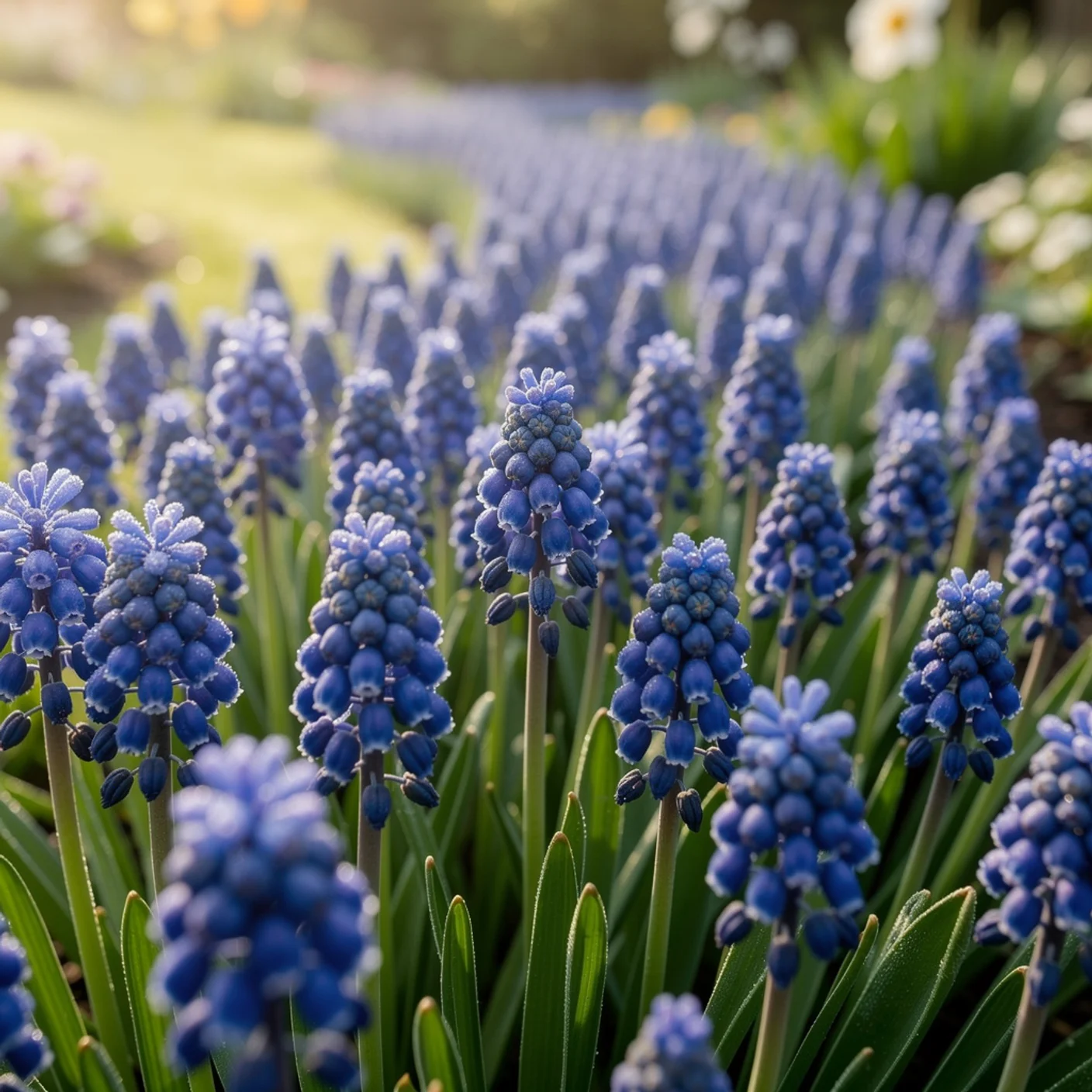
“Tiny nodding bells in electric blue that self-seed into spreading carpets under deciduous trees. Plant fifty bulbs and in three years you'll have something that looks like it's been there forever.”
— ROSIE
Rosie's Take
There's a blue that only exists in early spring — a vivid, electric, almost unnatural blue that appears at ground level in March and makes you wonder if someone's dropped something. Scilla siberica is that blue. Small, nodding, bell-shaped flowers, no more than four inches tall, in a colour so intense it seems to vibrate against the bare brown earth. It's the blue equivalent of a shout.
Each bulb produces just a handful of flowers on short, fleshy stems, with narrow, strap-shaped leaves that emerge at the same time. Individually, they're tiny — easy to miss, easy to step on. But scilla's genius is in numbers. Plant fifty bulbs under a deciduous tree and within three or four years you'll have a carpet of that impossible blue spreading across the ground. They self-seed with quiet determination, each year a little wider, a little denser, until you've got something that looks like a puddle of fallen sky.
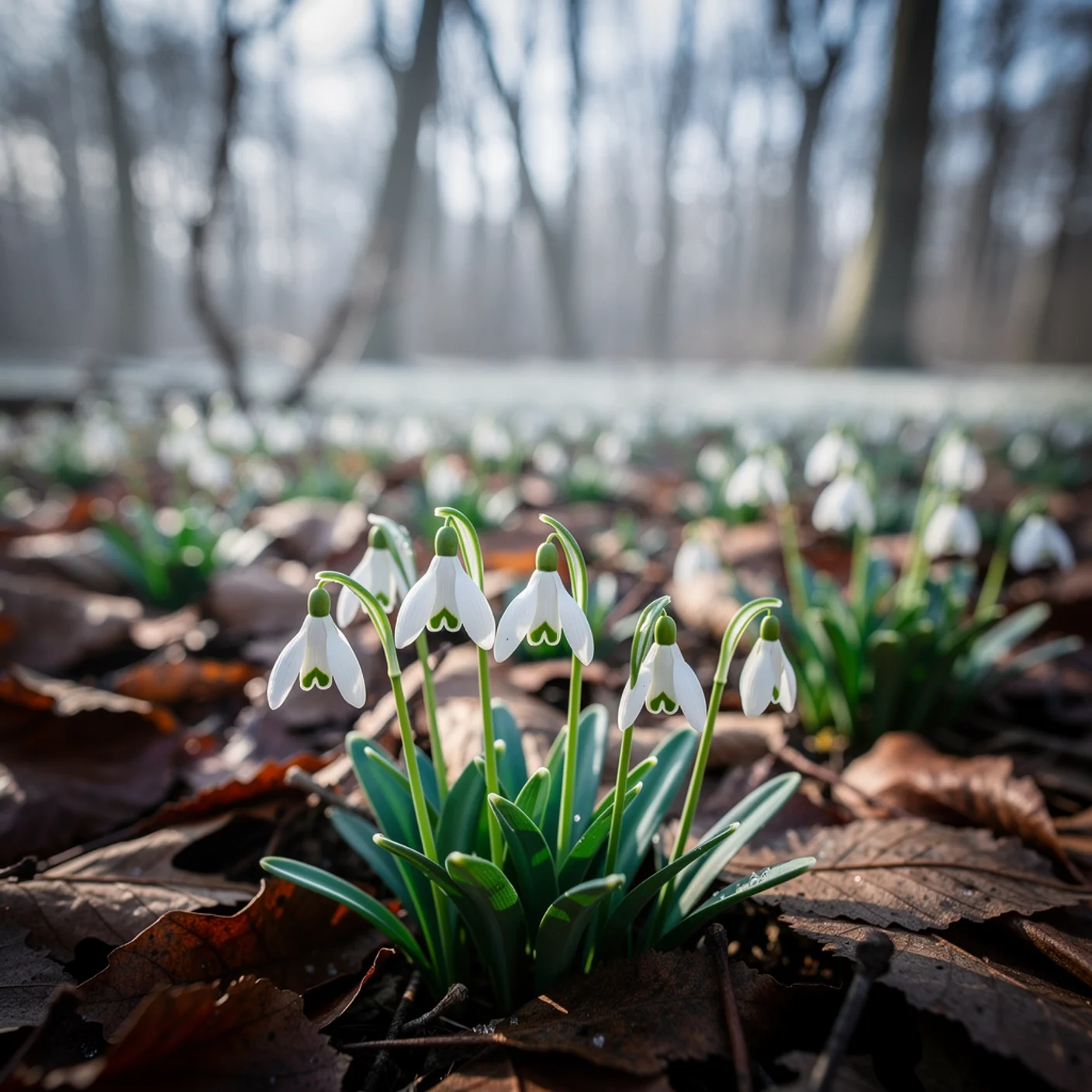
The timing is perfect. They flower after the snowdrops but before the daffodils, filling a gap in the spring calendar that would otherwise be empty. By the time the tree canopy unfurls and blocks the light, scilla has already set seed and retreated underground. The whole performance — emerge, flower, seed, vanish — takes about four weeks. It's the botanical equivalent of a perfectly timed cameo.
I plant mine under a silver birch where they've spread into a drift that stops visitors in their tracks every March. I don't feed them, don't water them, don't do anything except leave them alone. They're the cheapest, easiest, most reliable way I know to make a piece of garden look like it's been there for generations.
✿ From the folklore cabinet
Despite the name 'siberica,' this scilla's range extends far beyond Siberia — it grows wild across Russia, Turkey, and the Caucasus. It was one of the earliest spring bulbs to be cultivated in European gardens, arriving in the late eighteenth century. In its native habitats, it carpets forests and meadows in such numbers that entire hillsides turn blue. The genus name 'Scilla' comes from the Greek word for 'to harm' — several related species are toxic, containing cardiac glycosides. The Victorians loved scilla for underplanting in their woodland gardens, and many of those original plantings survive today, still spreading, still that same startling blue. A plant that outlasts the gardener who planted it. I find that rather comforting.