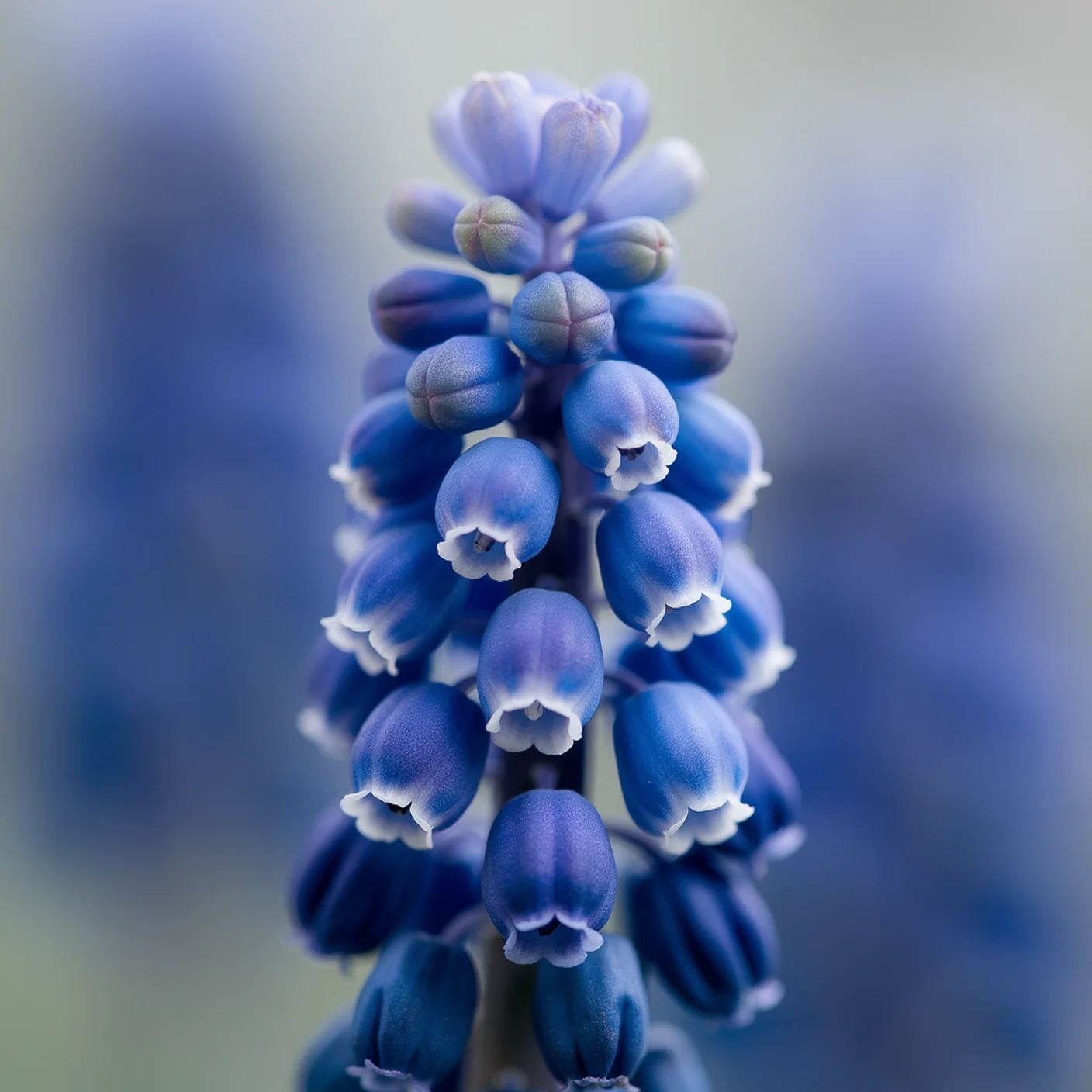
Grape Hyacinth
Armeniacum
“The cheapest thrill in spring gardening. Plant them once and you'll have rivers of cobalt blue every March.”
— ROSIE
Rosie's Take
Every spring, my muscari come back and I get this absurd little thrill, as though they might not have bothered this year. But they always do — these fat little spikes of the most intense cobalt blue, pushing up through the cold soil like they've somewhere important to be.
Grape hyacinths are one of the cheapest pleasures in gardening. A bag of bulbs costs almost nothing, you plant them in autumn, and by March you've got ribbons of blue running through the garden. They multiply freely, which means within a few years you'll have drifts of them — and drifts are really how muscari look their best.
The colour is extraordinary. It's not pale blue or sky blue — it's that deep, saturated cobalt that photographs beautifully and makes everything around it look more vivid. Planted under white narcissi or weaving through pale tulips, they're honestly show-stopping.
I pick tiny bunches for the kitchen windowsill in little egg cups and medicine bottles. They don't last long as a cut flower — maybe four or five days — but there's something about having that concentrated hit of blue indoors in March that lifts the whole room.
Where to Buy
If you want to try grape hyacinth for yourself, here's where I'd point you:
We may earn a small commission from purchases made through our links, at no extra cost to you.
✿ From the folklore cabinet
Muscari gets its name from the musk-like scent some species carry. In Turkish culture, they're associated with mourning and remembrance, but in British gardens they've always felt like the opposite — a cheerful, slightly cheeky announcement that spring is definitely happening.