Brunnera
Jack Frost
“Two plants in one — forget-me-not flowers in spring, extraordinary silver foliage all summer. The shade garden's most useful secret.”
— ROSIE
Rosie's Take
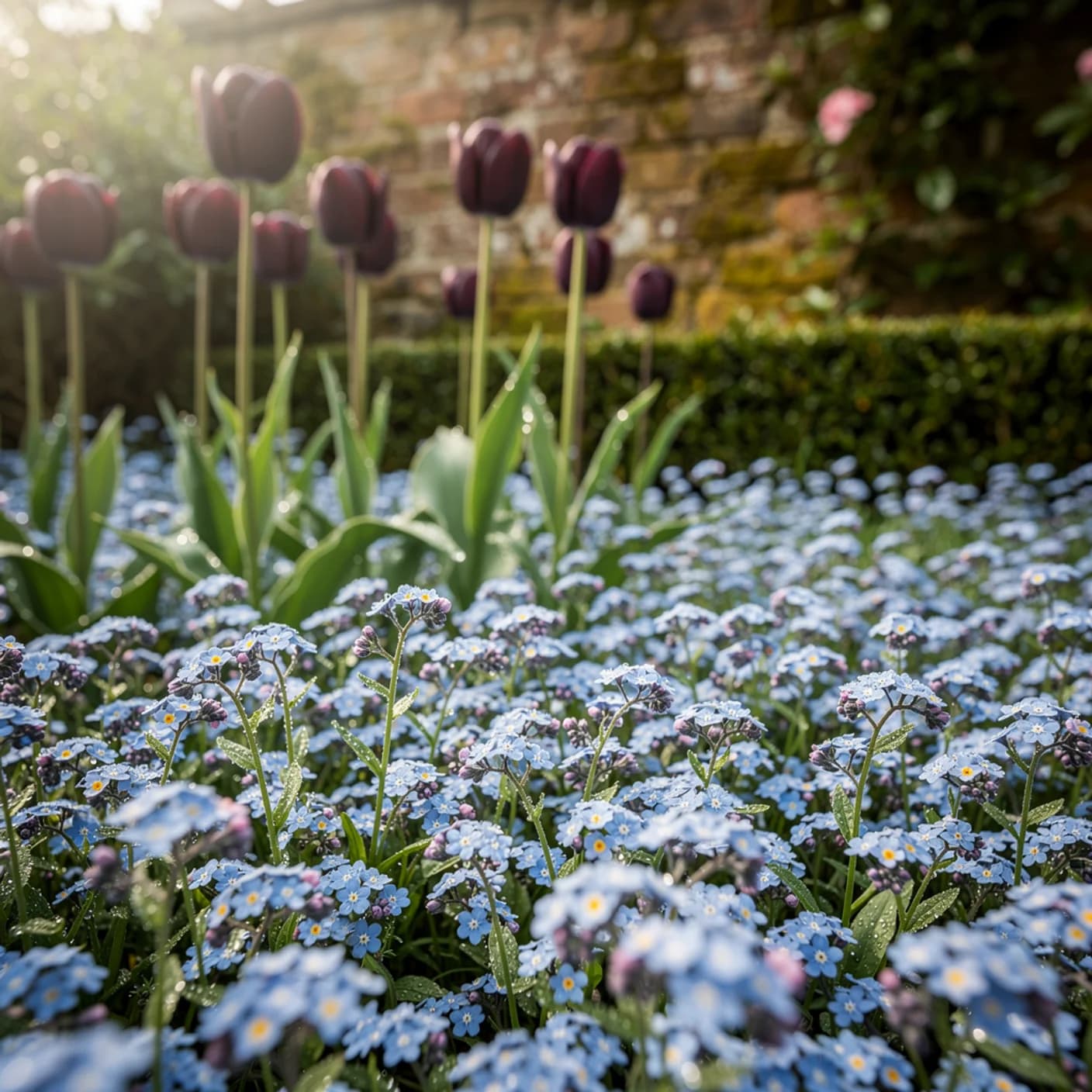
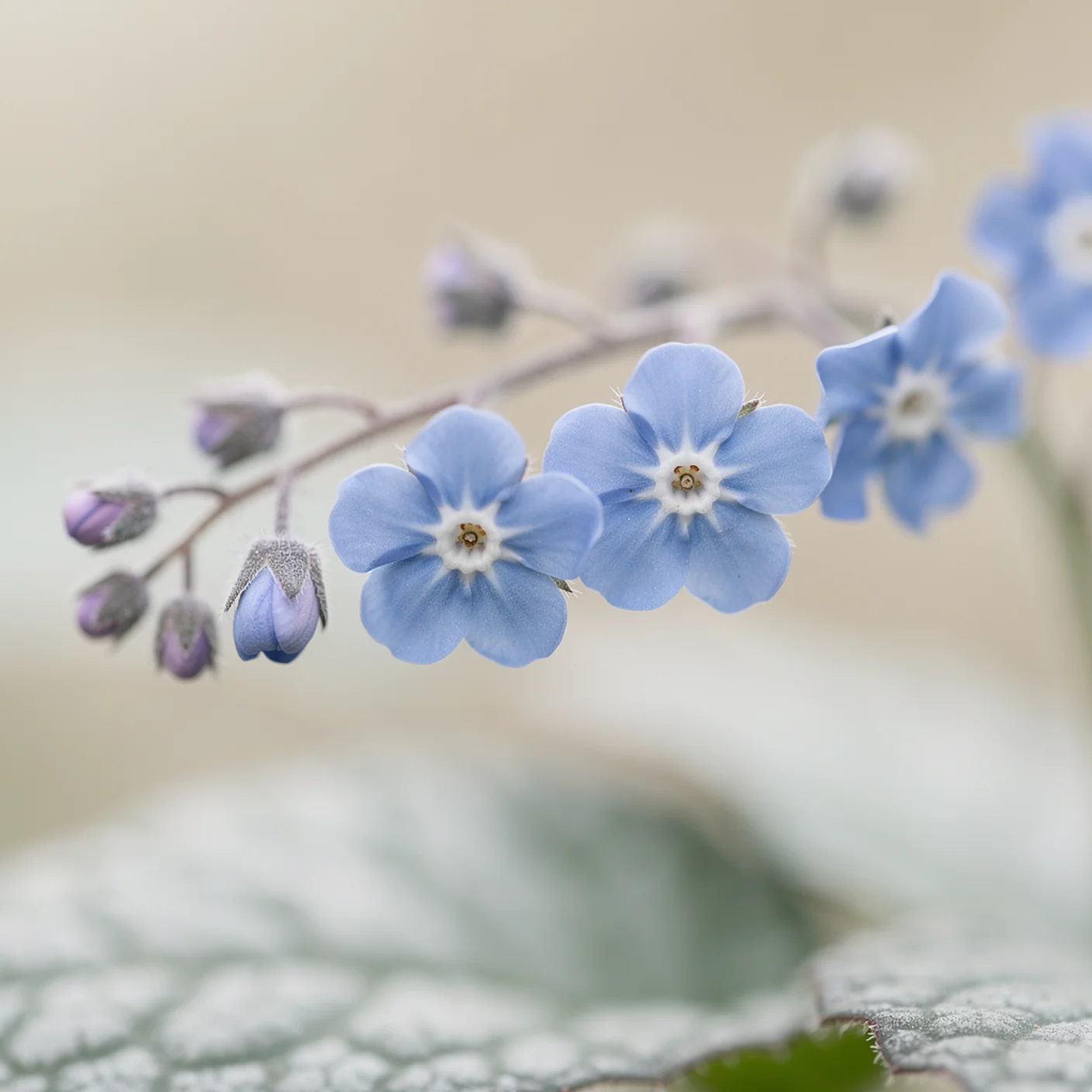
Brunnera 'Jack Frost' is two plants in one, and both of them are exceptional. In spring, it produces sprays of tiny, sky-blue flowers that look exactly like forget-me-nots — the same open, innocent, five-petalled face, the same clear blue. But unlike forget-me-nots, which are floppy annuals that vanish by June, brunnera is a proper perennial that comes back year after year and then gives you its second act: the foliage.
The leaves are the main event. Large, heart-shaped, and almost entirely silver — overlaid with a metallic, frosted sheen that makes them look as though they've been dipped in mercury. Fine green veining maps across the surface like a network of rivers seen from above. They catch the light in shade, which is where brunnera lives happiest, and they illuminate dark corners in a way that no other foliage plant can match.
I grow mine under a north-facing wall where almost nothing else would bother, and from April onwards those silver leaves light up the whole area. They're at their best through spring and summer, before the older leaves start to look a bit tired by autumn — but by then the garden has plenty else to look at.
The combination of blue spring flowers and silver summer foliage makes brunnera one of the most useful plants in the shade garden. It's doing two jobs simultaneously and excelling at both. Pair it with ferns and hellebores for a shade planting that looks effortlessly considered. It's one of those plants where someone looked at nature and decided to improve it, and actually succeeded.
Where to Buy
If you want to try brunnera for yourself, here's where I'd point you:
We may earn a small commission from purchases made through our links, at no extra cost to you.
✿ From the folklore cabinet
Brunnera is named after Samuel Brunner, a nineteenth-century Swiss botanist. The species macrophylla means 'large-leaved,' which is accurate enough. The plant is native to the woodlands of the Caucasus mountains, which explains its affinity for shade and cool conditions. 'Jack Frost' was discovered as a sport — a natural mutation — in a nursery in the United States in 2003, and within a few years it had become one of the most popular shade perennials in the world. Sometimes a single genetic accident changes everything.