Snake's Head Fritillary
Fritillaria meleagris
“One of Britain's most extraordinary wild flowers. Plant bulbs in damp grass and in a few springs you'll have your own colony of these improbable, chequered bells.”
— ROSIE
Rosie's Take
I remember the exact moment I first saw a snake's head fritillary. It was in a damp meadow in Oxfordshire, April, the grass still cold and dewy, and there among the ordinary green was this extraordinary thing — a nodding, bell-shaped flower with a chequered pattern on its petals that looked like someone had drawn it with a mathematical compass and a very fine pen.
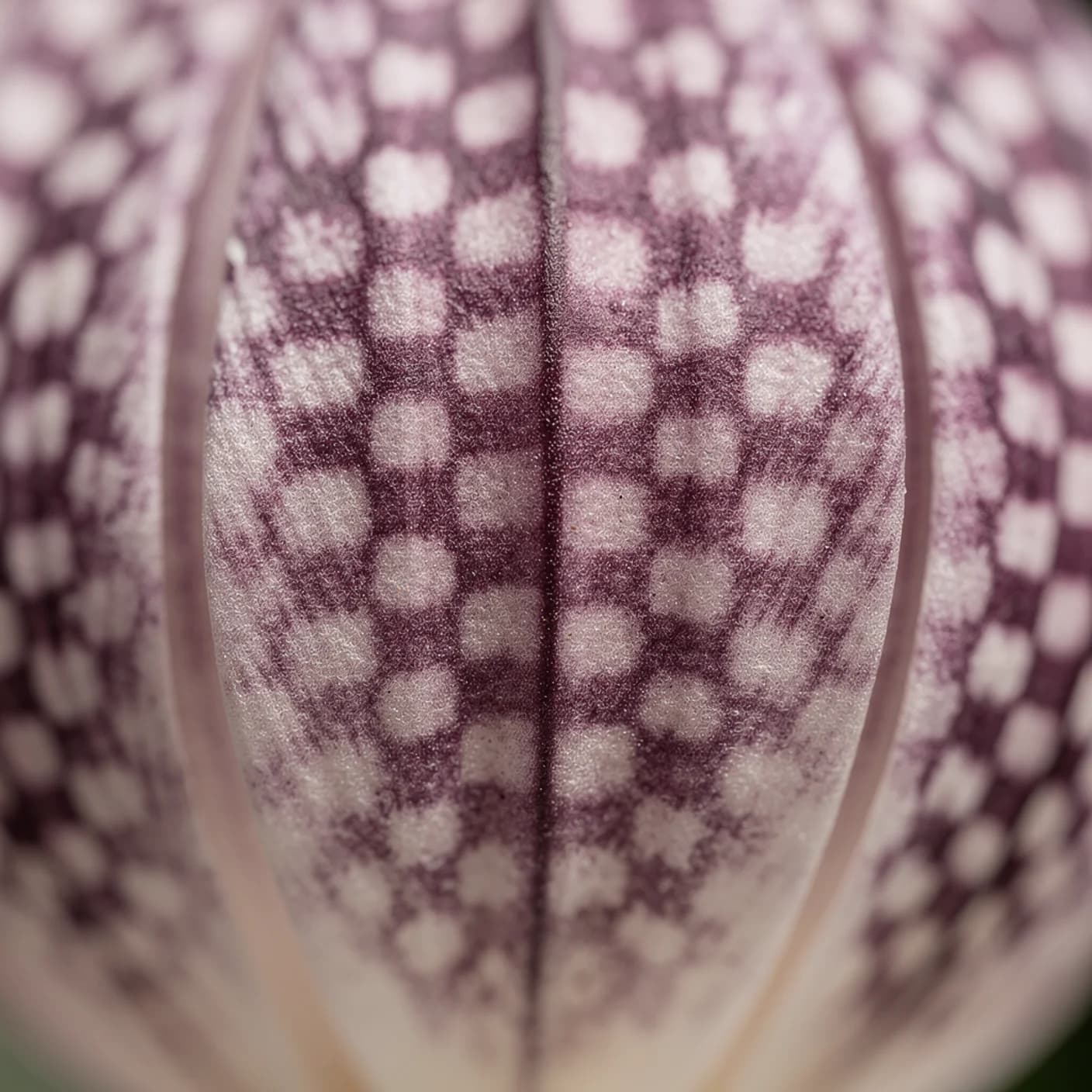
The chequering is what makes them impossible to forget. Tiny, precise squares of purple and white arranged in a grid pattern across each petal. I have no idea how nature does this. It looks deliberate, designed, like a tiny piece of textile art hanging from a wire-thin stem. The colour ranges from deep plum-purple through to a pure white form that's equally beautiful.
They grow wild in only a handful of British water meadows now — they've declined dramatically since Victorian times when their habitats were drained. Finding a wild colony feels like stumbling on a secret. Iffley Meadow in Oxford, Magdalen College meadow, a few spots in the Thames Valley — these are pilgrimage sites for anyone who loves flowers.
You can grow them in your own garden, though. They want damp, grassy conditions — naturalise them in a slightly boggy patch of lawn and leave them to it. Don't mow until the leaves have died back. In a few years, you'll have your own colony of these improbable little bells.
They're too small and precious to really be cut flowers. This is a flower you get down on your knees for, literally. Cup one gently in your hand, turn it upward, and look at that pattern. It's one of the most quietly extraordinary things growing in Britain.
Where to Buy
If you want to try snake's head fritillary for yourself, here's where I'd point you:
Also available as seeds — Fritillaria meleagris (Mixed) - Seeds →
We may earn a small commission from purchases made through our links, at no extra cost to you.
✿ From the folklore cabinet
The 'meleagris' in the name means 'guinea fowl' — a reference to the chequered pattern that resembles the bird's spotted feathers. In parts of England they're called 'leper lily' because the markings were said to resemble diseased skin. I prefer the folk name 'snake's head' — hold a pointed bud sideways and you'll see it immediately.