Penstemon
Garnet
“The autumn border's most reliable friend. 'Garnet' keeps going from July to November and that deep wine-red only gets better in low light.”
— ROSIE
Rosie's Take
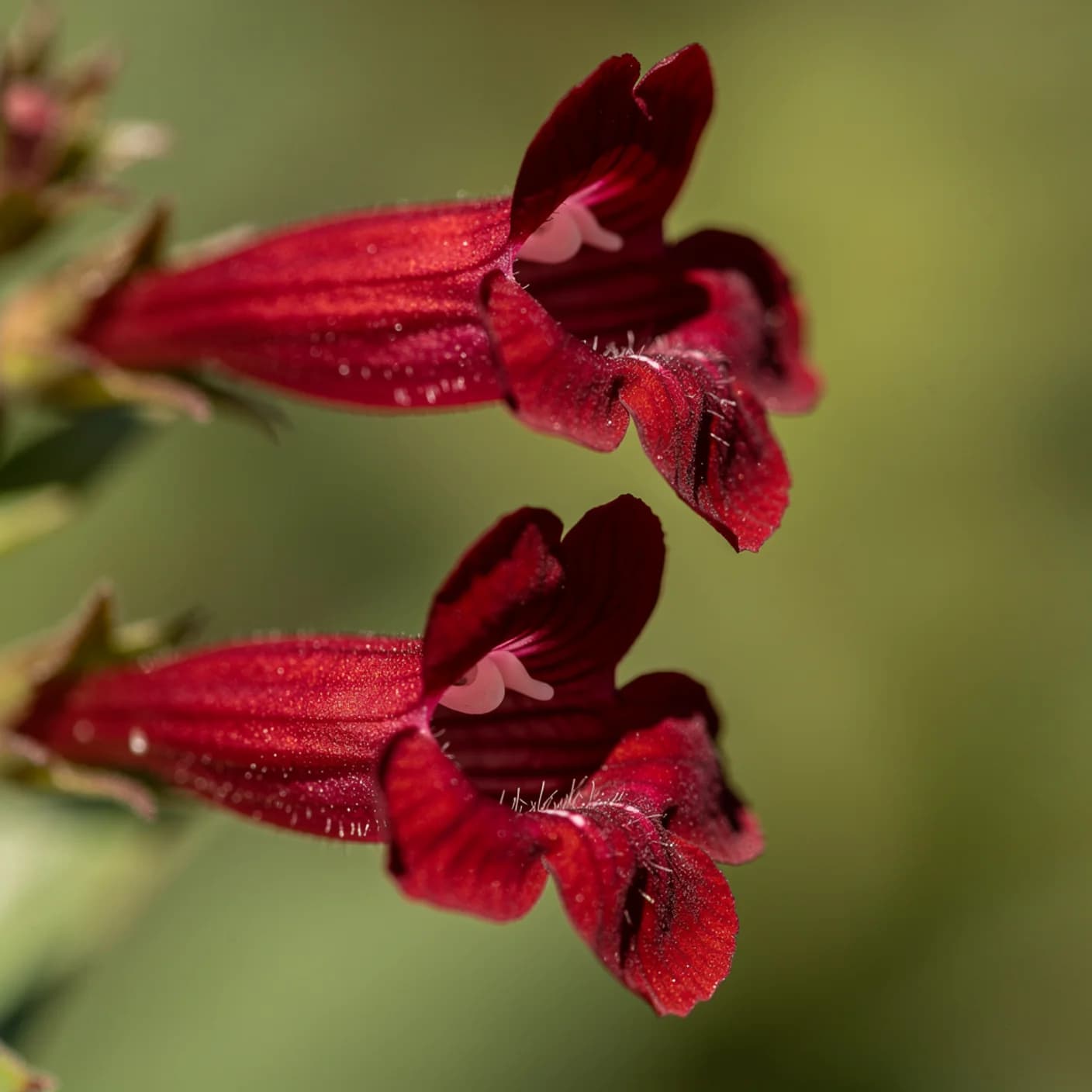
Penstemon is one of those plants that keeps the garden going long after most things have given up for the year. 'Garnet' is my favourite — those deep, wine-red tubular flowers that keep appearing on upright stems from July all the way through to the first serious frosts in November. That's five months of colour from a single plant, which is an extraordinary return.
The colour is rich and saturated — a true deep garnet that glows in the low autumn light. Each flower is a neat little tube that opens into a two-lipped face, and they're arranged in loose spikes that have a natural, unforced elegance. Bumblebees love them — they're exactly the right shape for a bee to climb inside, and on warm autumn afternoons you can hear them humming their way up each spike.
I grow a whole row of them along the edge of a border, and by October they're the main event — everything around them has retired for the year, and there's 'Garnet,' still producing fresh flowers like it hasn't noticed the season changing.
They're not fully hardy everywhere — a hard winter can kill them — so I take cuttings in September as insurance. It's a five-minute job and the cuttings root ridiculously easily in a glass of water on the windowsill. A small investment for a plant that gives you colour when you need it most.
Where to Buy
If you want to try penstemon for yourself, here's where I'd point you:
We may earn a small commission from purchases made through our links, at no extra cost to you.
✿ From the folklore cabinet
Penstemon comes from the Greek for 'five stamens' — though the fifth stamen is sterile and modified into a hairy filament, which gave rise to the common name 'beardtongue.' They're almost all North American natives, and 'Garnet' (officially 'Andenken an Friedrich Hahn') is a hybrid that was raised in Germany. Despite those international origins, it's become a cottage garden staple in Britain.