Teasel
Dipsacus fullonum
“A wildflower with the architecture of a sculpture. Grow them for the goldfinches, dry them for winter, and stop apologising for weeds.”
— ROSIE
Rosie's Take
Teasels are the flower I'd use to convince someone that wildflowers can be architectural. Those symmetrical, egg-shaped seed heads on tall, stiff, spiny stems — they look like something designed in a studio, not something growing in a ditch. And when you look closely at a flowering teasel in July, the tiny purple florets open in a band around the middle of the head and work their way simultaneously upward and downward, like a tiny, very organised firework. It's one of the most peculiar and satisfying things in the plant world.
I grow them deliberately in my garden, which gets mixed reactions. 'You're growing weeds?' Yes. Very good weeds. A clump of teasels at the back of a border gives structure and height that persists right through winter, long after everything else has collapsed. The dead stems and seed heads are sculptural against a winter sky, and in frost they're extraordinary — every spine outlined in white.
Goldfinches adore them. Watching goldfinches work a teasel head, clinging sideways with that acrobatic grip while they extract seeds — that's worth more than any flower I've ever bought. I leave the dead stems standing until spring specifically for the birds.
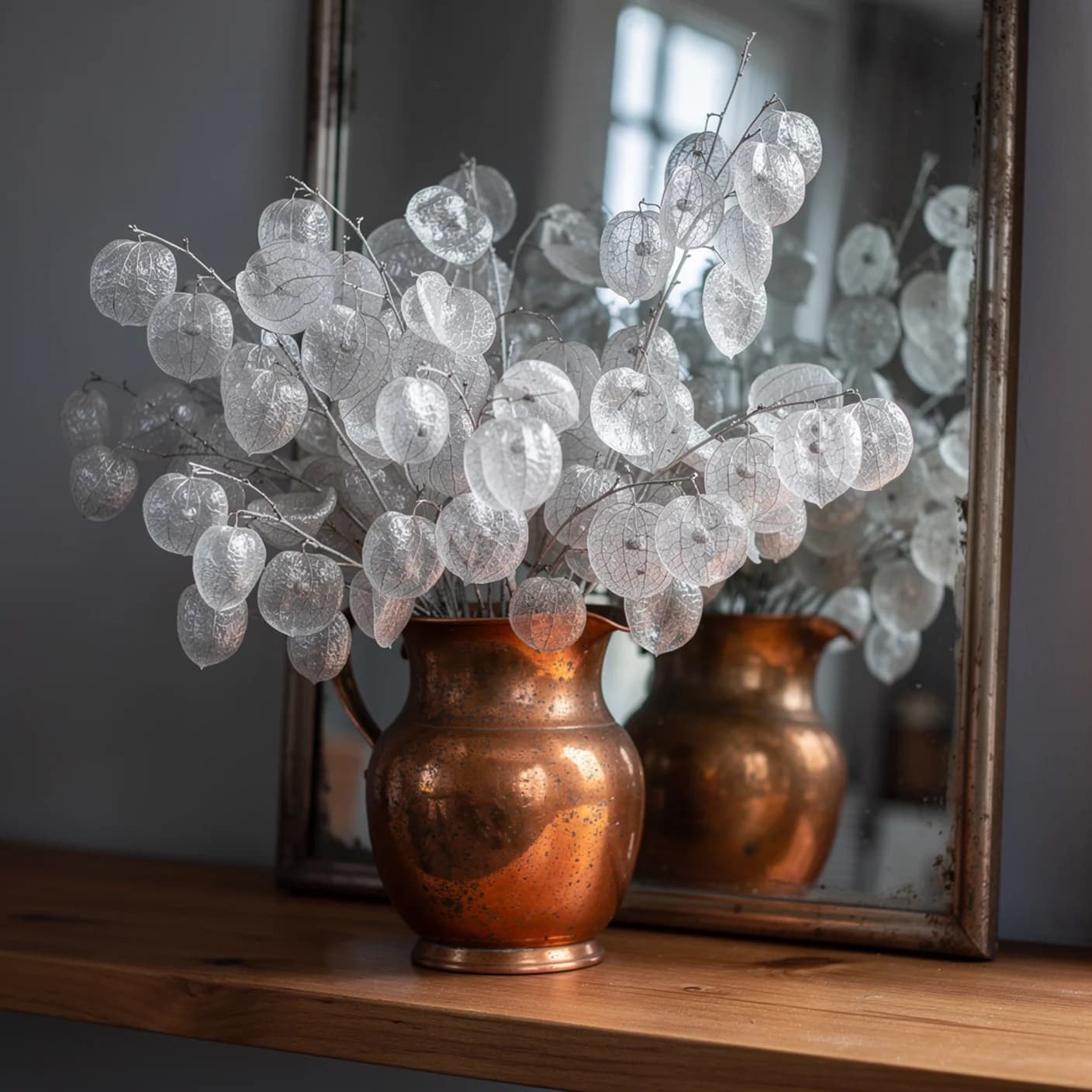
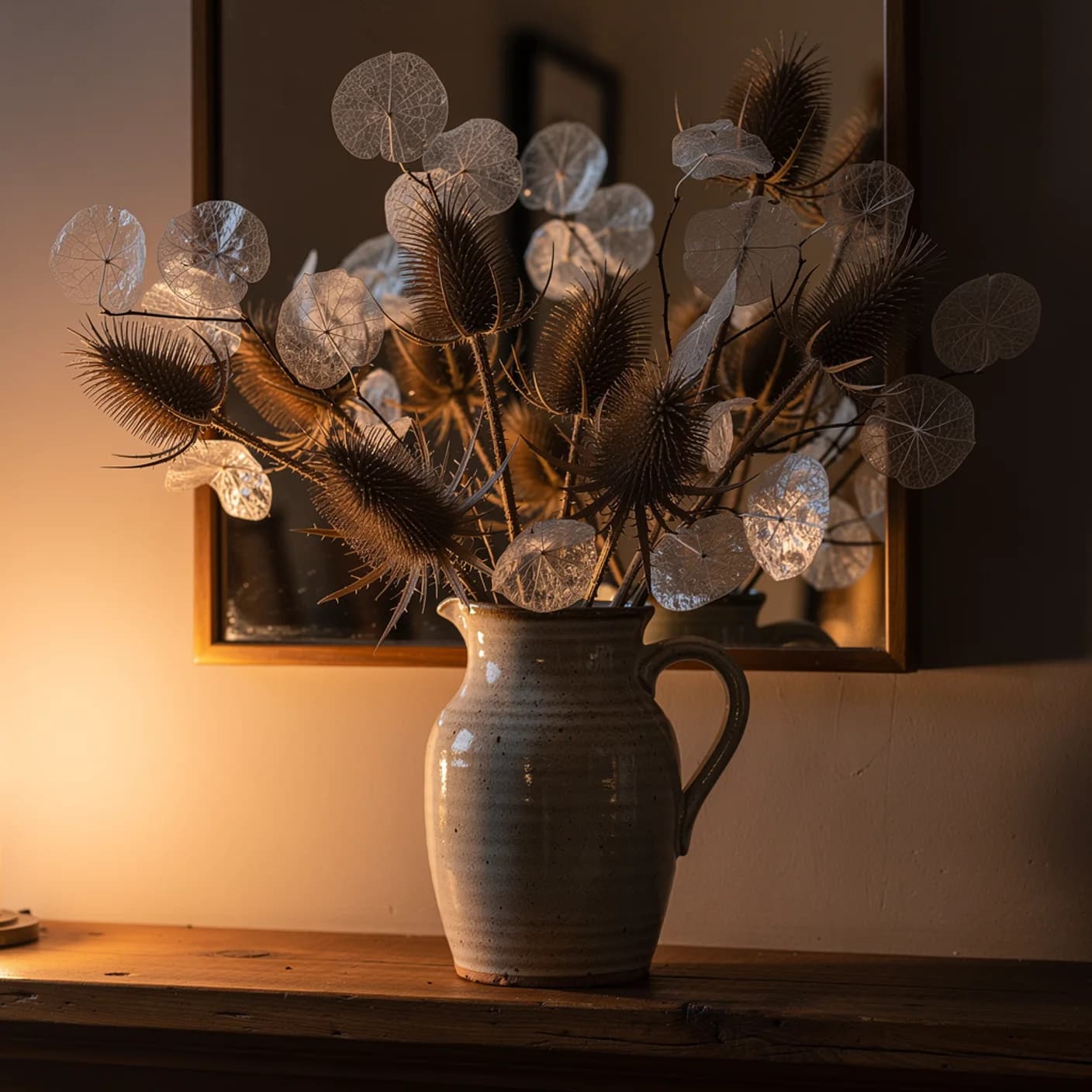
Dried teasel heads are magnificent in winter arrangements. They hold their shape perfectly, they last for years, and they have a graphic, almost brutal beauty that contrasts brilliantly with softer dried flowers. A jug of teasels and honesty seed heads is my November mantlepiece standby. Costs nothing. Lasts all winter. Looks like someone who knows what they're about.
Where to Buy
If you want to try teasel for yourself, here's where I'd point you:
We may earn a small commission from purchases made through our links, at no extra cost to you.
✿ From the folklore cabinet
The name 'fullonum' means 'of the fullers' — the related species Dipsacus sativus was cultivated for centuries to raise the nap on woollen cloth, those spiny heads being the perfect tool for the job. No machine has ever quite replicated what a teasel head does to wool. 'Dipsacus' comes from the Greek for thirst — the leaves join around the stem to form a cup that collects rainwater, which was believed to have healing properties, particularly for the eyes. Country children used to drink from teasel cups, which feels like exactly the kind of thing Rosie would have done.