Actaea
Simplex 'Brunette' (Bugbane)
“The shade garden's most dramatic autumn moment. 'Brunette' broods beautifully for months and then produces scented white spires when you least expect it.”
— ROSIE
Rosie's Take
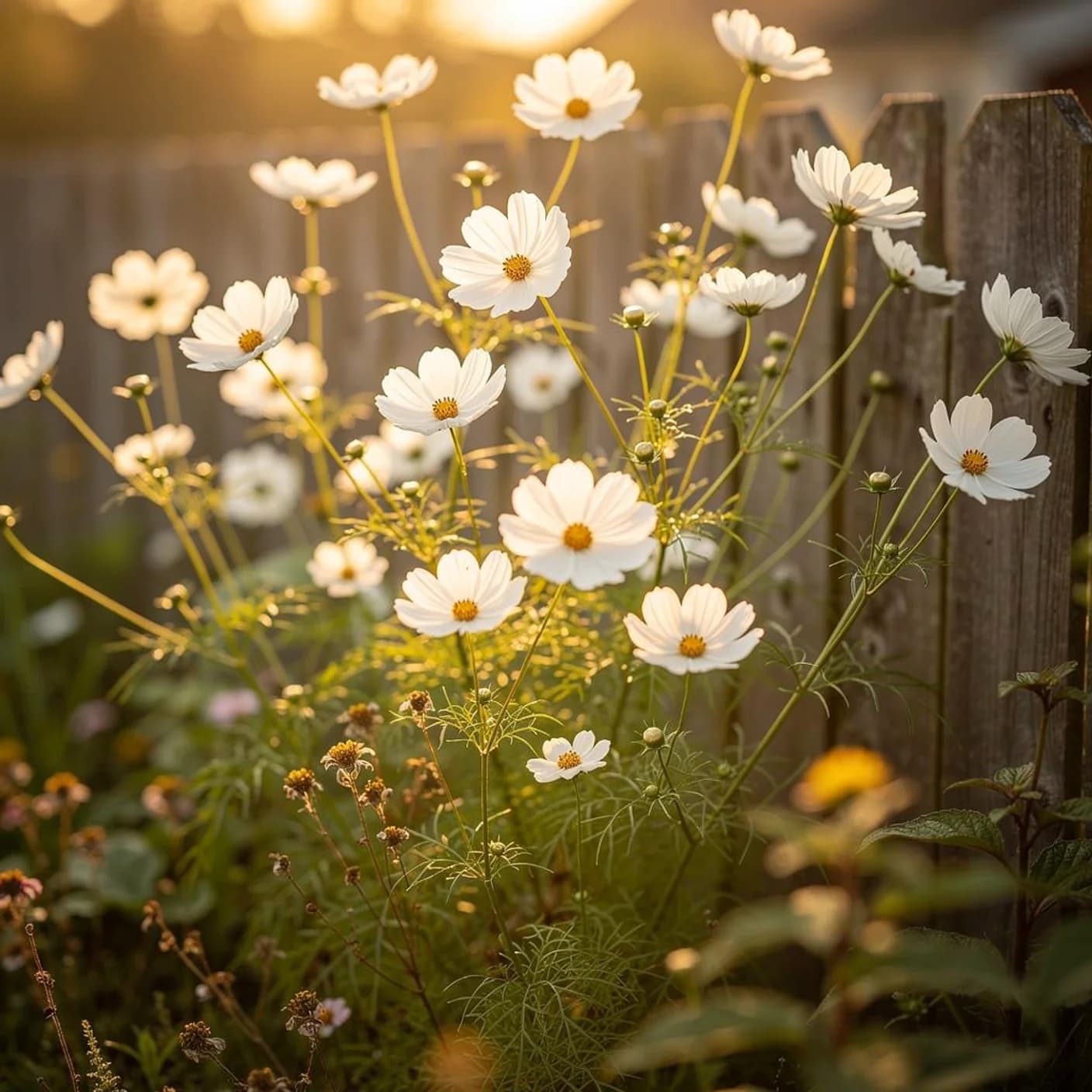
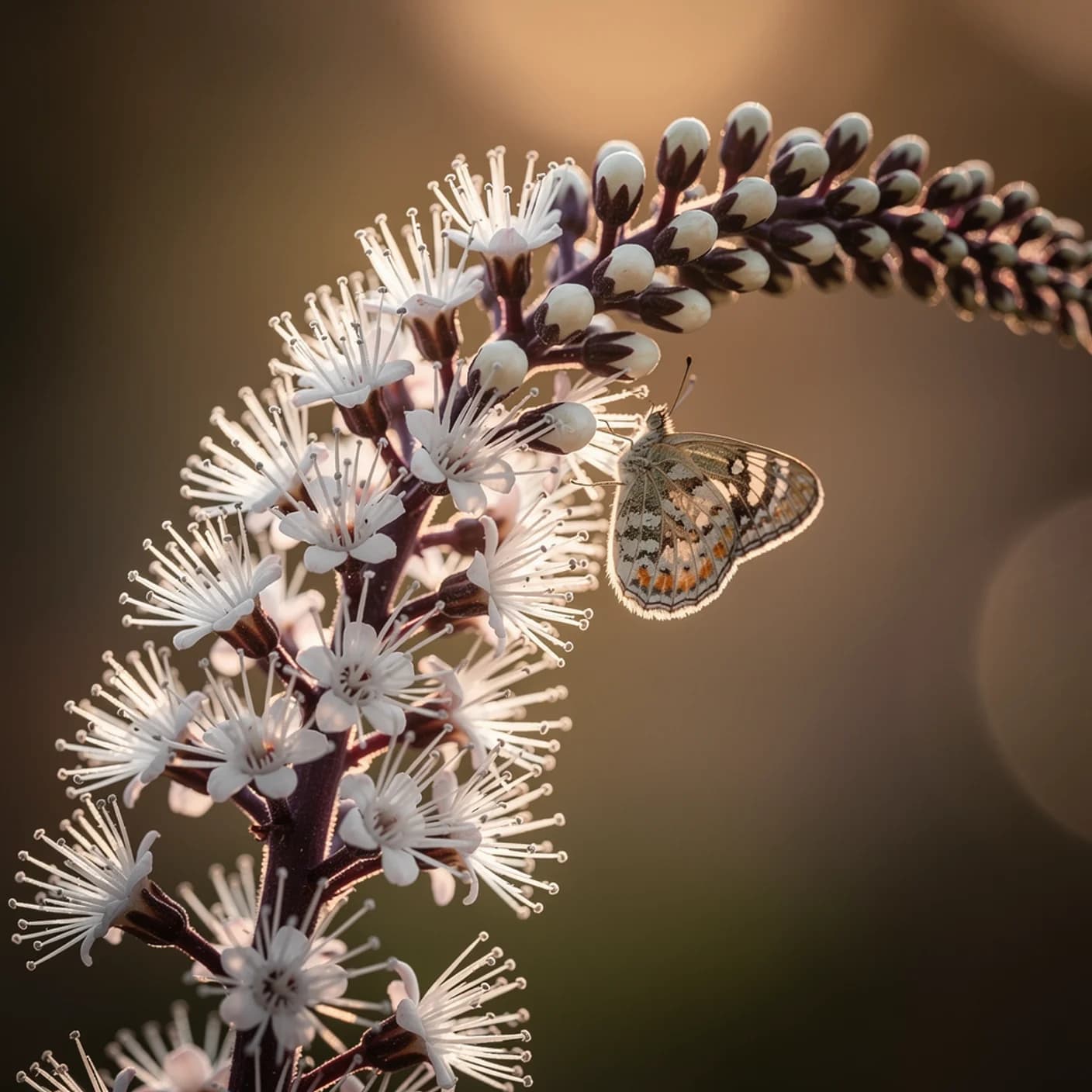
Actaea 'Brunette' is the plant I use to prove that shade gardens can be dramatic. Those dark, beetroot-purple, finely divided leaves are handsome from the moment they emerge in spring, providing months of moody, brooding foliage that makes everything around it look more interesting. But the real performance comes in September and October, when tall, arching spikes of tiny white flowers rise above the dark leaves — like bottle-brushes dipped in cream, the contrast almost violent in its intensity.
The scent is unexpected. Those delicate white spikes carry a sweet, heady, slightly musky fragrance that fills the autumn air in a way that feels improbable. You don't expect a shade plant flowering in October to be perfumed, but actaea doesn't read the rules. The scent is strongest on still, mild autumn days, and it draws in the last butterflies of the season.
I grow mine at the edge of a woodland area, where the dark foliage emerges from a carpet of ferns and the flower spikes catch the low autumn sun. The whole composition — dark leaves, white flowers, green ferns, slanting October light — is one of the most sophisticated things my garden does, and I had very little to do with it.
The old common name 'bugbane' comes from the belief that the pungent roots repelled insects. The newer name, used in North America, is 'snakeroot.' Neither does justice to a plant this elegant. I prefer 'Brunette' — it feels like a name someone gave to a specific, beautiful, slightly mysterious individual, which is exactly what this plant is.
✿ From the folklore cabinet
Actaea simplex was previously classified as Cimicifuga — 'bug-repeller' in Latin — because the roots were used to drive away insects. The plant is native to eastern Russia, Japan, and northern China, where various species have been used in traditional medicine for centuries. A related North American species, Actaea racemosa (black cohosh), is still widely used as a herbal remedy. 'Brunette' was selected for its exceptionally dark foliage by the Dutch nursery trade and has become one of the most awarded shade perennials of the last twenty years — proof that the best plants are often the most patient.