Kirengeshoma
Kirengeshoma palmata
“The cognoscenti's autumn treasure. Waxy yellow bells on dark stems in shady corners — a woodland plant of extraordinary poise that most gardens have never heard of.”
— ROSIE
Rosie's Take
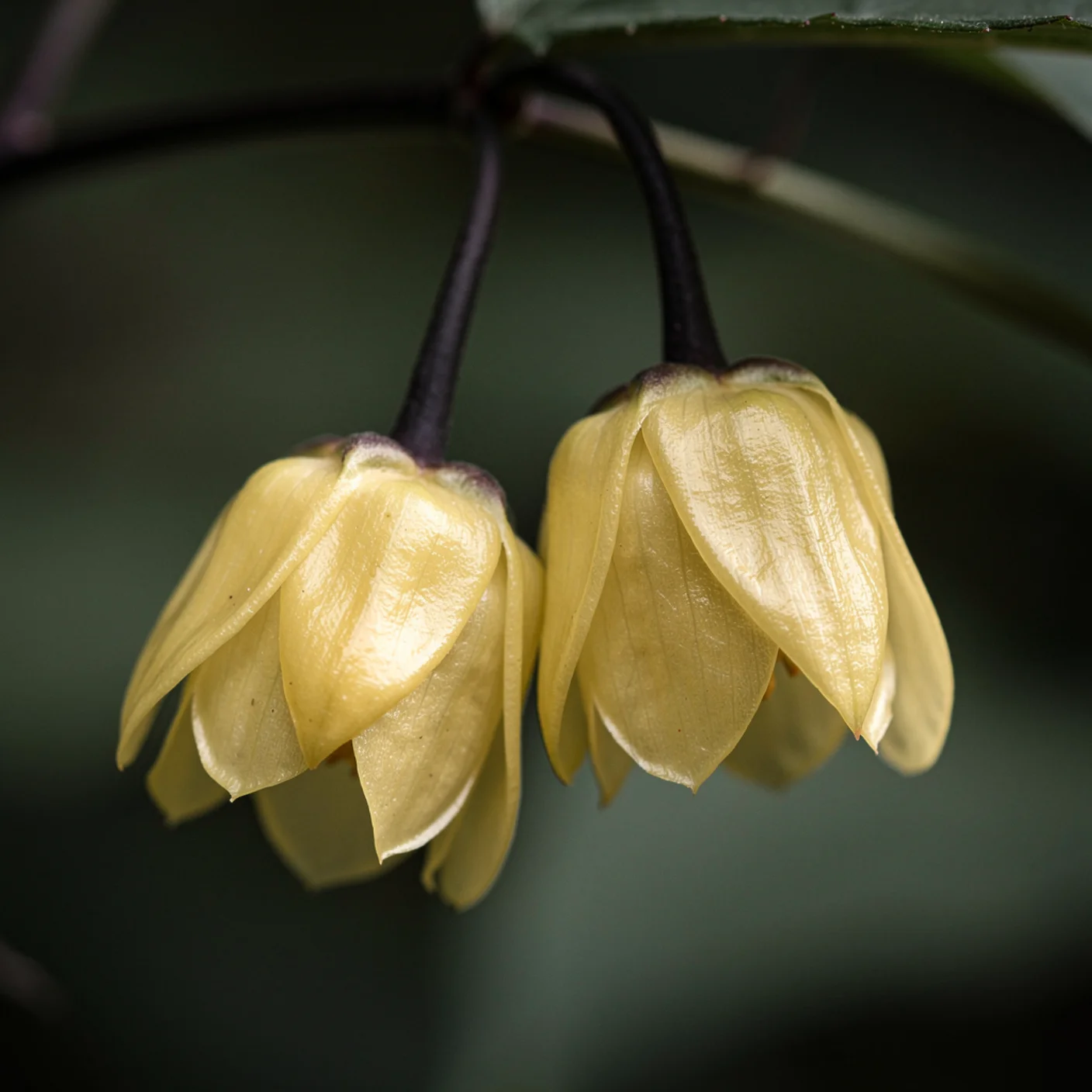
This is one of those plants that makes you feel like you've discovered a secret. Kirengeshoma palmata is a Japanese woodland perennial that flowers in September and October — which is unusual enough — with soft, butter-yellow, waxy bells that hang in loose clusters from dark, almost black stems. The combination is extraordinary. Yellow flowers on near-black stems, above beautiful, maple-shaped leaves. It looks like something from a fairy tale, or a particularly good botanical illustration.
The flowers have a thickness to them — they're waxy and substantial, more like shuttlecocks than bells, and they never fully open, which gives them a perpetual sense of restraint. As if the flower is keeping something back. I find that incredibly appealing. In a season when everything else is either blowsy or fading, kirengeshoma is composed, deliberate, and quietly magnificent.
It wants shade and moisture — the conditions of a Japanese mountain woodland, which translates in Britain to a sheltered spot under deciduous trees with decent soil that doesn't dry out. Mine grows at the base of a north-facing wall with a mulch of leaf mould, and it's one of the most reliably beautiful things in the garden each autumn. The leaves alone are worth growing it for — large, palmate, a fresh bright green that holds well into October.
It's not a common plant. Most garden centres won't stock it, and you'll need to seek it out from specialist nurseries. But that's part of the pleasure. The best gardens are full of plants that required a small effort to find. Kirengeshoma rewards that effort every September with those impossible yellow bells on their dark stems, nodding in the shade like quiet lanterns.
✿ From the folklore cabinet
Kirengeshoma palmata was first described by the Japanese botanist Tomitaro Makino in 1890, and the genus name comes from the Japanese 'ki-renge-shoma' — meaning yellow lotus-like plant, though it's not related to lotus at all. It's native to the mountain forests of Japan and Korea, growing in the understory of deciduous woodland. In its native habitat it's increasingly rare due to deer grazing — a problem British gardeners can sympathise with. It was introduced to Western gardens by the great plant collector Ernest Wilson in the early 1900s and has remained a connoisseur's plant ever since. Some things resist becoming fashionable, and are better for it.