Nerine
Bowdenii
“Plant them at the base of a sunny wall and forget about them. In October they'll repay your neglect with the pinkest, sparkliest thing the garden year offers.”
— ROSIE
Rosie's Take
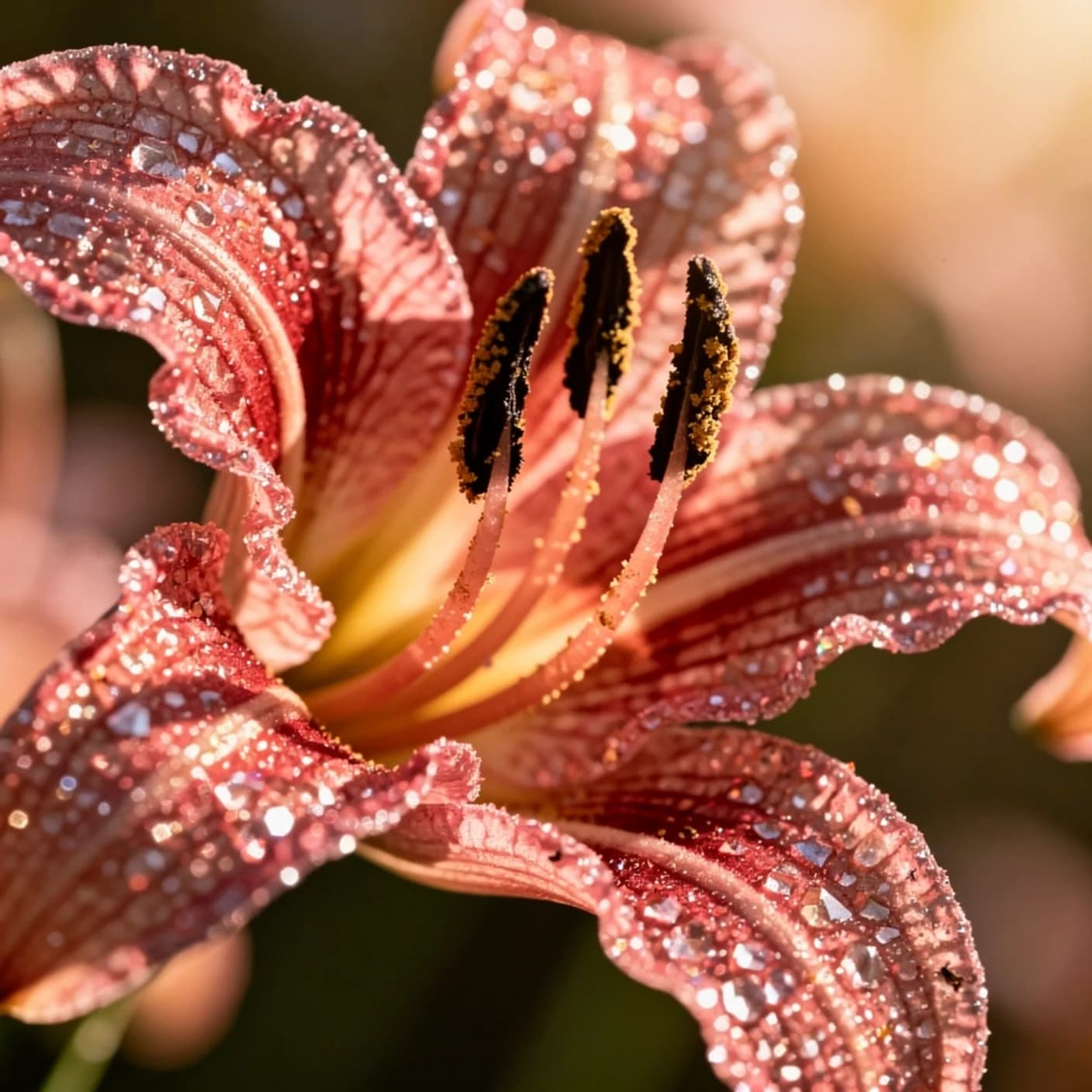
October is not a month you expect to find a flower this pink, this delicate, and this utterly determined to dazzle. Nerine bowdenii is the autumn surprise I wait for every year — clusters of lily-like flowers in the most extraordinary shade of sugar-pink, each petal curled backward and catching the low autumn light with a crystalline sparkle that's almost unreal.
That sparkle is the thing that gets people. The petal surface has a glittery, diamond-dust quality that's visible even in photographs but extraordinary in real life. On a sunny October afternoon, when the light is low and golden, the flowers literally twinkle. I've had people ask if they're real. They're real, and they're planted at the base of my south-facing wall where they bake all summer and then perform this autumn miracle.
They're South African bulbs, which means they want heat and good drainage. A spot at the base of a sunny wall is ideal — the stored warmth of the bricks helps them along. Plant them with the nose of the bulb above the soil, don't feed them too richly, and resist the urge to fuss. They like being slightly starved and slightly crowded. Another plant that thrives on benign neglect.
The flowers appear on bare stems before the leaves, which gives them a surreal quality — these crystalline pink explosions rising from nothing, like fireworks in slow motion.
They're not a traditional cut flower, but they last extraordinarily well — ten days, sometimes more. A small vase of nerines on the kitchen table in October is a genuine mood-shifter. Just when you think the garden has finished surprising you, here she comes.
Where to Buy
If you want to try nerine for yourself, here's where I'd point you:
We may earn a small commission from purchases made through our links, at no extra cost to you.
✿ From the folklore cabinet
Nerine bowdenii is named after Athelstan Cornish-Bowden, who sent bulbs from South Africa to his mother in England in the early 1900s. I love that — a son sending his mum flowers from across the world. The bulbs naturalised in her Devon garden and started the British love affair with nerines. Thanks, Athelstan.