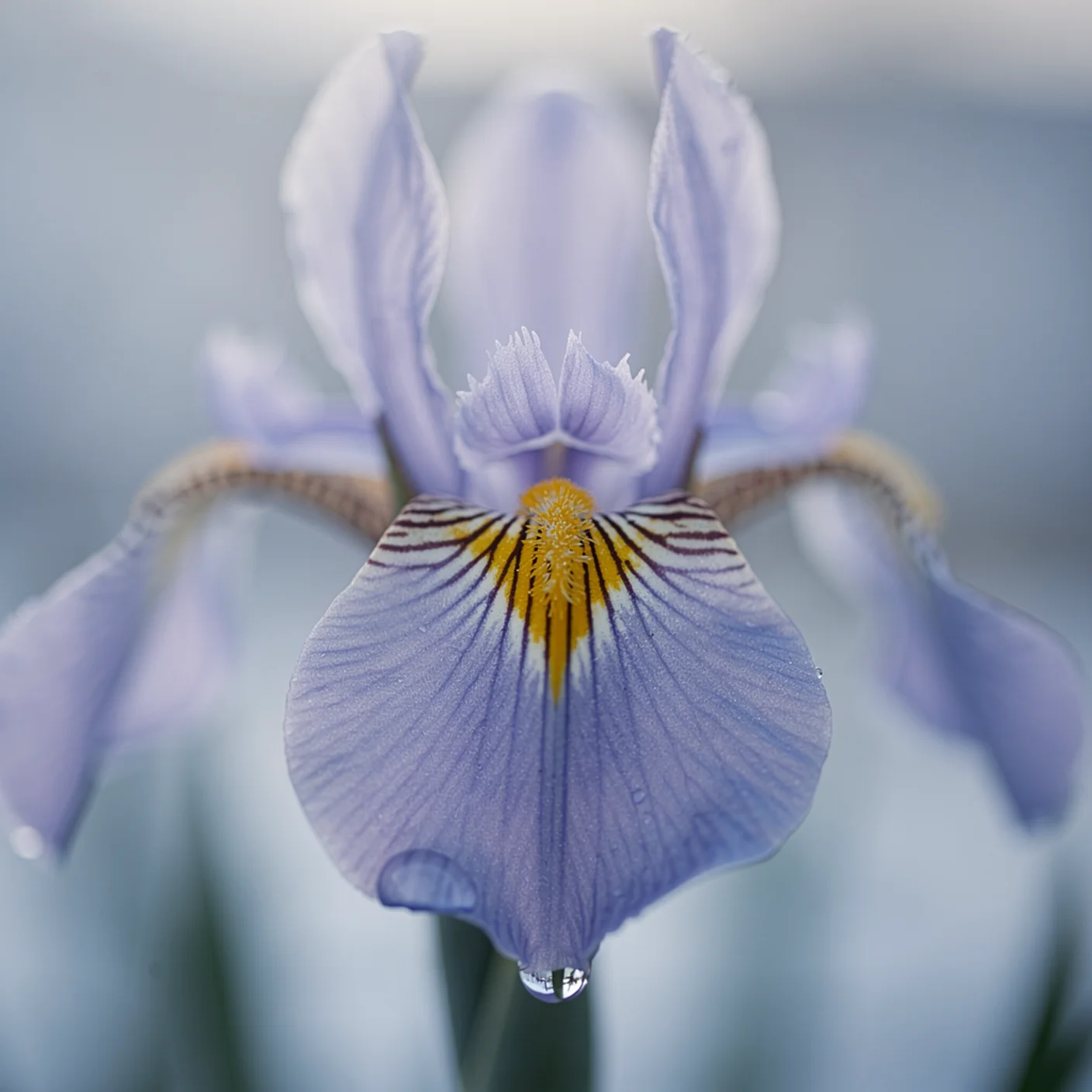
Algerian Iris
Iris unguicularis
“The most beautiful flower of the darkest month. Fragrant lavender irises from November to March, one at a time, from a scruffy clump that thrives on neglect. Cut them and bring them inside.”
— ROSIE
Rosie's Take
An iris in December. Just think about that for a moment. While the garden is at its absolute nadir — bare, grey, cold, apparently lifeless — Iris unguicularis pushes up a flower from within its scrubby clump of narrow, grassy leaves, and it's not some apologetic, half-hearted, winter-compromise flower. It's a full, gorgeous, lavender-blue iris with golden markings and the kind of delicate perfume that makes you kneel on cold, wet ground to put your nose into it.
The flowers appear sporadically from November through to March, one or two at a time, hidden among the leaves. You have to look for them — they don't announce themselves. Part of the ritual is going out each morning in winter to check whether a new one has opened. When it has, I cut it immediately and bring it inside, because the flowers are fragile and a hard frost or heavy rain will destroy them in the garden. In a small vase on the kitchen windowsill, a single iris unguicularis will scent the whole room with the most beautiful, violet-like perfume.
It wants the worst position in your garden. Seriously — baked, dry, poor soil at the base of a south-facing wall, the kind of spot where nothing else thrives. It's from North Africa and the Mediterranean, and it needs summer baking to set flower buds. Rich soil and generous watering produce masses of leaf and no flowers. Neglect it, starve it, forget about it — and in December it will thank you with those extraordinary lavender irises. There's a moral there.
The leaves are a mess. Let's be honest — a clump of iris unguicularis out of flower is an untidy tangle of long, narrow, rather ratty-looking foliage. But the flowers. The midwinter flowers, scented and delicate and impossibly beautiful against a cold, grey sky. Some plants earn their space in a single month. This one earns it in the month when you need it most.
Where to Buy
If you want to try algerian iris for yourself, here's where I'd point you:
Also available as bulbs — Iris 'Katharine Hodgkin' →
We may earn a small commission from purchases made through our links, at no extra cost to you.
✿ From the folklore cabinet
Iris unguicularis was a favourite of the great gardener and writer E.A. Bowles, who grew it at his garden at Myddelton House in Enfield and wrote about it with particular affection. The specific name 'unguicularis' means 'with a small claw,' referring to the narrow base of the petals. It's native to Algeria, Tunisia, and the eastern Mediterranean — regions where dry, baked summers are followed by mild, wet winters. The flower's survival strategy is to bloom when there's no competition for pollinators, which in its native habitat means winter. In a British garden, this translates to producing precious, delicate blooms during the months when we need beauty most. Bowles used to say that picking the first iris unguicularis of the winter was the moment the gardening year truly began.