Clematis
cirrhosa 'Freckles'
“The best winter-flowering clematis. Nodding cream bells with secret burgundy freckles, evergreen bronze foliage, and a faint lemon scent in the coldest months. Needs a sheltered wall and gives back a winter ritual.”
— ROSIE
Rosie's Take
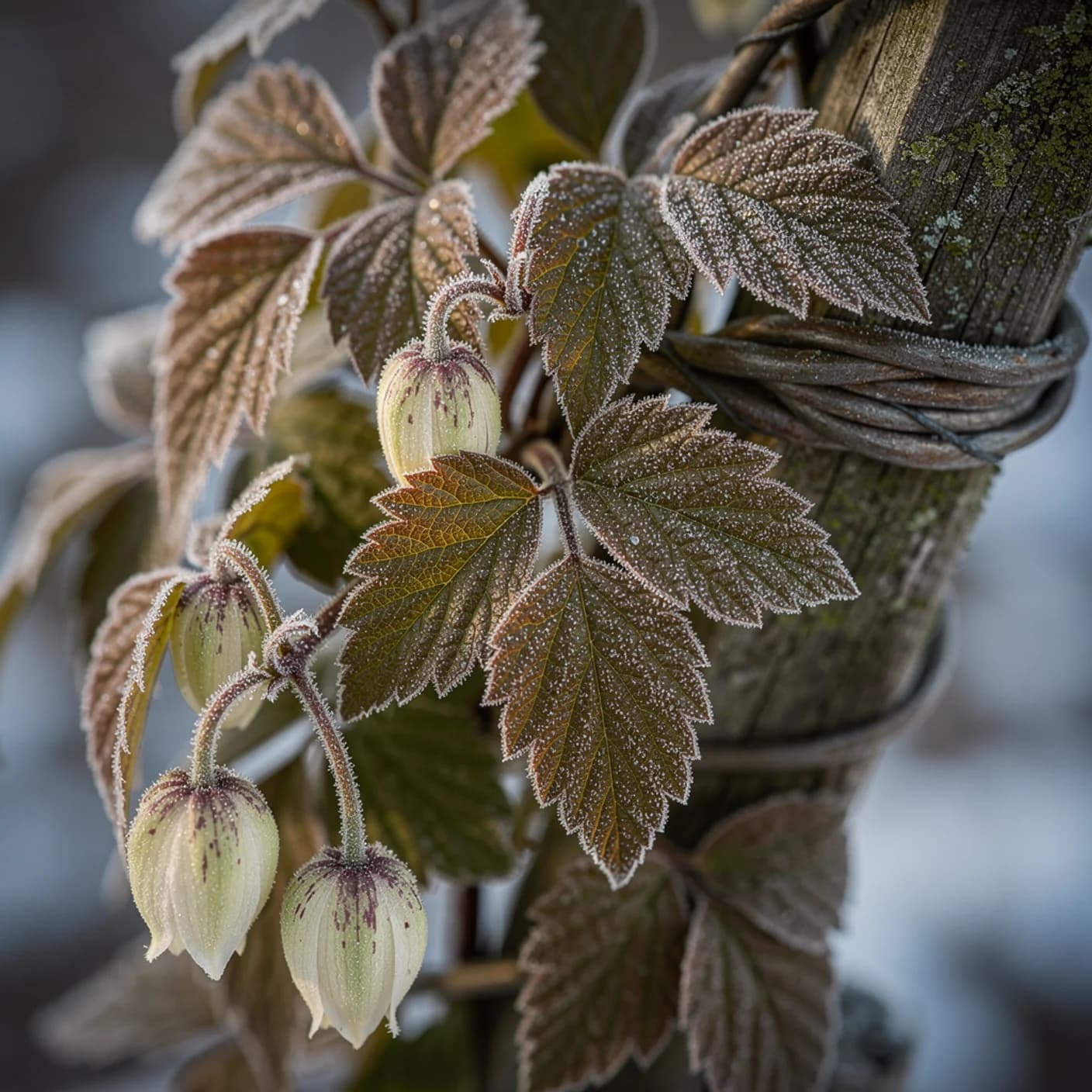
A clematis that flowers in December. I know. It sounds like a horticultural rumour, something someone's uncle claims to have seen but can't quite prove. But Clematis cirrhosa 'Freckles' really does flower from November through to February, producing nodding, bell-shaped blooms through the darkest months of the year, when every other clematis is dormant and bare.
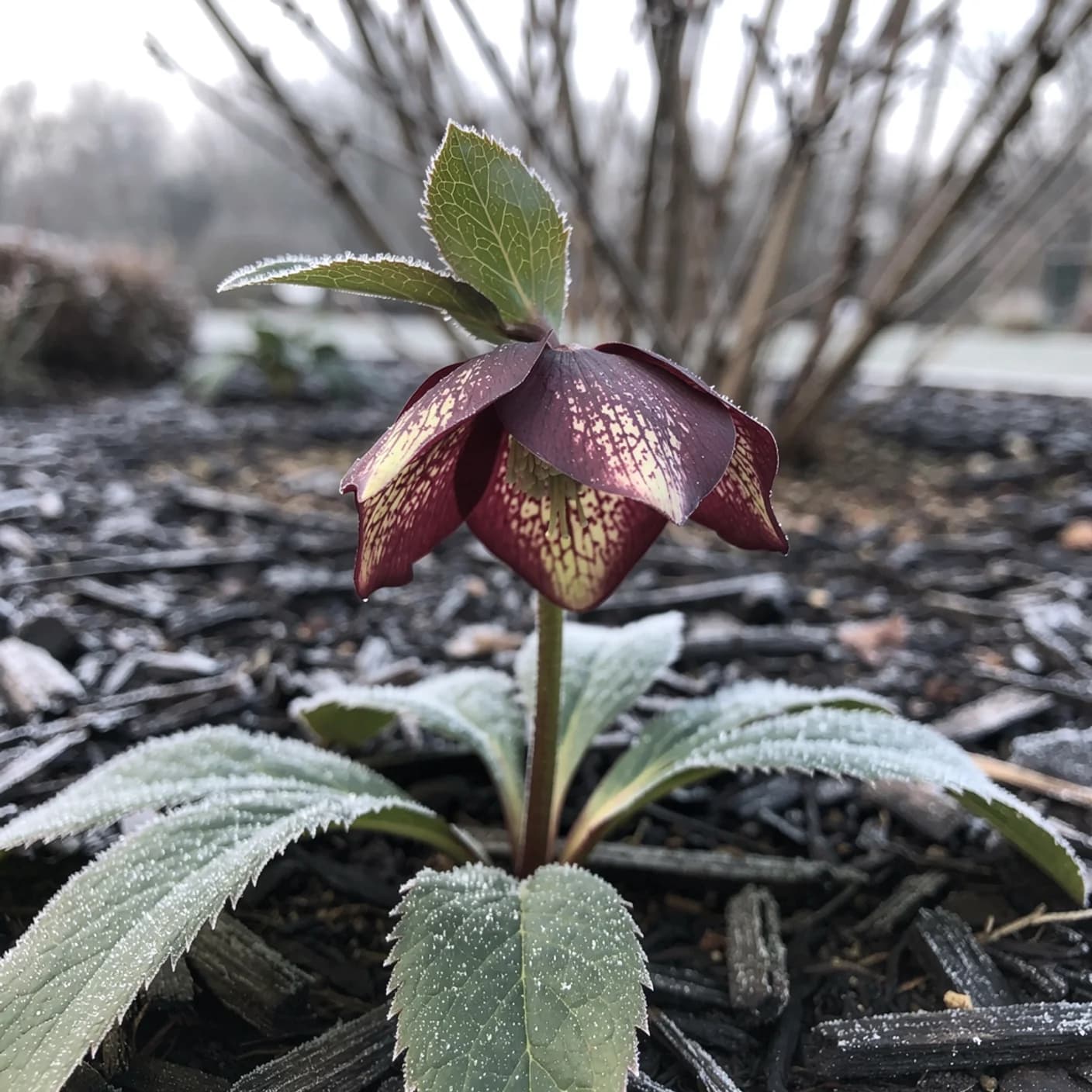
The flowers are the colour of clotted cream, about two inches across, and heavily freckled on the inside with deep reddish-purple spots and speckles — like someone has flicked a paintbrush loaded with burgundy ink across each petal. From the outside, they're a soft, greenish cream. You have to lift the nodding bells and look inside to discover the freckling, which feels like being let in on a secret. That element of surprise — the hidden pattern — is what makes 'Freckles' more than just a winter curiosity.
It's an evergreen climber, which in winter gardening terms is already half the battle won. The foliage is fine, glossy, and bronze-tinted in cold weather, creating a dense cover over a wall, fence, or obelisk. Against a south- or west-facing wall, protected from the worst of the north wind, it flowers reliably every winter and fills in the architectural gap left by deciduous climbers that have dropped their leaves.
The scent is delicate — a faint, sweet, lemon fragrance that you only catch on milder days when the air is still. In the bleakness of January, leaning in to smell a clematis flower feels almost miraculous. I grow mine over an archway near the back door, where I walk underneath it daily and occasionally stop to lift a bell and look at those extraordinary freckles. It's become one of my winter rituals — a small, private pleasure on a cold morning.
Where to Buy
If you want to try clematis for yourself, here's where I'd point you:
We may earn a small commission from purchases made through our links, at no extra cost to you.
✿ From the folklore cabinet
Clematis cirrhosa is native to the Mediterranean — southern Europe, North Africa, and the Balearic Islands, where it scrambles through scrubby vegetation and flowers through the mild winters. 'Freckles' was raised in the Fisk Clematis Nursery in Suffolk by the legendary clematis breeder Jim Fisk, who selected it for the intensity of its freckling. The name 'cirrhosa' means 'with tendrils,' referring to the leaf stalks that twist and grip like tiny fingers. In its native habitat, the plant goes dormant in summer to avoid the Mediterranean drought, then wakes and flowers in winter when the rains return. In a British garden, with our obliging year-round dampness, it skips the dormancy and stays evergreen. A Mediterranean plant that thrives in British weather — not something you hear often.