Cornus
Sanguinea 'Midwinter Fire'
“The best argument for winter gardening. 'Midwinter Fire' gives you months of glowing orange-red stems when nothing else is trying.”
— ROSIE
Rosie's Take
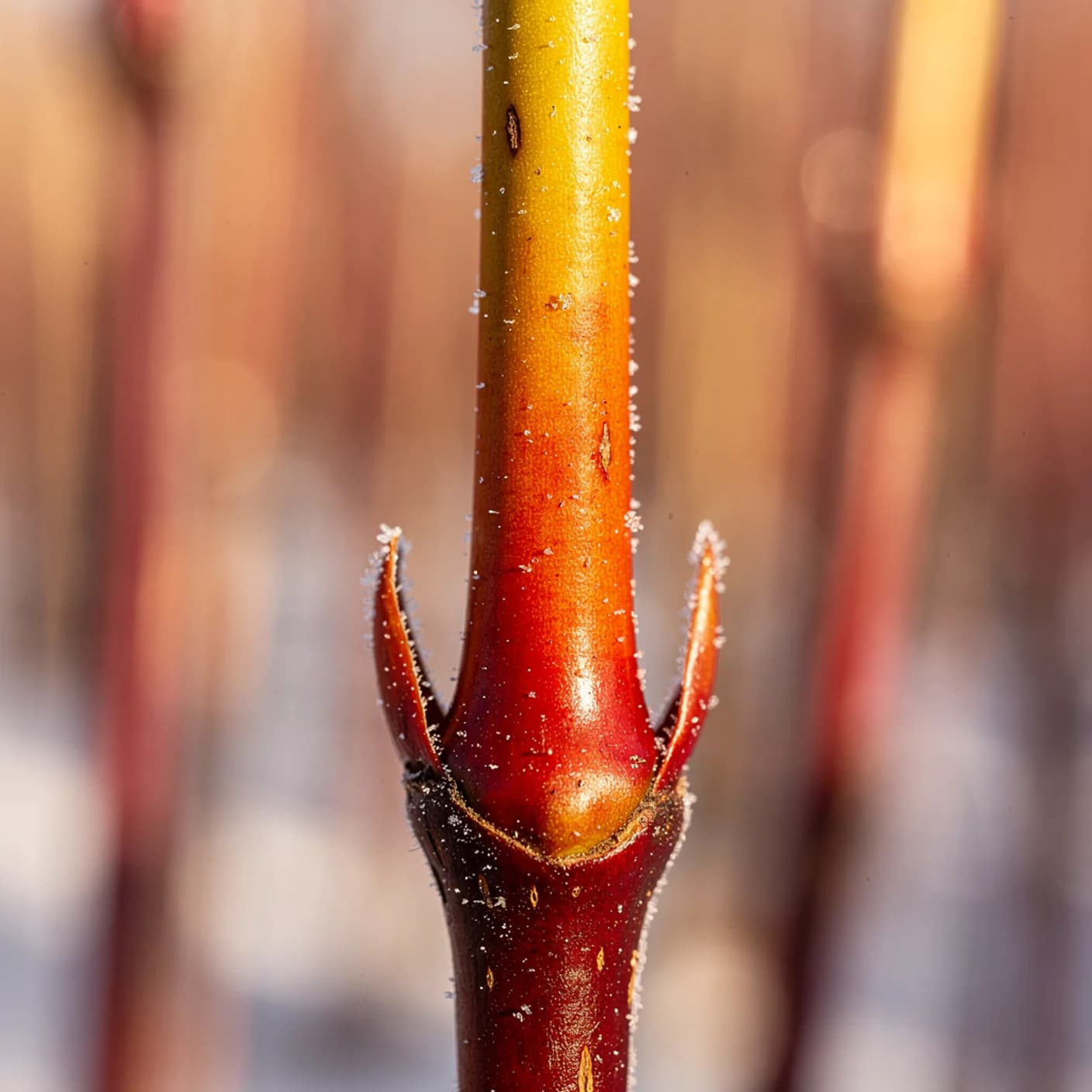
This is a plant you grow for winter and ignore the rest of the year, and the trade-off is entirely worth it. From November to March, once the leaves have fallen, Cornus sanguinea 'Midwinter Fire' reveals the most extraordinary stems — a gradient of colour from deep red at the base, through fiery orange in the middle, to bright yellow at the tips. Like a flame frozen in place.
Massed together, the effect is extraordinary. A bed of cornus stems in low winter sunlight, glowing orange and red against a grey sky or a backdrop of evergreen hedging — it's one of the best things the winter garden can do. And it does it for months, not days. This is colour that persists through the entire dead season, asking nothing of you except an annual hard prune in March.
That pruning is the key. Cut every stem to about six inches in early spring and the plant will send up a thicket of new growth that colours brilliantly the following winter. Young stems colour best — leave the plant unpruned and the colour fades to a disappointing muddy brown. It's counterintuitive, cutting something to the ground to make it better, but it works.
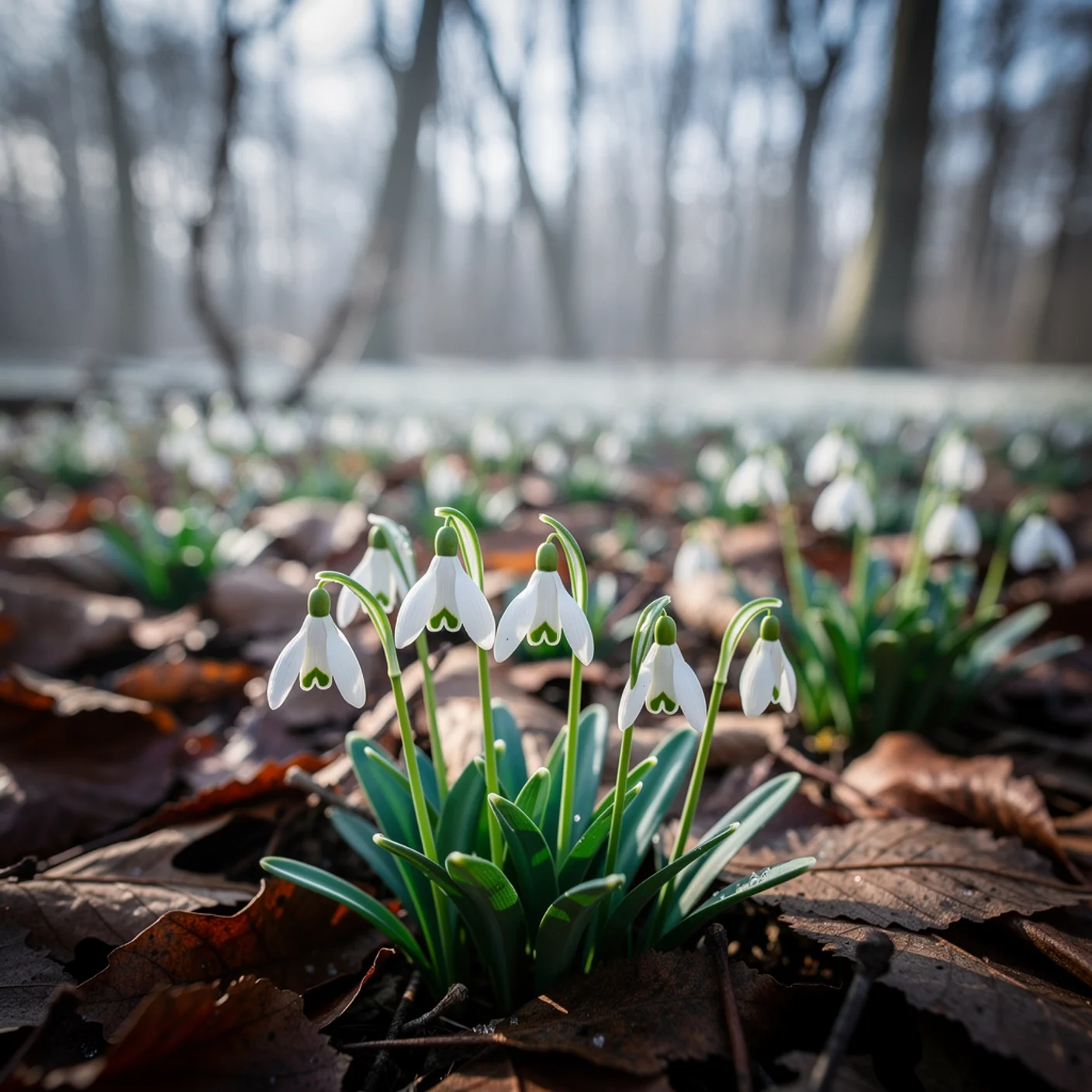
I cut a few stems for the house in January and they look gorgeous in a tall vase — bare, graphic, glowing. Mixed with snowdrops or hellebores, the warm stem colour against the white or green flowers is a combination that feels considered and seasonal. Winter flower arranging is about stems and structure and subtlety, and cornus gives you all three.
Where to Buy
If you want to try cornus for yourself, here's where I'd point you:
We may earn a small commission from purchases made through our links, at no extra cost to you.
✿ From the folklore cabinet
Cornus sanguinea — the native dogwood — gets its species name from 'sanguineus,' meaning bloody, for the red colour of its autumn stems. The common name 'dogwood' is thought to derive from 'dagwood' — the hard, dense wood was used to make dags, which were daggers and skewers. The wood is exceptionally hard for its size, and was also used to make butchers' skewers, tool handles, and weaving shuttles. 'Midwinter Fire' was selected from a Dutch breeding programme and introduced in the early 2000s — it's a modern garden plant with ancient bloodlines.