Garrya
James Roof
“The most dramatic winter shrub you can grow. 'James Roof' turns a north-facing wall into the best thing in the garden from January to March.”
— ROSIE
Rosie's Take
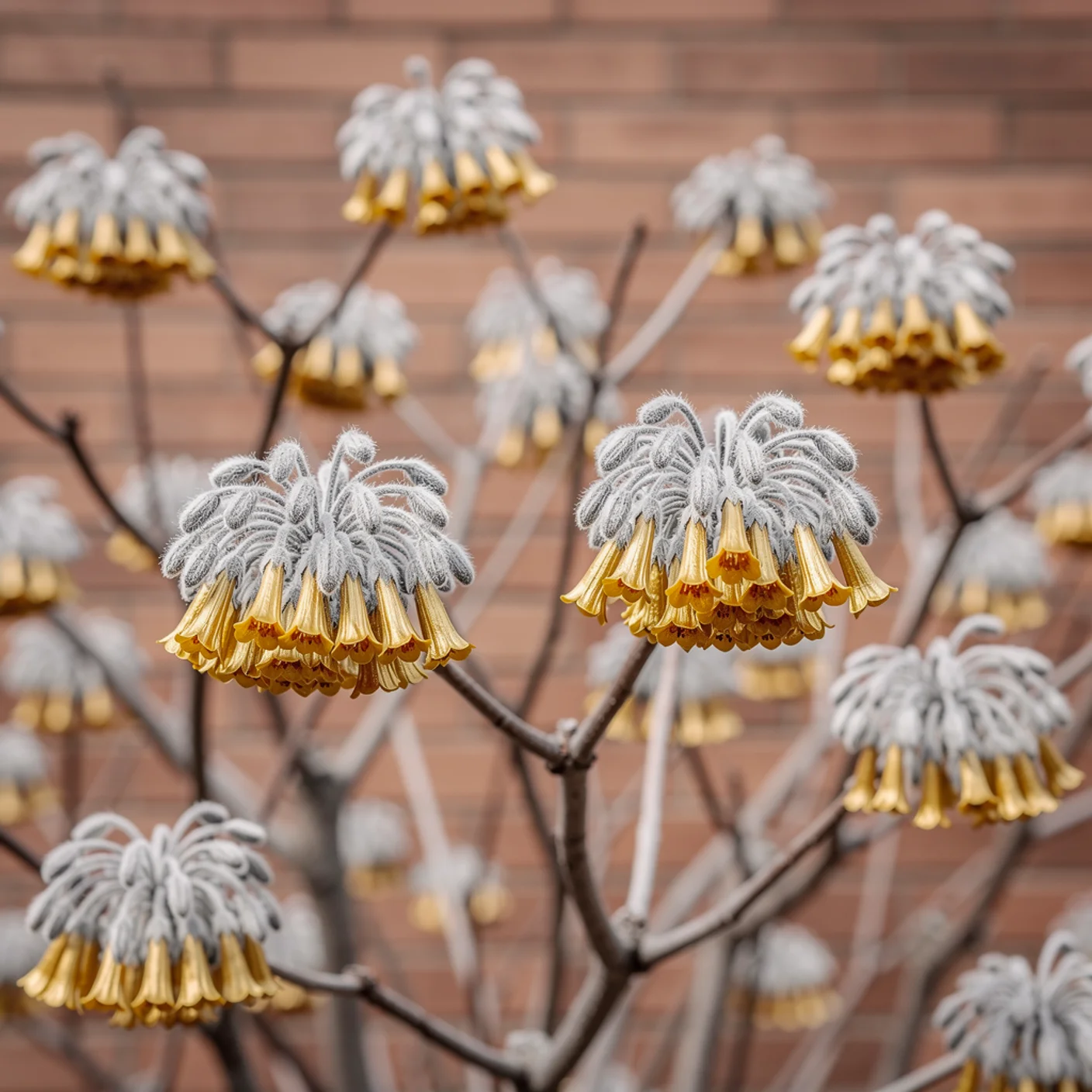
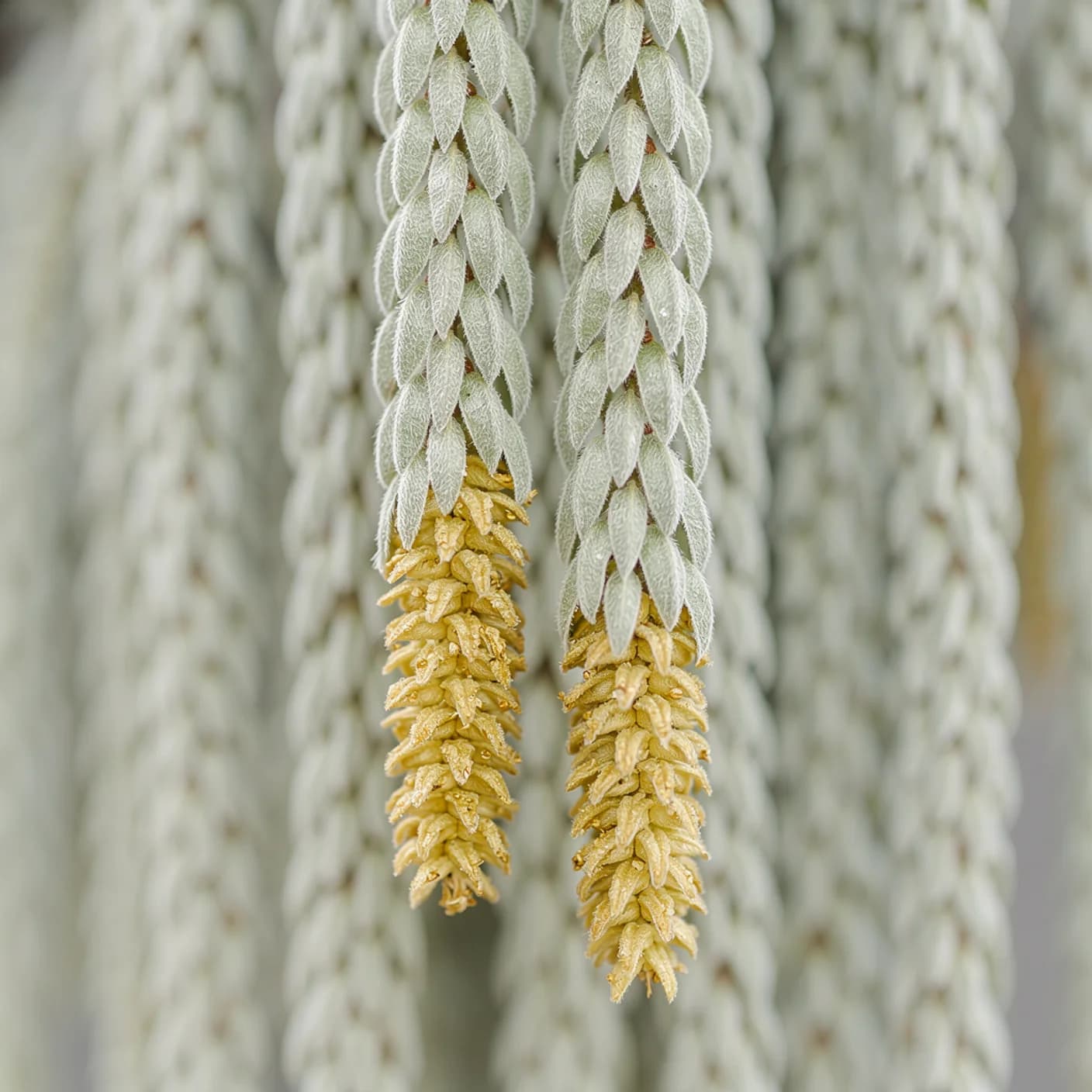
January is a month when you have to work for your beauty in the garden, which is exactly why garrya earns its place. From midwinter, this evergreen shrub produces the most extraordinary catkins — long, silvery-green tassels that hang in dense curtains from every branch. 'James Roof' is the male form, and the catkins can reach a foot long, sometimes more. A well-established plant in full tassel looks like it's been decorated for a very tasteful winter party.
The effect is unlike anything else in the winter garden. Where witch hazel gives you tiny, spidery flowers and hellebores give you downward-facing cups, garrya gives you drama. Sheer, cascading, architectural drama. Against a dark wall or a grey January sky, those pale tassels are genuinely breathtaking.
I have mine trained against a north-facing wall, which is supposed to be the worst aspect in the garden. Garrya doesn't care. The leathery, wavy-edged leaves are evergreen and handsome year-round, but in January and February, when those catkins are at their best, it becomes the single most interesting thing in any direction. Visitors stop and stare.
Cut a few branches for the house and they last well in water — the tassels gradually elongate and turn from silver-green to a warm, buttery yellow as the pollen develops. Mixed with bare branches and a few snowdrops in a jug, it's my favourite winter arrangement. Proof that the garden never really stops, even in the darkest month.
✿ From the folklore cabinet
Garrya is named after Nicholas Garry of the Hudson's Bay Company, who helped the Scottish botanist David Douglas during his plant-hunting expeditions in western North America in the 1820s. Douglas introduced it to Britain, where it's been quietly impressing winter gardeners ever since. It's one of those plants that was fashionable in Victorian shrubberies, fell out of favour, and is now being rediscovered — the gardening equivalent of a band your parents liked that turns out to be genuinely good.