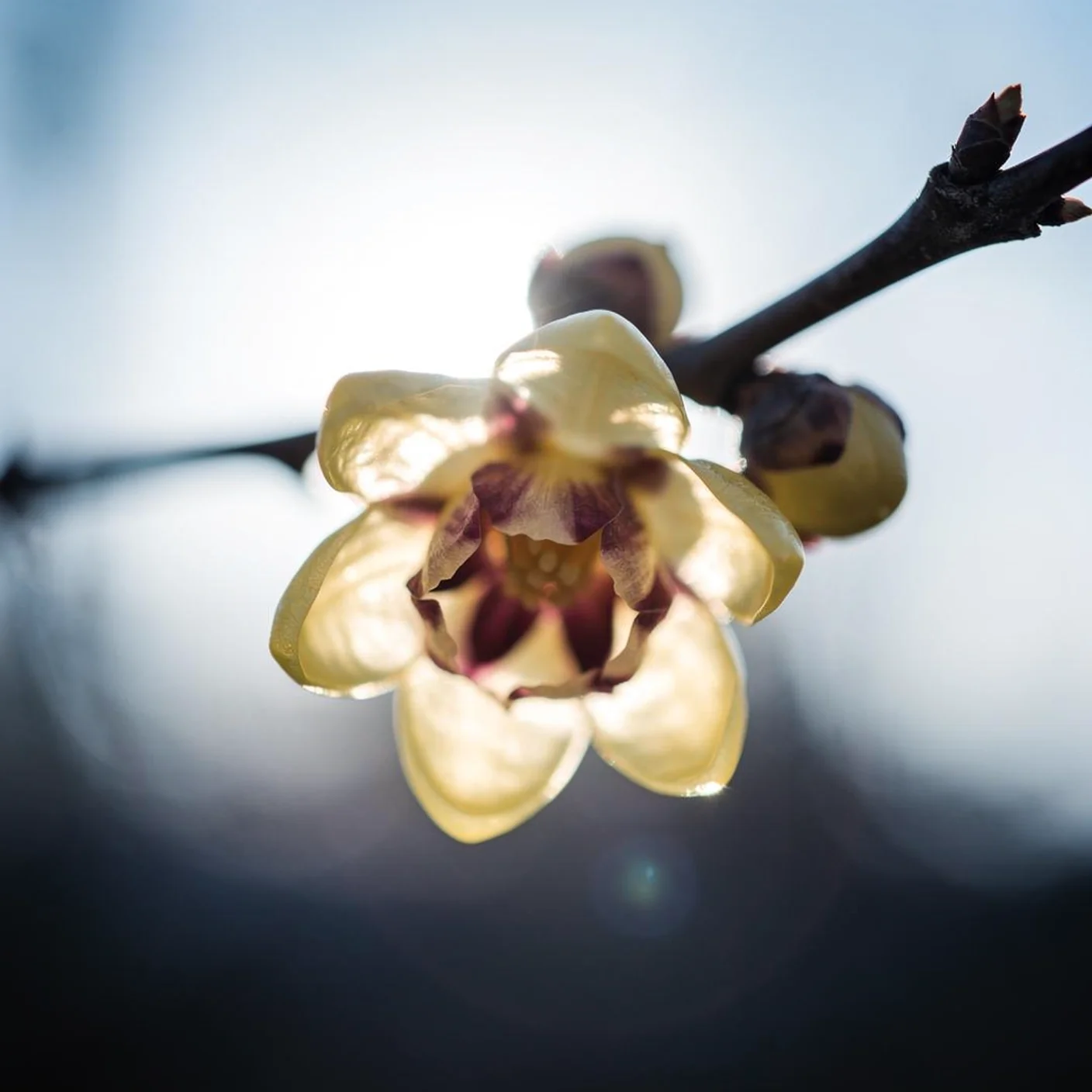
Wintersweet
Chimonanthus praecox
“Winter's secret perfumer. Those small, waxy flowers on bare branches carry a scent that perfumers have tried and failed to replicate.”
— ROSIE
Rosie's Take
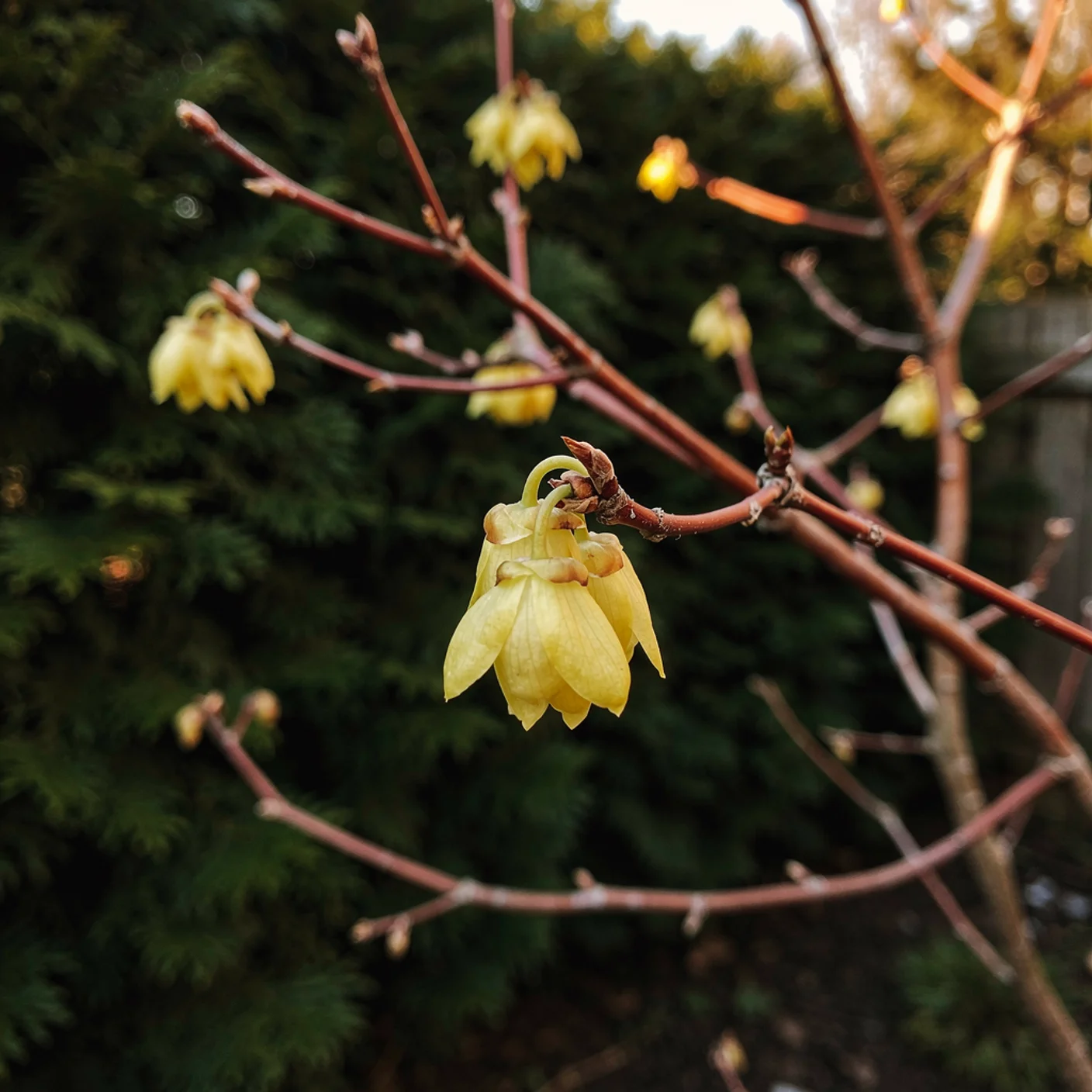
Wintersweet is the plant that proves winter has its own kind of beauty, and its own kind of perfume. Those small, waxy, translucent flowers opening on bare branches in the coldest months — they look fragile, almost accidental, like something that started too early and can't go back. And then the scent hits you. A spicy, sweet, honeyed warmth that has no business existing in January. It's the most unexpected perfume in the winter garden.
Chimonanthus praecox — the name means 'winter flower that comes early' — is a deciduous shrub from China that's been grown in British gardens since the eighteenth century. It's never been fashionable, which I think is to its credit. Fashion is fickle; wintersweet just quietly gets on with flowering when nothing else dares.
The flowers are small and easy to miss if you're not looking — pale, waxy yellow cups with a darker maroon-purple centre, borne directly on the bare twigs. You have to get close to appreciate them properly, which is when the scent ambushes you. It's complex — spicy like carnation, sweet like honey, with a warm, slightly fruity depth. Perfumers have tried to capture it. None have quite managed.
A single flowering branch brought indoors will scent an entire room for days. That's the way to enjoy it — cut a few twigs when the flowers are just opening, put them in a small vase by a warm radiator, and let the heat release the fragrance. In the depth of January, when the garden feels like it's sleeping, wintersweet is a whispered reminder that growing things never truly stop.
Where to Buy
If you want to try wintersweet for yourself, here's where I'd point you:
We may earn a small commission from purchases made through our links, at no extra cost to you.
✿ From the folklore cabinet
Wintersweet has been cultivated in China for over a thousand years, where it's called là méi — 'wax plum' — and is considered one of the flowers of winter alongside plum blossom and camellia. It's associated with endurance and renewal in Chinese art and poetry. The plant was introduced to Europe in 1766 by Lord Coventry, who grew it at Croome Court in Worcestershire. It needs patience — a newly planted wintersweet can take five to seven years before it flowers well, which I think is part of its character. Good things are worth waiting for.