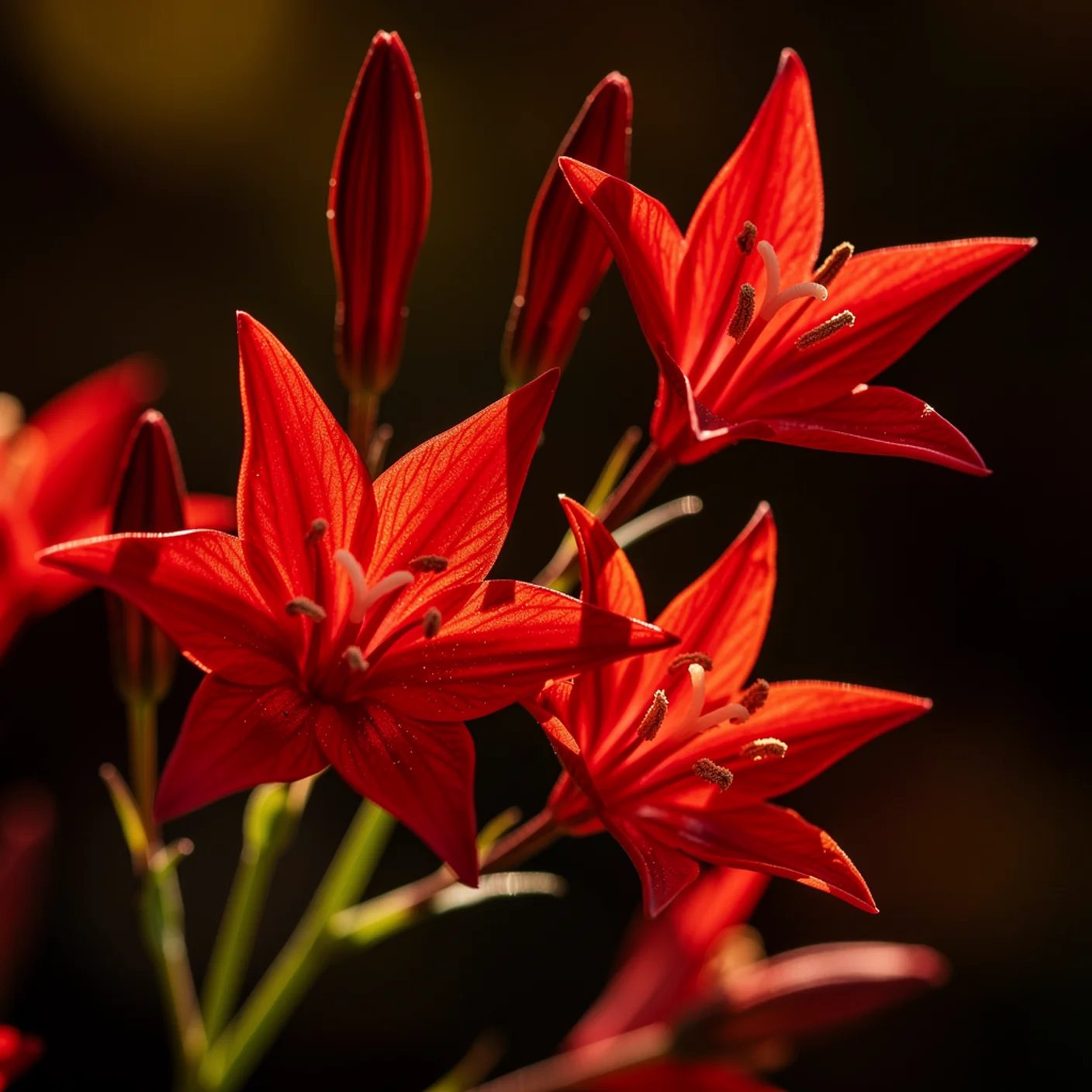
Hesperantha
Coccinea (River Lily)
“Autumn's best-kept secret. Vivid scarlet flowers from September to November, in a garden that desperately needs the colour.”
— ROSIE
Rosie's Take
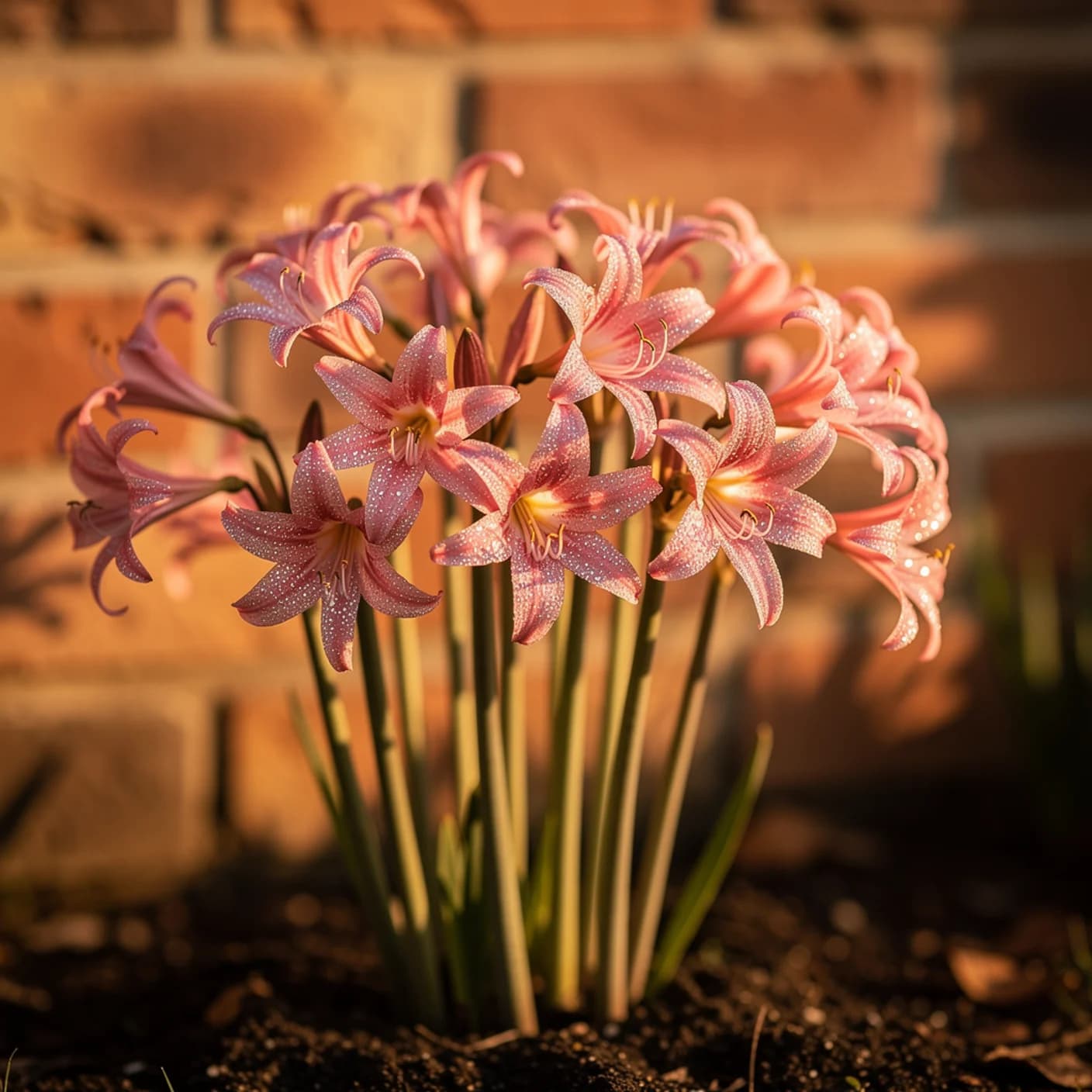
Hesperantha is one of those flowers that makes you wonder why it isn't in every garden. Here is a plant that flowers from September well into November — sometimes even December in a mild year — producing stem after stem of open, star-shaped blooms in the most vivid, saturated crimson you've ever seen. While everything else is packing up for winter, hesperantha is throwing a party.
The flowers open wide and flat, like little satellite dishes pointed at whatever weak autumn sun is available, and the colour is extraordinary — a pure, singing red that has no orange or brown in it. Against the tawny backdrop of an autumn garden, it's like a full stop at the end of a sentence. Definitive. Impossible to ignore.
I grow the straight species along the edge of a border that gets afternoon sun, and by October it's the only thing anyone comments on. The grassy, iris-like foliage is neat and unobtrusive for most of the year, then suddenly it's producing these elegant stems of scarlet that light up the whole corner. They spread gradually by rhizome, which means the display gets better every year.
You can cut them for the house, though I rarely do because the garden needs them more than I do at that time of year. When everything else has given up, hesperantha is still going — cheerful, determined, and thoroughly unbothered by the first frosts. It's the plant equivalent of someone who's brilliant at parties and also the last to leave.
Where to Buy
If you want to try hesperantha for yourself, here's where I'd point you:
We may earn a small commission from purchases made through our links, at no extra cost to you.
✿ From the folklore cabinet
Hesperantha means 'evening flower' in Greek — the flowers of some species open in the late afternoon. It was previously known as Schizostylis, and many gardeners still call it that, which causes no end of taxonomic confusion. It's native to southern Africa, growing alongside streams in the Drakensberg mountains, which explains why it likes moisture and copes surprisingly well with British autumns. The common name 'river lily' refers to its streamside habitat back home.