Aster
Little Carlow
“The Michaelmas daisy that changes minds. 'Little Carlow' brings a rare violet-blue to autumn and resists mildew. That's a winning combination.”
— ROSIE
Rosie's Take
Michaelmas daisies have a reputation for being a bit municipal — the kind of thing you see in council planting schemes, slightly mildewed and past their best by mid-October. 'Little Carlow' is the one that proves everyone wrong.
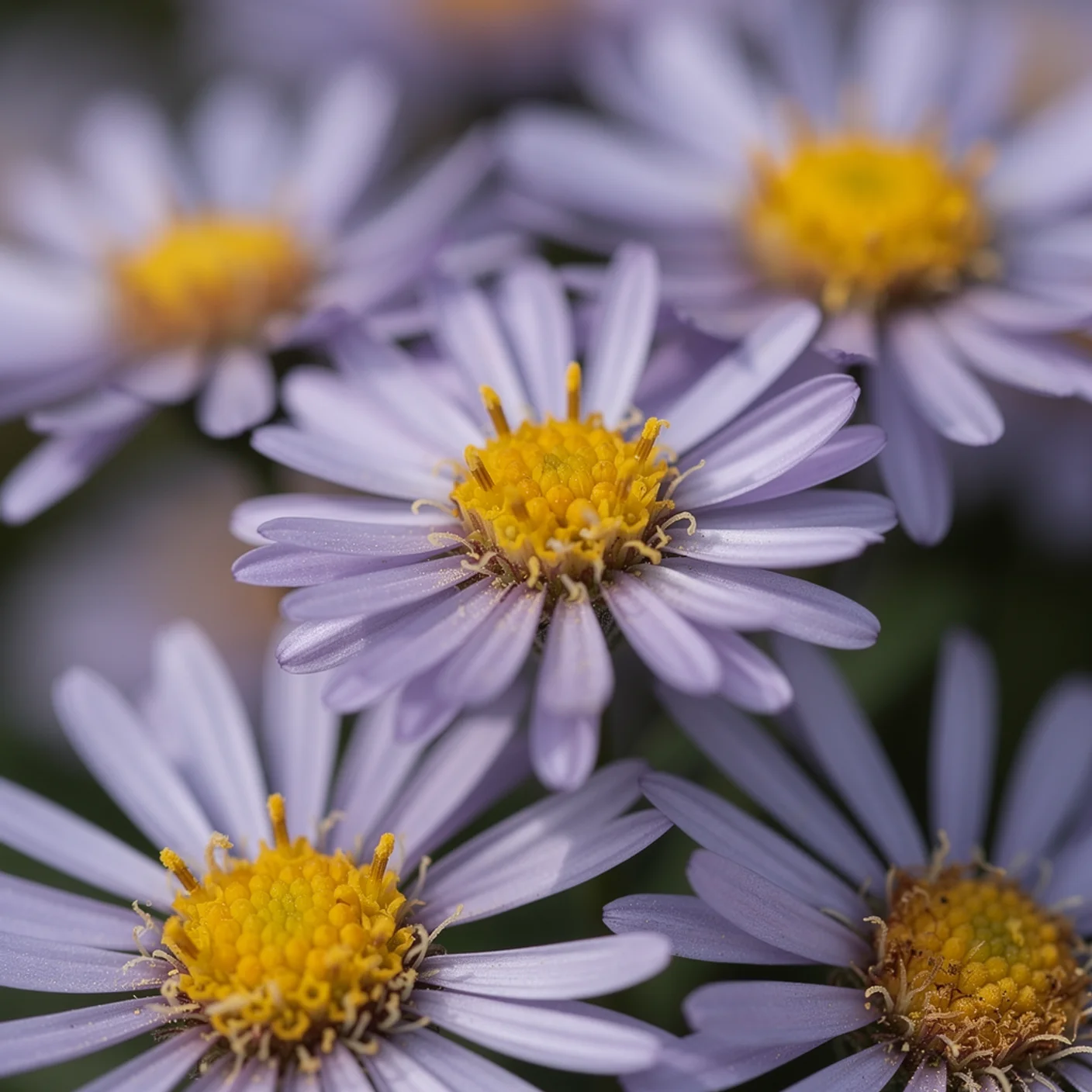
It produces these generous, branching sprays of small, violet-blue flowers with bright yellow centres, and when it's in full bloom in late September it creates this haze of colour that's unlike anything else in the autumn garden. The flowers are tiny individually — no bigger than a two-pence piece — but there are hundreds of them on each plant, and the cumulative effect is extraordinary.
The colour is what sets it apart. That particular shade of violet-blue is rare in autumn, when everything else is heading towards warm reds, oranges, and golds. It provides the cool counterpoint that makes those warm tones sing. Put it next to rudbeckia or helenium and both flowers look better for the contrast.
As a cut flower, the sprays are lovely — airy, abundant, and they last well in water. They fill out an arrangement without dominating it, and that blue makes everything else in the vase pop. I use them the way some people use gypsophila — as the thing that ties a mixed bunch together — except they bring colour rather than just texture.
Where to Buy
If you want to try aster for yourself, here's where I'd point you:
We may earn a small commission from purchases made through our links, at no extra cost to you.
✿ From the folklore cabinet
Michaelmas daisies get their name from the feast of St Michael on 29th September, when they're traditionally in peak bloom. In medieval times, they were planted around monasteries and dedicated to the archangel. The name 'aster' means 'star' in Greek, which is exactly what each tiny flower looks like — a small, coloured star with a golden centre.