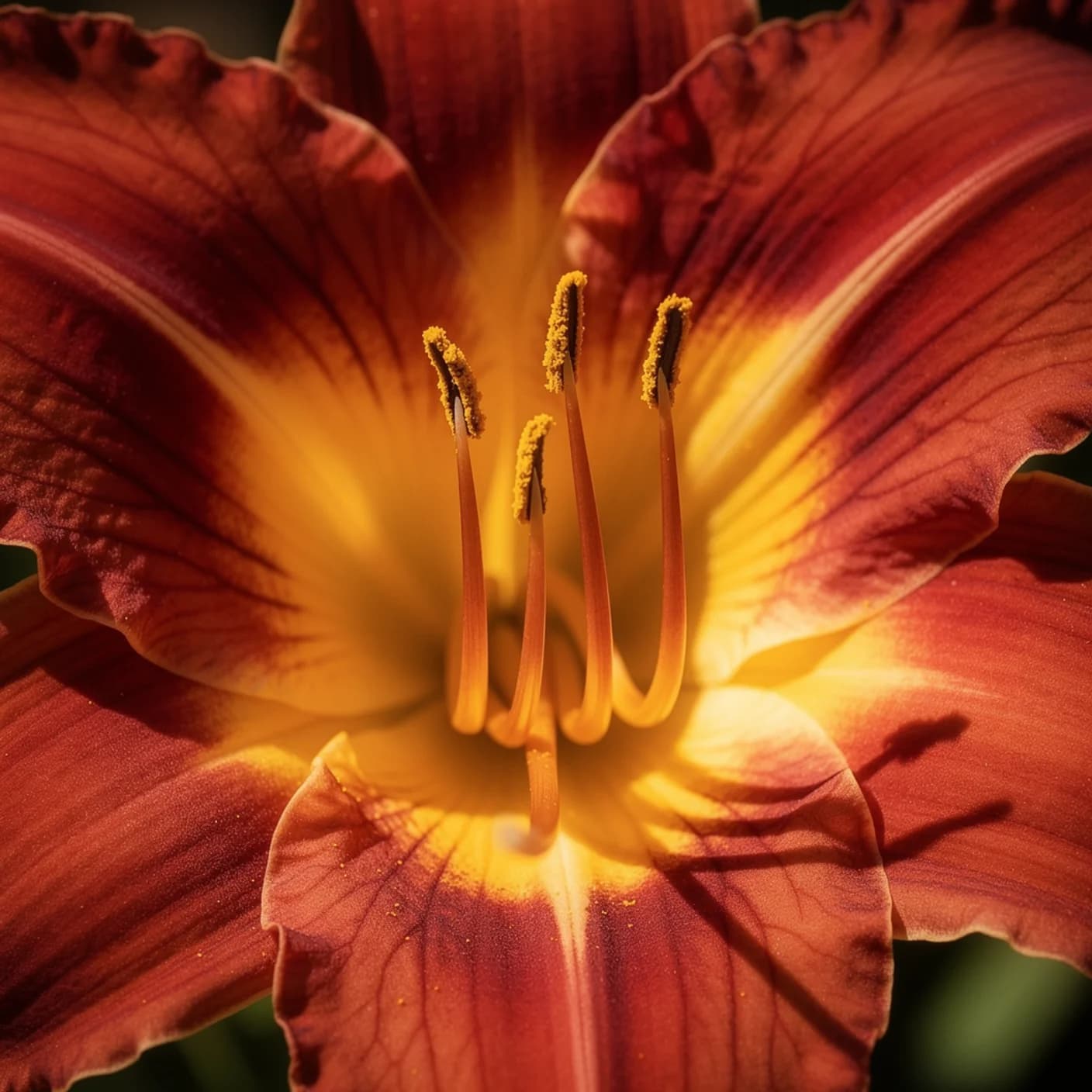
Day Lily
Stafford
“The most reliable perennial in existence. Deep brick-red flowers with gold throats, a new one every morning for a month, on a plant that cannot be killed. Budget gardening at its best.”
— ROSIE
Rosie's Take
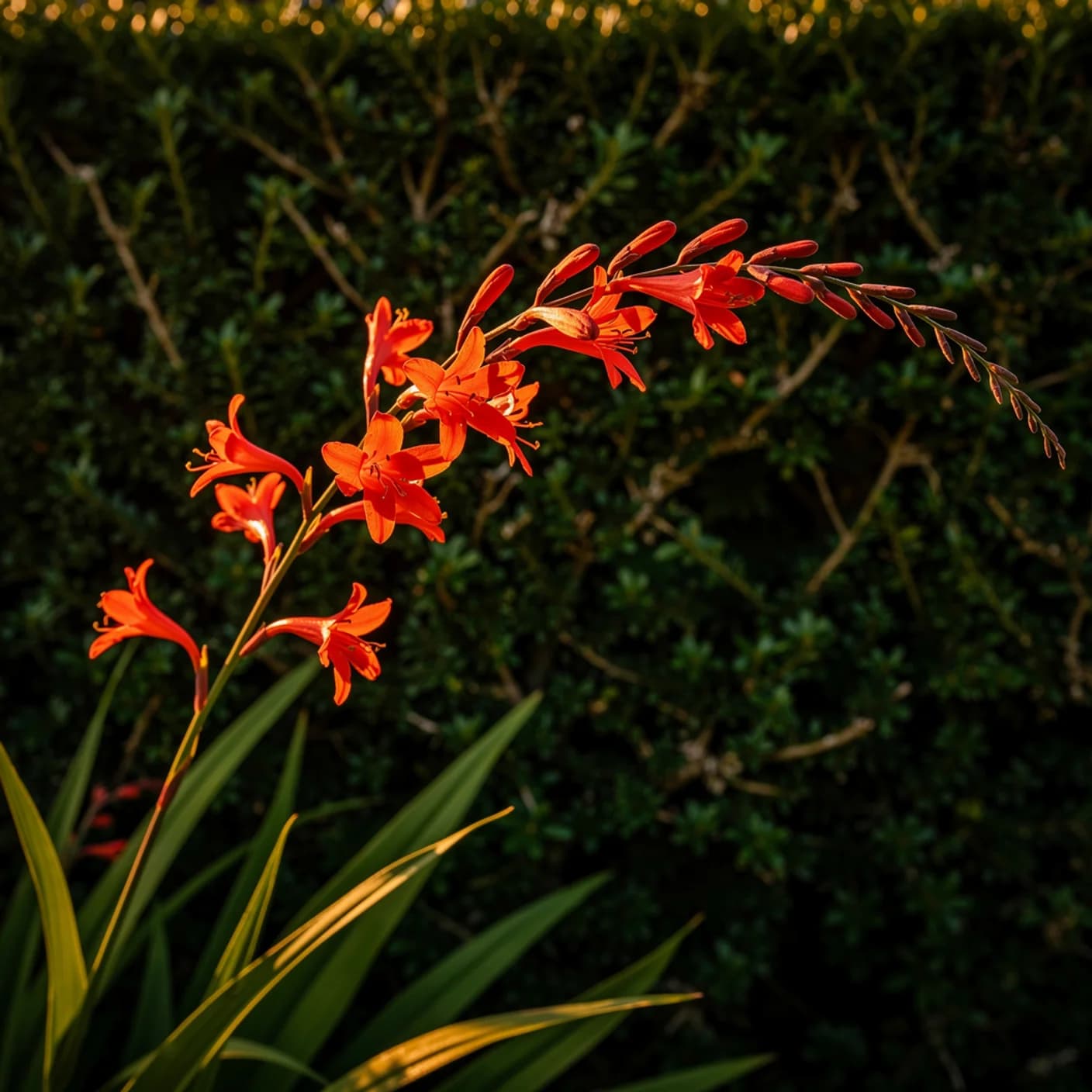
Every flower of Hemerocallis 'Stafford' lasts exactly one day. It opens in the morning, holds its performance through the afternoon and evening, and by the following dawn it's spent. Gone. Finished. But the plant doesn't care — there are dozens more buds waiting, and for three to four weeks in July and August, the succession of daily flowers is so reliable that the one-day lifespan becomes irrelevant. You never notice the absence because the arrival is so constant.
The flowers are large — about four inches across — in a deep, saturated, brick-red with a golden-yellow throat that catches the light. The colour is rich without being dark, warm without being gaudy. 'Stafford' is one of the older hemerocallis varieties, bred in Britain in the 1950s, and it has a simplicity and directness that many modern hybrids — with their ruffled edges and multicoloured blends — have lost. It knows what it is. A strong red day lily with a gold throat. That's enough.
The grassy, strap-shaped foliage forms a dense fountain that's attractive even before the flowers arrive. In a border, the arching leaves provide a softening effect among more rigid perennials. After flowering, the foliage continues to earn its place through autumn, turning a pleasant straw-yellow before dying back.
Day lilies are indestructible. That's not an exaggeration — they tolerate sun, partial shade, dry spells, wet soil, neglect, and division with equal indifference. I've seen them thriving in abandoned gardens, motorway verges, and the forgotten corners of public parks. 'Stafford' will outlast you and your garden and possibly your house. For a flower that lives a single day, the plant itself has a kind of immortality. I find that rather wonderful.
Where to Buy
If you want to try day lily for yourself, here's where I'd point you:
We may earn a small commission from purchases made through our links, at no extra cost to you.
✿ From the folklore cabinet
Hemerocallis means 'beauty for a day,' from the Greek 'hemera' (day) and 'kallos' (beauty). Day lilies are native to East Asia, where they've been cultivated for over two thousand years — the Chinese ate the buds and flowers as a vegetable long before anyone grew them ornamentally. The dried buds are still used in Chinese cooking as 'golden needles.' In Western gardens, hemerocallis breeding became a serious obsession in mid-twentieth-century America, where thousands of named cultivars were produced. 'Stafford' bucks the trend — it was bred in England by Amos Perry in the 1950s and remains one of the finest red day lilies ever raised. No amount of American ruffling has surpassed it.