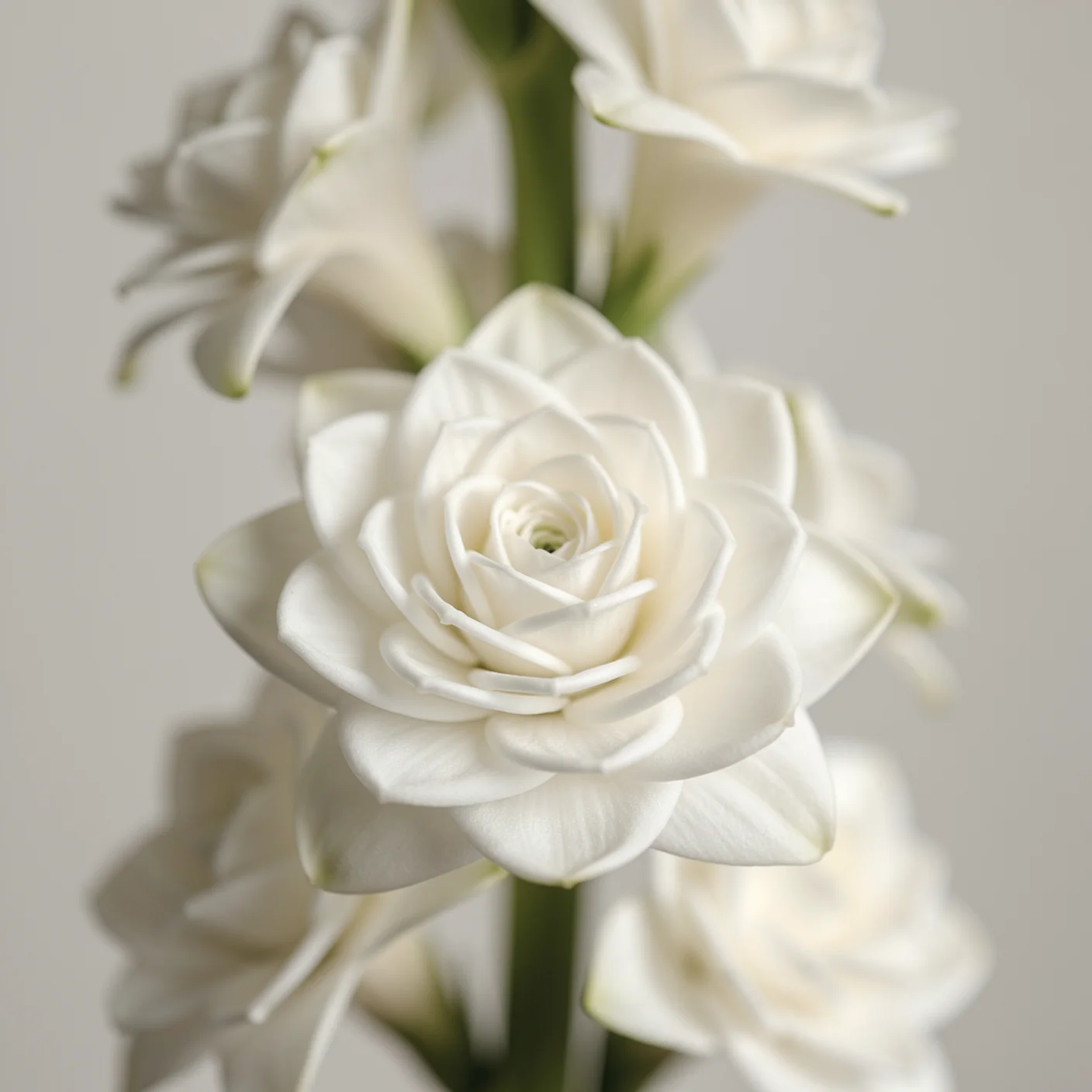
Tuberose
The Pearl
“The most intoxicating scent in the flower world. A single stem will fill a room and ruin you for ordinary flowers.”
— ROSIE
Rosie's Take
If you've never smelled tuberose, you're missing one of the most extraordinary experiences the flower world has to offer. I'm not exaggerating. The first time someone handed me a stem of 'The Pearl,' I stood there breathing it in for an embarrassingly long time, trying to work out what on earth was happening.
It's not a subtle scent. It's rich, creamy, almost narcotic — imagine jasmine turned up to eleven with a buttery sweetness underneath. Perfumers are obsessed with it, and once you've smelled the real thing you'll understand why it's in so many of the great fragrances.
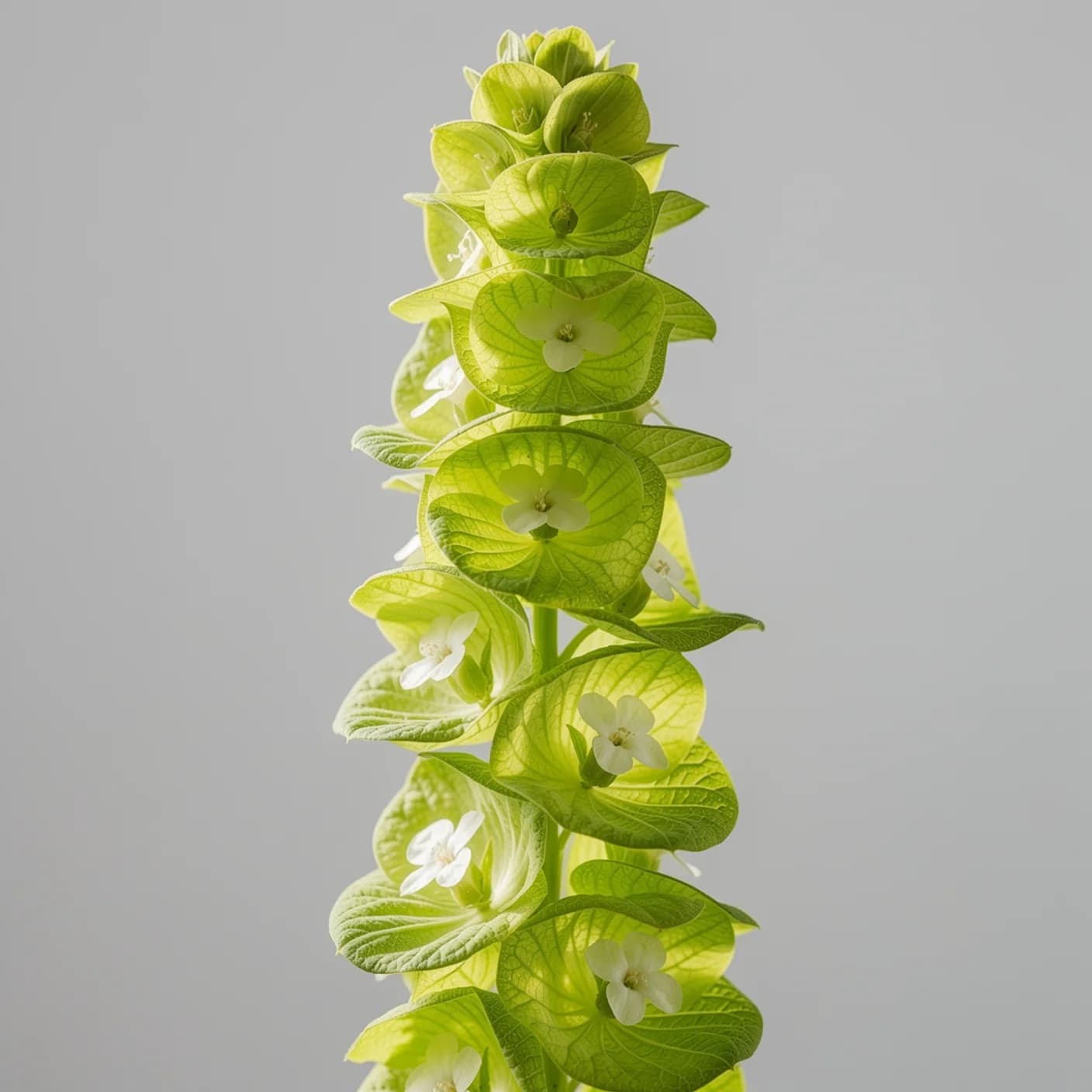
'The Pearl' is the double-flowered form, with waxy white rosettes climbing up a tall, slender stem. They're not showy in the way a peony or a dahlia is — they're elegant, restrained, and then they hit you with that scent and everything else in the room becomes irrelevant.
They're not easy to find in the UK — this isn't a pop-to-the-supermarket flower — but specialist florists carry them, especially in late summer. They're a splurge, absolutely, but I'd argue a single stem of tuberose in a slim vase is worth more than a whole mixed bunch of something ordinary.
Where to Buy
If you want to try tuberose for yourself, here's where I'd point you:
We may earn a small commission from purchases made through our links, at no extra cost to you.
✿ From the folklore cabinet
In the Victorian language of flowers, tuberose meant 'dangerous pleasures' — which tells you everything about how those buttoned-up Victorians felt about that scent. In India, it's called 'rajanigandha,' meaning 'night fragrance,' because the scent intensifies after dark. I've tested this. It's true.