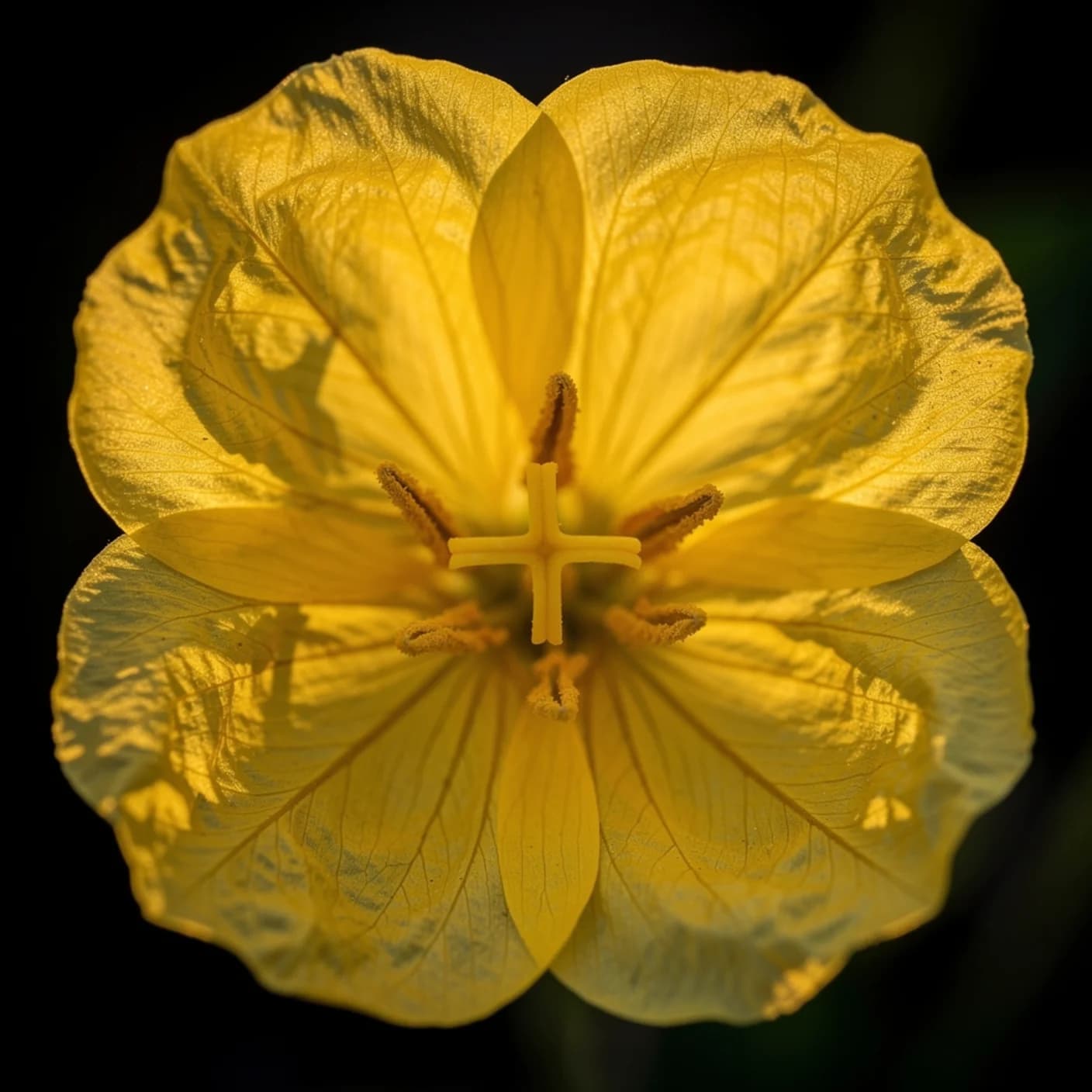
Evening Primrose
Oenothera biennis
“The garden's evening performance. Watch the flowers open at dusk, one by one, then sit in the scent they release for the moths. It never gets old.”
— ROSIE
Rosie's Take
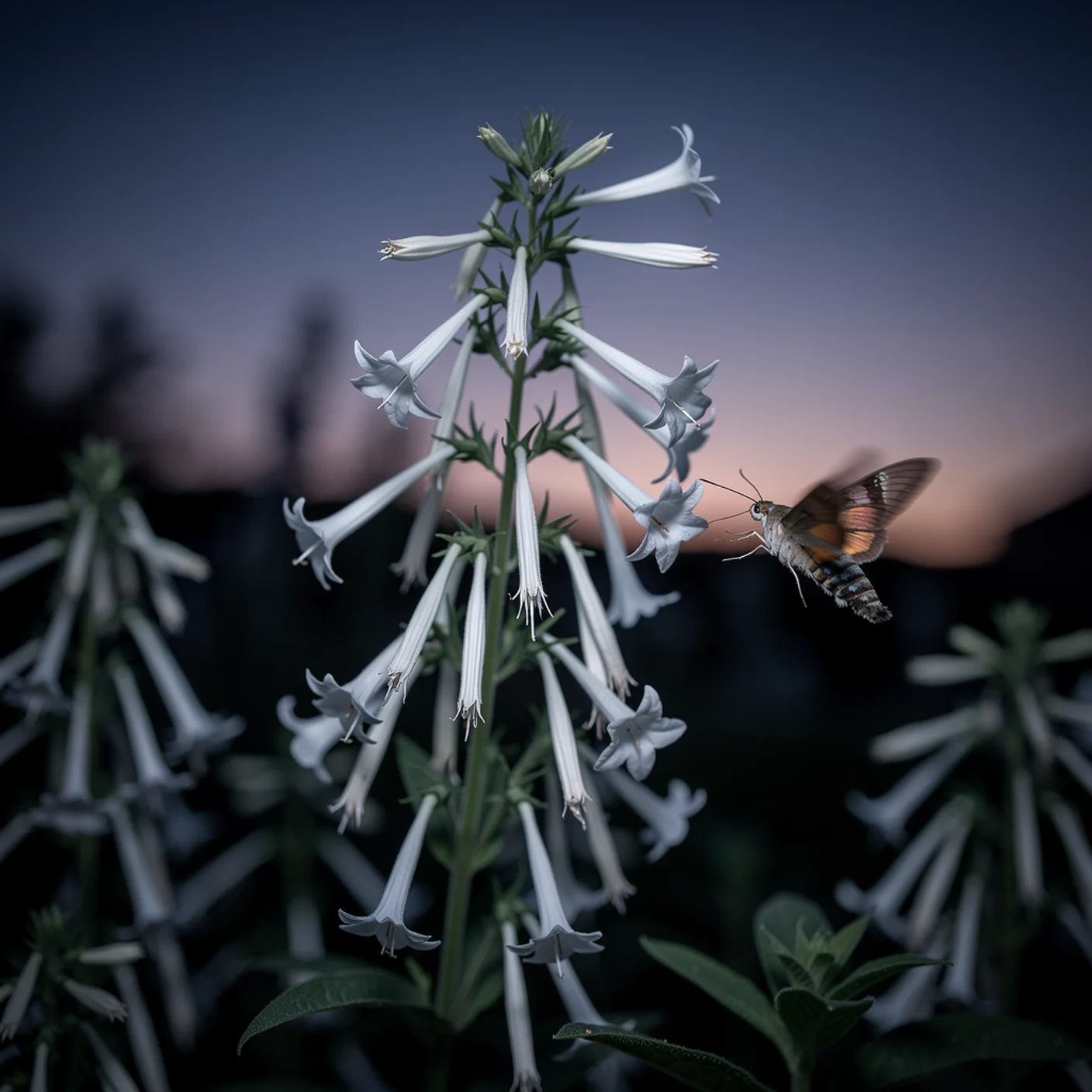
Evening primrose does something that no other common garden plant does — it opens its flowers at dusk, one by one, in a performance you can actually watch happening. The buds split, the petals unfurl, and within a few minutes a fresh, lemon-yellow, four-petalled flower is fully open and glowing in the fading light. I've sat on the garden bench at nine o'clock on a July evening and watched four flowers open in ten minutes. It never gets old.
Oenothera biennis is a wildflower — a North American native that's naturalised across Britain, growing on railway embankments, waste ground, and sandy soil. It's tall, a bit ungainly, and not what anyone would call elegant during the day. The flowers are closed and slightly crumpled. But as evening comes, the transformation is remarkable. Each bloom opens fresh and luminous, releasing a light, sweet, lemony fragrance that attracts moths from across the garden.
The flowers last a single night. By morning they've faded to a soft apricot-pink and new buds are preparing for the evening show. There's something philosophical about that — beauty that exists for twelve hours and doesn't apologise for its brevity. Each flower gets one evening, and it makes the most of it.
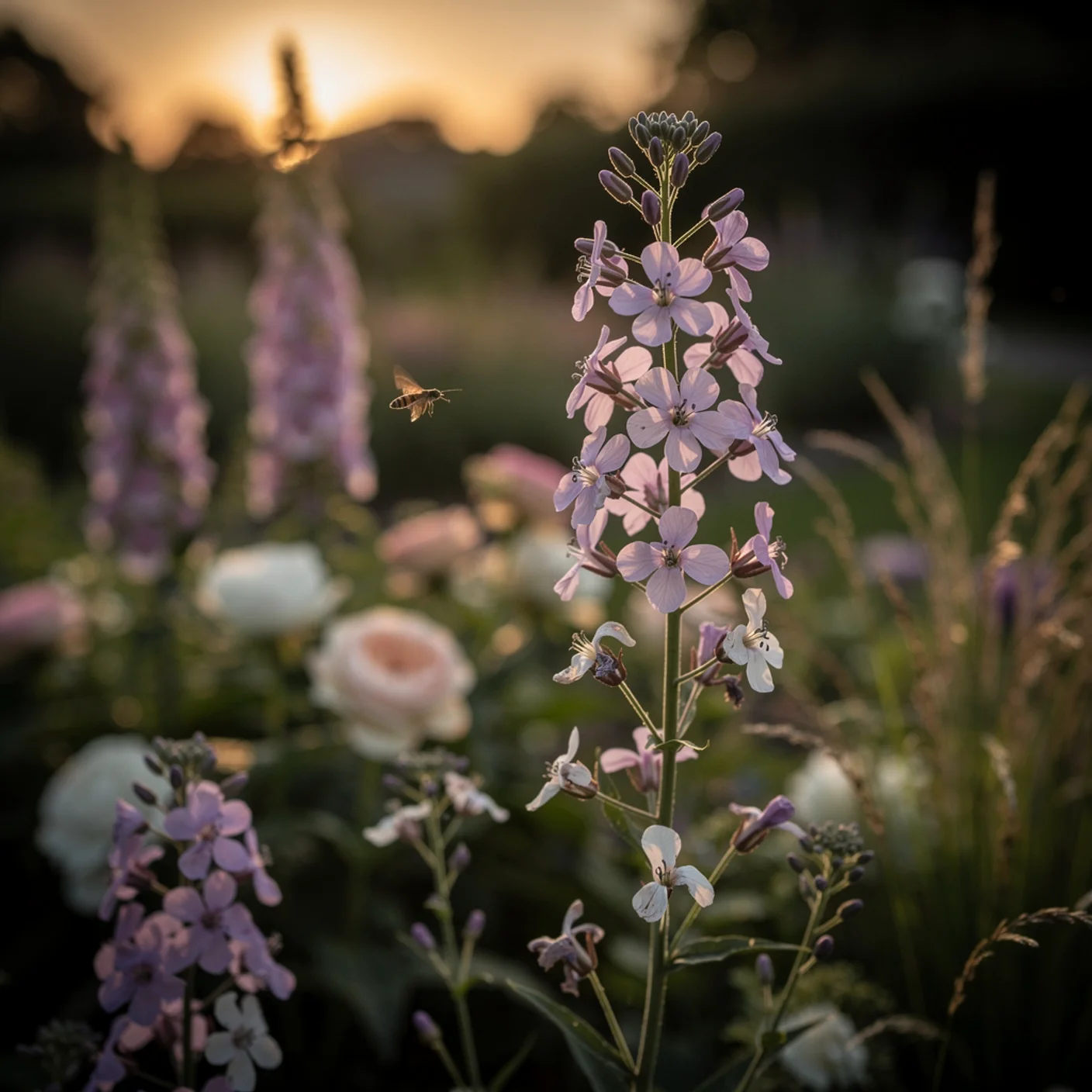
I grow them at the back of a border near the seating area, because this is a plant you experience rather than display. Mix them with nicotiana and night-scented stocks for an evening garden that comes alive as the sun goes down. The daytime garden is for looking at. The evening garden is for being in. Evening primrose understands the difference.
Where to Buy
If you want to try evening primrose for yourself, here's where I'd point you:
Also available as seeds — Oenothera 'Lemon Sunset' - Seeds →
We may earn a small commission from purchases made through our links, at no extra cost to you.
✿ From the folklore cabinet
Evening primrose is not a primrose at all — it's in the willowherb family. It was brought to Europe from North America in the early seventeenth century as a curiosity. The entire plant is edible — roots, leaves, flowers — and the seed oil is now a major health supplement, rich in gamma-linolenic acid. Native Americans used the plant medicinally for centuries before European settlers took notice. The German name 'Nachtkerze' means 'night candle,' which I think captures it better than our rather pedestrian English name.