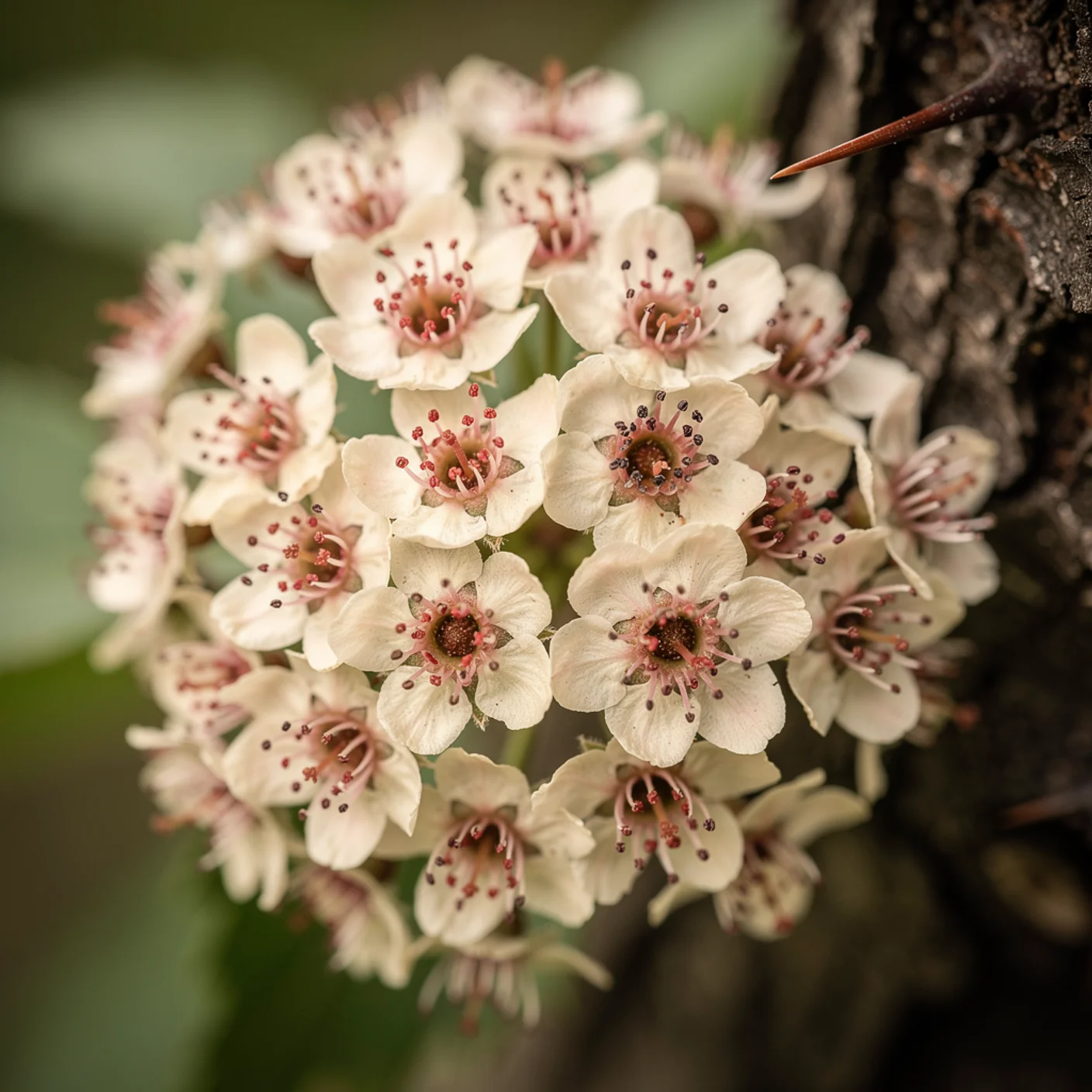
Hawthorn
May Blossom
“The backbone of British hedgerows and the definitive sign that May has arrived. Wild, thorny, scented, and magnificent.”
— ROSIE
Rosie's Take
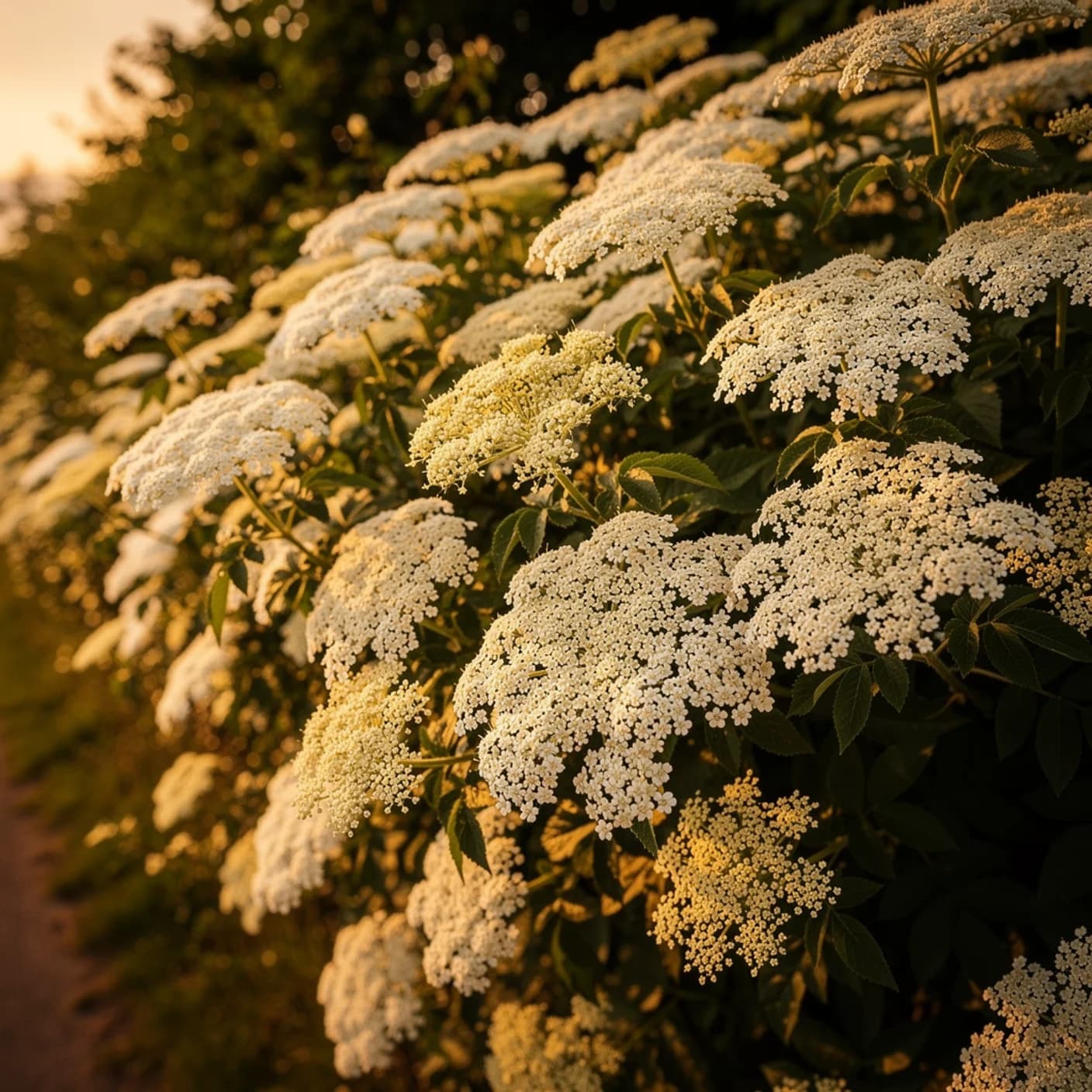
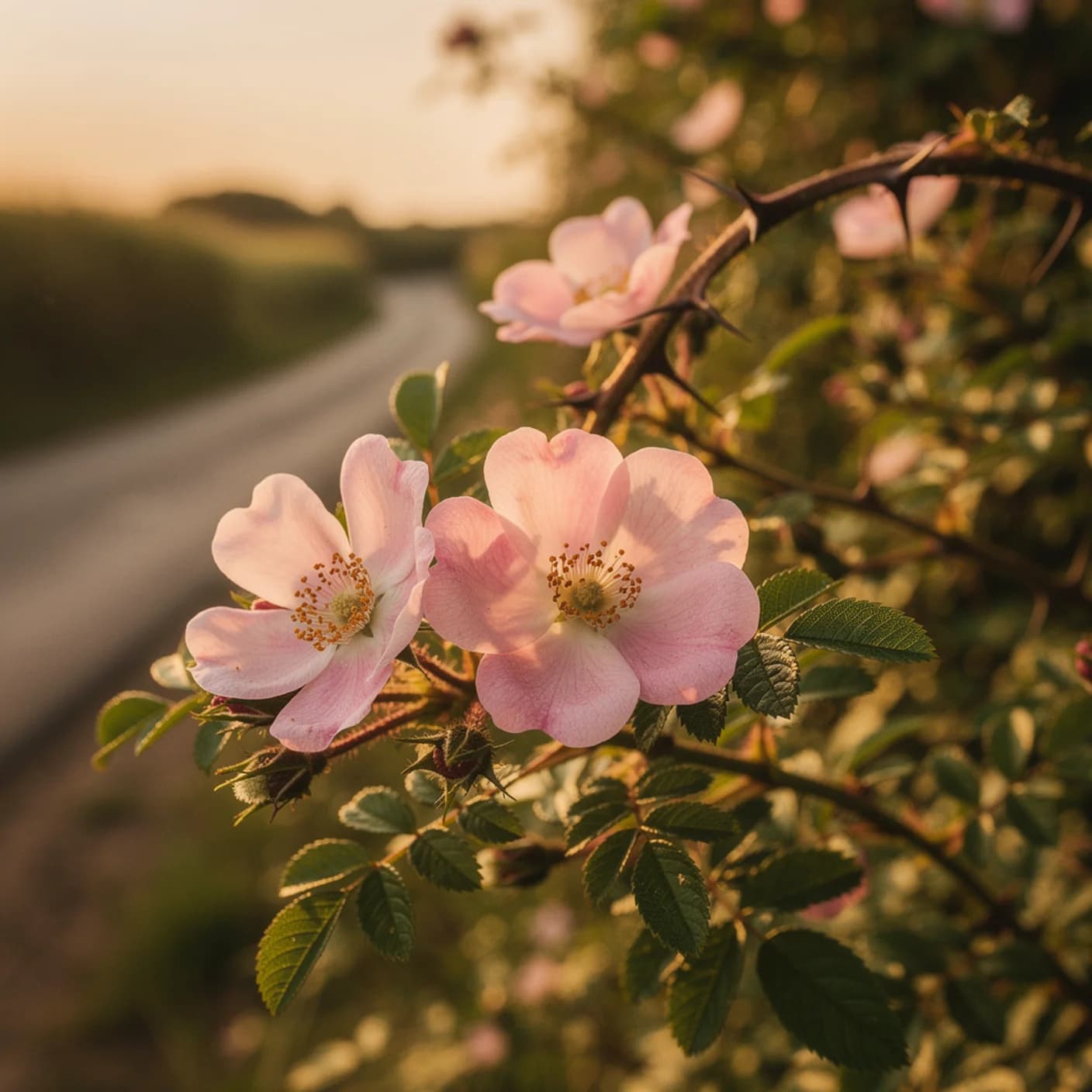
When the hawthorn blooms, you know May has properly arrived. Those clouds of creamy-white blossom covering every hedgerow in the countryside — it's like the landscape has been given a fresh coat of paint. And that scent. Sweet, heavy, slightly musty, unlike anything else — some people love it, some find it unsettling. I'm firmly in the first camp.
Crataegus monogyna is the backbone of the British hedgerow. It's been planted as field boundaries since the Enclosure Acts, which means every country lane in England is essentially lined with hawthorn. When it flowers in May — hence the common name — the effect is extraordinary. An entire hedgerow becomes a wall of blossom.
I cut a few branches for the house every year, despite the old superstition that it's bad luck to bring May blossom indoors. The branches are thorny, which makes arranging them a slightly painful affair, but a single branch in a tall vase — all those tiny white flowers clustered along dark, angular wood — has a wild, hedgerow beauty that no cultivated flower can replicate.
The autumn berries are equally good. Those dark red haws clustered along bare branches are some of the richest colour in the November hedgerow, and the birds are mad for them. A plant that gives you blossom in spring, shade in summer, berries in autumn, and structural bare branches in winter has earned its place as the most important hedge plant in Britain.
Where to Buy
If you want to try hawthorn for yourself, here's where I'd point you:
We may earn a small commission from purchases made through our links, at no extra cost to you.
✿ From the folklore cabinet
Hawthorn is the most folklore-laden tree in Britain. It was sacred to the Celts, associated with fairy entrances, and to this day many farmers won't cut a lone hawthorn in a field for fear of bad luck. The tradition of never bringing May blossom indoors may relate to the scent — it contains trimethylamine, the same chemical found in decomposing tissue, which our ancestors would have recognised. I bring it in anyway.