Corydalis
Père David (Corydalis flexuosa)
“The most extraordinary blue in the spring shade garden. Turquoise flowers above bronze-flushed ferny foliage, for gardeners who appreciate a plant that knows when to bow out.”
— ROSIE
Rosie's Take
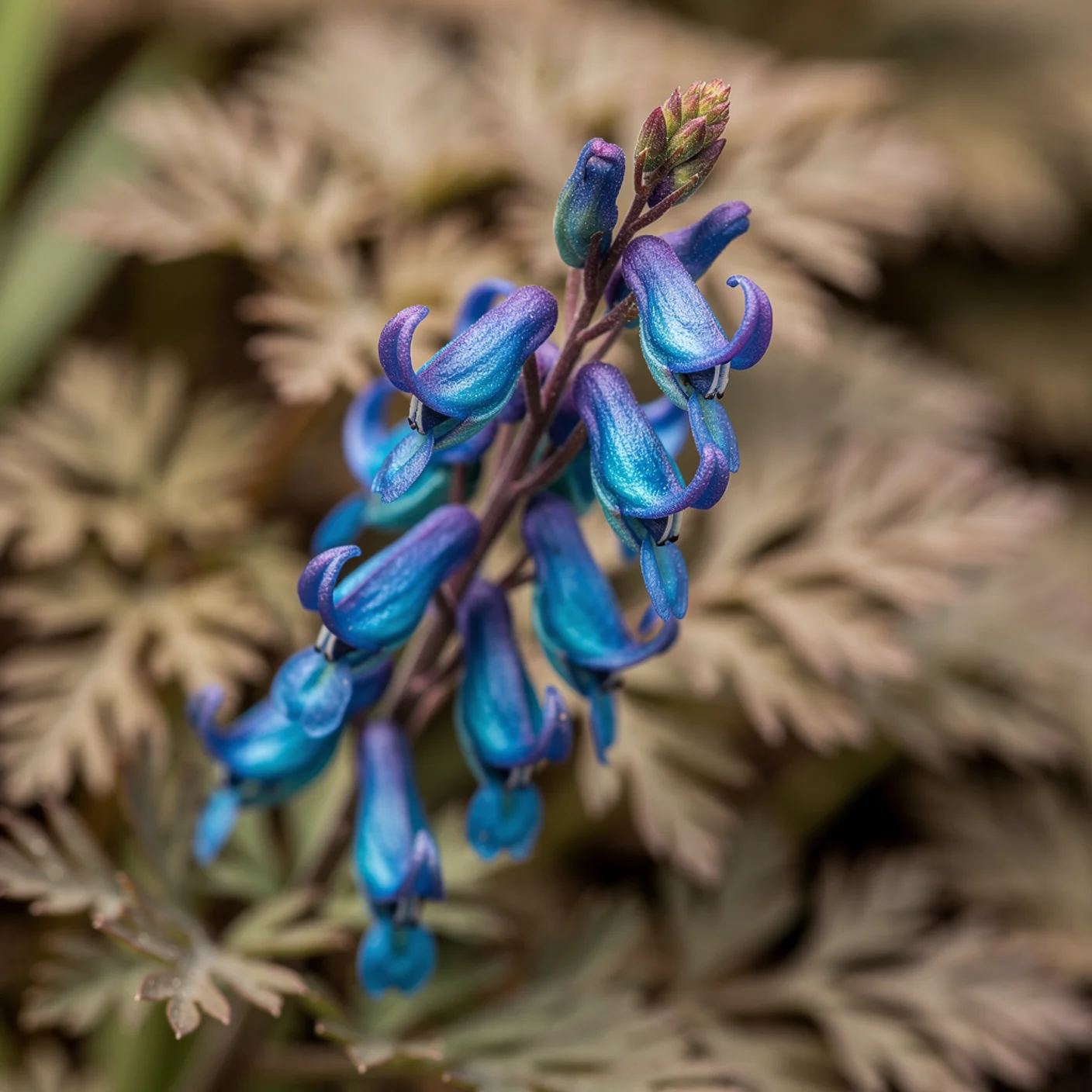
The blue of Corydalis flexuosa is one of those colours that genuinely stops you. Not sky blue, not cornflower blue — something more complex, more electric. A vivid, slightly turquoise, smoky blue that's closer to the colour of a kingfisher than anything in the usual garden palette. In April and May, the racemes of small, spurred, tubular flowers hover above ferny, bronze-tinted foliage, and the whole effect is of something impossibly exotic growing in a shady British border.
It's a woodland plant from China — 'Père David' was named for the French missionary and naturalist Armand David, who explored the forests of western China in the 1860s. The same man who brought the handkerchief tree and Père David's deer to Western attention. You get the sense that everything he found was remarkable, and this corydalis is no exception.
The flowers are individually small — maybe an inch long — and spurred like tiny fumitory, held in loose clusters on slender stems about a foot tall. The foliage is as good as the flowers — finely divided, fern-like, often flushed with bronze or purple, particularly in the 'China Blue' and 'Purple Leaf' forms. It's a plant with as much to offer below the flower line as above it.
It wants shade and moisture — the conditions of the Chinese forest floor — and it'll go dormant in summer if it gets too dry. That disappearing act puts some gardeners off, but I've come to appreciate it. A plant that arrives in spring, puts on a show of extraordinary blue, and then quietly retires is doing exactly what spring should do. It's not lazy. It's seasonal. Grow it with ferns and hostas that'll fill the gap when it goes. The garden doesn't need every plant performing twelve months a year.
Where to Buy
If you want to try corydalis for yourself, here's where I'd point you:
We may earn a small commission from purchases made through our links, at no extra cost to you.
✿ From the folklore cabinet
Corydalis flexuosa was introduced to Western gardens from China in 1986, making it a relatively recent arrival. It was collected in the mountains of Sichuan province by a Sino-British botanical expedition. The genus name comes from the Greek 'korydallis,' meaning crested lark, because the flower spur resembles the bird's crest. Père David — the French Lazarist priest for whom this species group is named — was one of the great naturalist-explorers of the nineteenth century. He discovered the giant panda, the dove tree, and the deer that bears his name. That this small, shade-loving plant from the forest floor carries his name feels right. David was someone who noticed the things other people walked past.