Solomon's Seal
Polygonatum multiflorum
“The most graceful plant in any shade garden. Those arching, bell-hung stems make every spring arrangement look effortlessly considered.”
— ROSIE
Rosie's Take
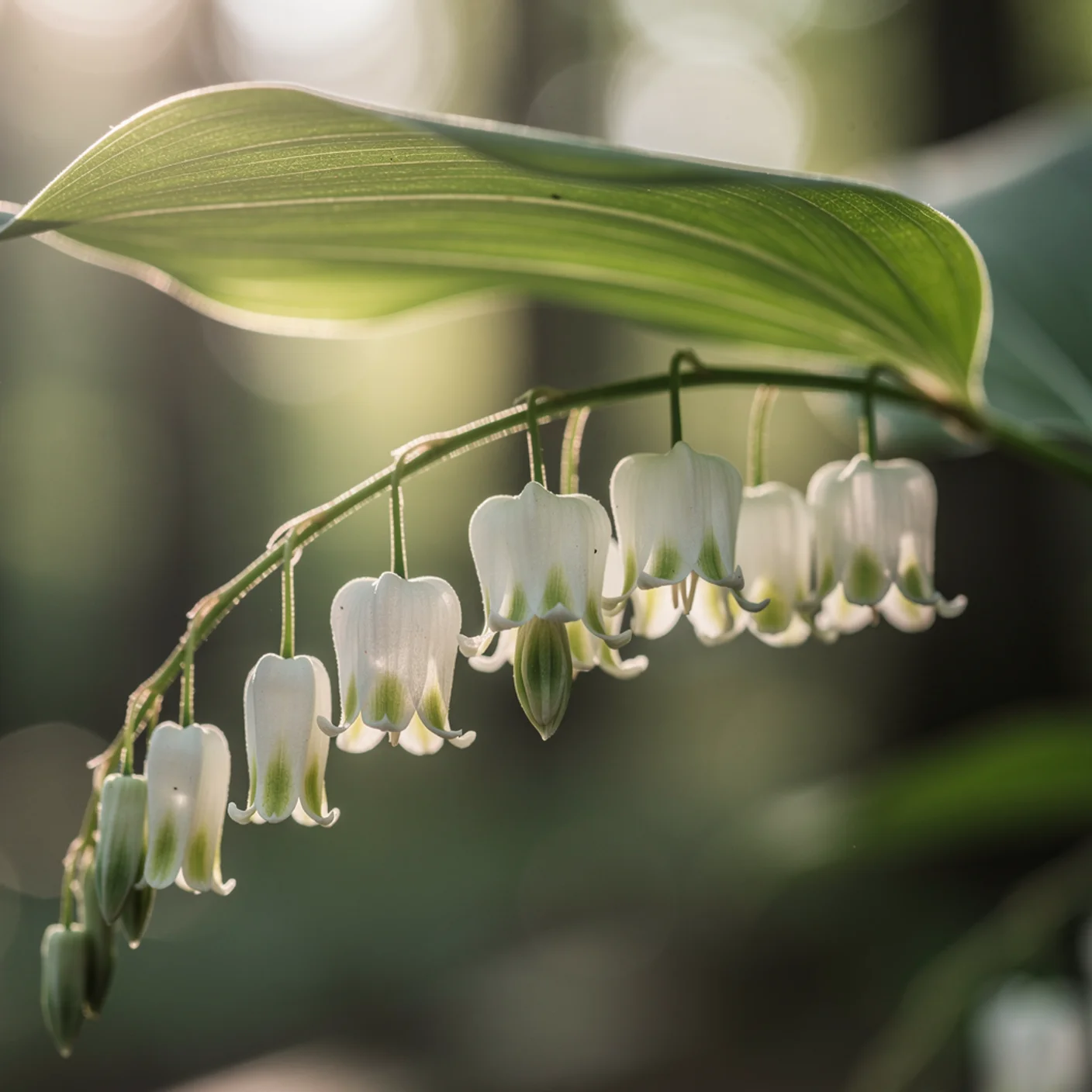
Solomon's seal is the kind of plant that makes you stop and really look. Those arching stems, hung with rows of small, white, green-tipped bells — it's like a natural chandelier, elegant and quiet and completely unbothered by whatever else is happening in the garden.
Polygonatum multiflorum is the native British species, and you'll find it in old woodlands if you know where to look. I first noticed it growing along a shady bank in the Cotswolds, and I remember thinking it looked like something from a medieval illustration. There's a formality to it, a grace, that most woodland plants lack.
In the garden, it's a gift for difficult spots. Deep shade, dry shade, that impossible strip under a north-facing wall — Solomon's seal doesn't mind. It spreads slowly by rhizome, sending up those distinctive arching stems each spring, and by May they're hung with bells that dangle in perfectly spaced rows. The leaves are beautiful too — broad, ribbed, fresh green, and arranged alternately along the stem in a pattern that looks deliberate.
I use cut stems in spring arrangements where I want something that isn't a flower in the conventional sense. A few arching stems of Solomon's seal with some ferns and a handful of cow parsley — that's a woodland arrangement that looks like you know exactly what you're doing. The stems curve beautifully in a vase, which gives you movement and line that straight-stemmed flowers simply can't.
✿ From the folklore cabinet
The name refers to King Solomon — one story says the root, when cut crosswise, shows markings that resemble the Star of David, and that Solomon himself set his seal upon the plant to mark its healing properties. It was used in traditional medicine for centuries as a remedy for bruises and broken bones — herbalist John Gerard wrote in 1597 that the roots 'taketh away in one night, or two at the most, any bruise gotten by falls or women's wilfulness in stumbling upon their hasty husband's fists.' Medieval herbalism wasn't always charming.