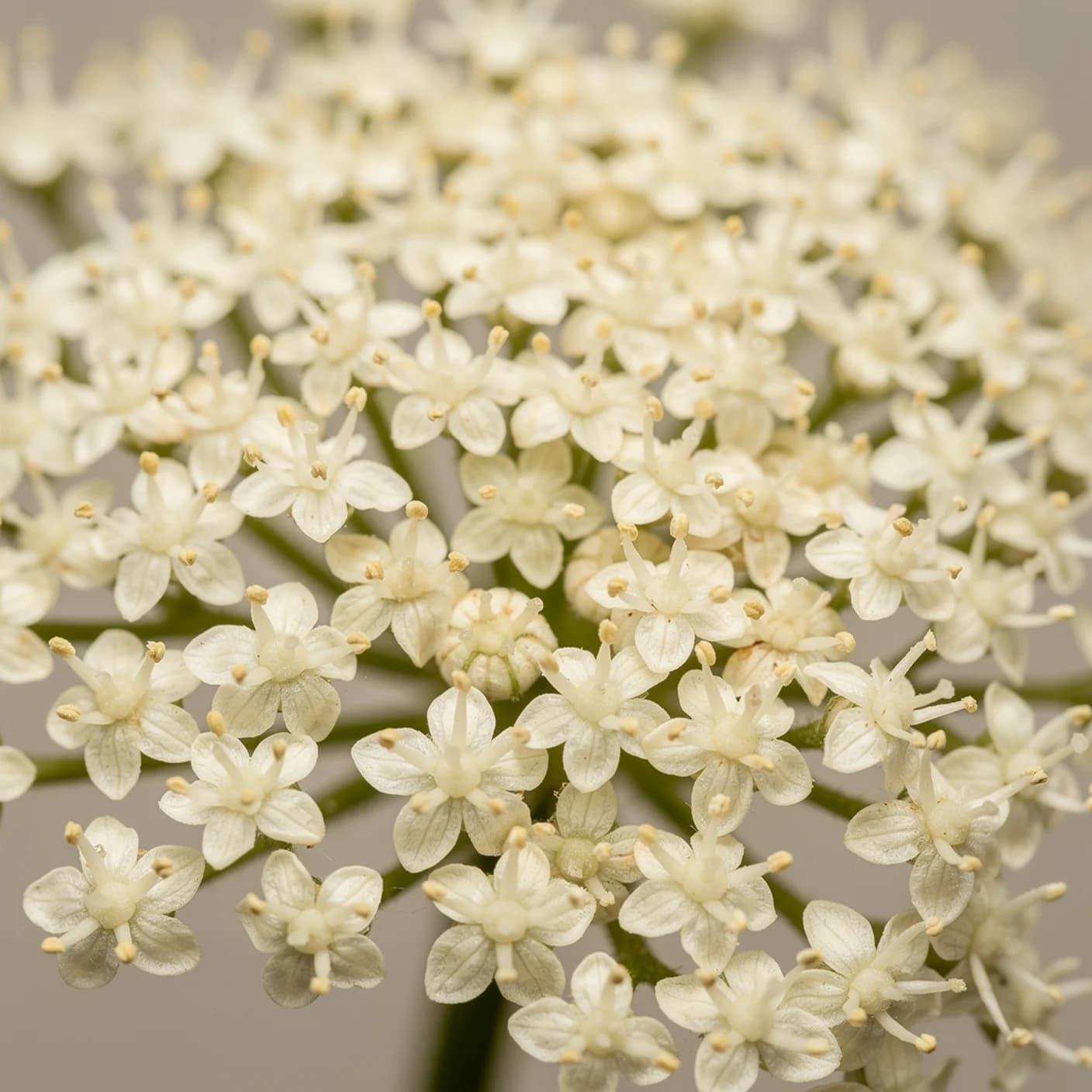
Elderflower
Sambucus Nigra
“June's most generous hedgerow offering. Bring the frothy white heads indoors, make the cordial, and breathe it all in while it lasts.”
— ROSIE
Rosie's Take
Every June, the hedgerows foam with elderflower, and for about three weeks the air smells of muscat grapes and summer. It's one of those scents that's so tied to a specific moment in the year that a single breath of it takes me straight to long evenings, warm grass, and the feeling that summer has properly arrived.
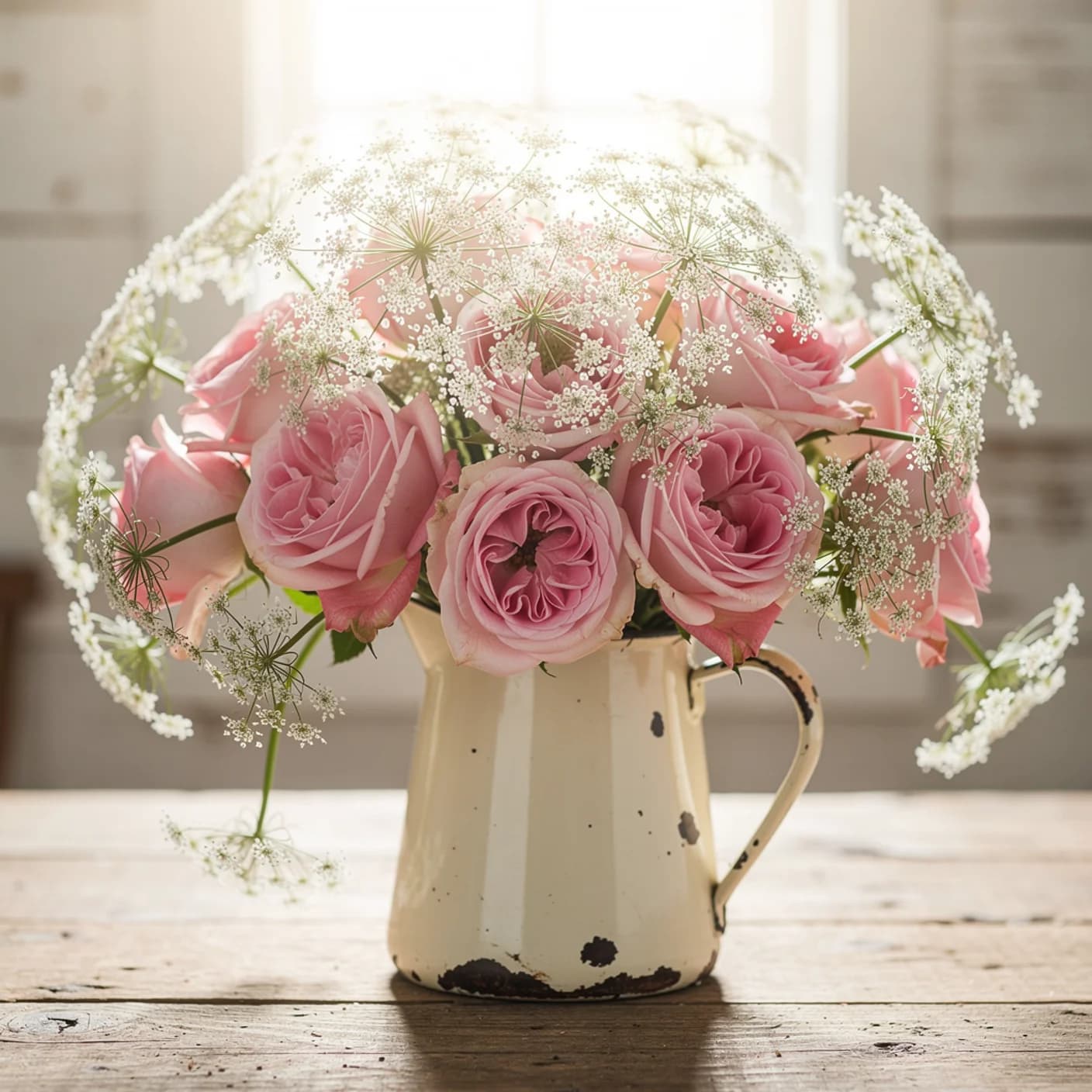
The flowers themselves are modest — flat, creamy-white umbels made up of hundreds of tiny individual flowers arranged in these lace-like discs. Individually they're nothing much. En masse, covering an entire elder tree, they're extraordinary — this cascade of frothy white against dark green leaves that looks like the hedgerow has put on its best dress.
I cut a few stems for the house every year and they bring that scent indoors beautifully, if briefly. They drop pollen everywhere, which is the price you pay, but the perfume is worth the hoovering. A single large head floating in a bowl of water on the kitchen table is one of the simplest and most effective things June has to offer.
And then there's the cordial. I make a batch every year — elderflower heads, sugar, lemon, and a couple of days of patient steeping — and it tastes exactly the way June should taste. The best arrangements are the ones that engage more than just the eyes, and elderflower engages everything.
Where to Buy
If you want to try elderflower for yourself, here's where I'd point you:
We may earn a small commission from purchases made through our links, at no extra cost to you.
✿ From the folklore cabinet
Elder has more folklore than almost any British tree. It was considered the tree of the Elder Mother — a spirit who would curse anyone who cut the wood without asking permission first. Judas was said to have hanged himself from an elder, and witches were believed to hide in its branches. I just think it makes excellent cordial and looks beautiful in a vase.