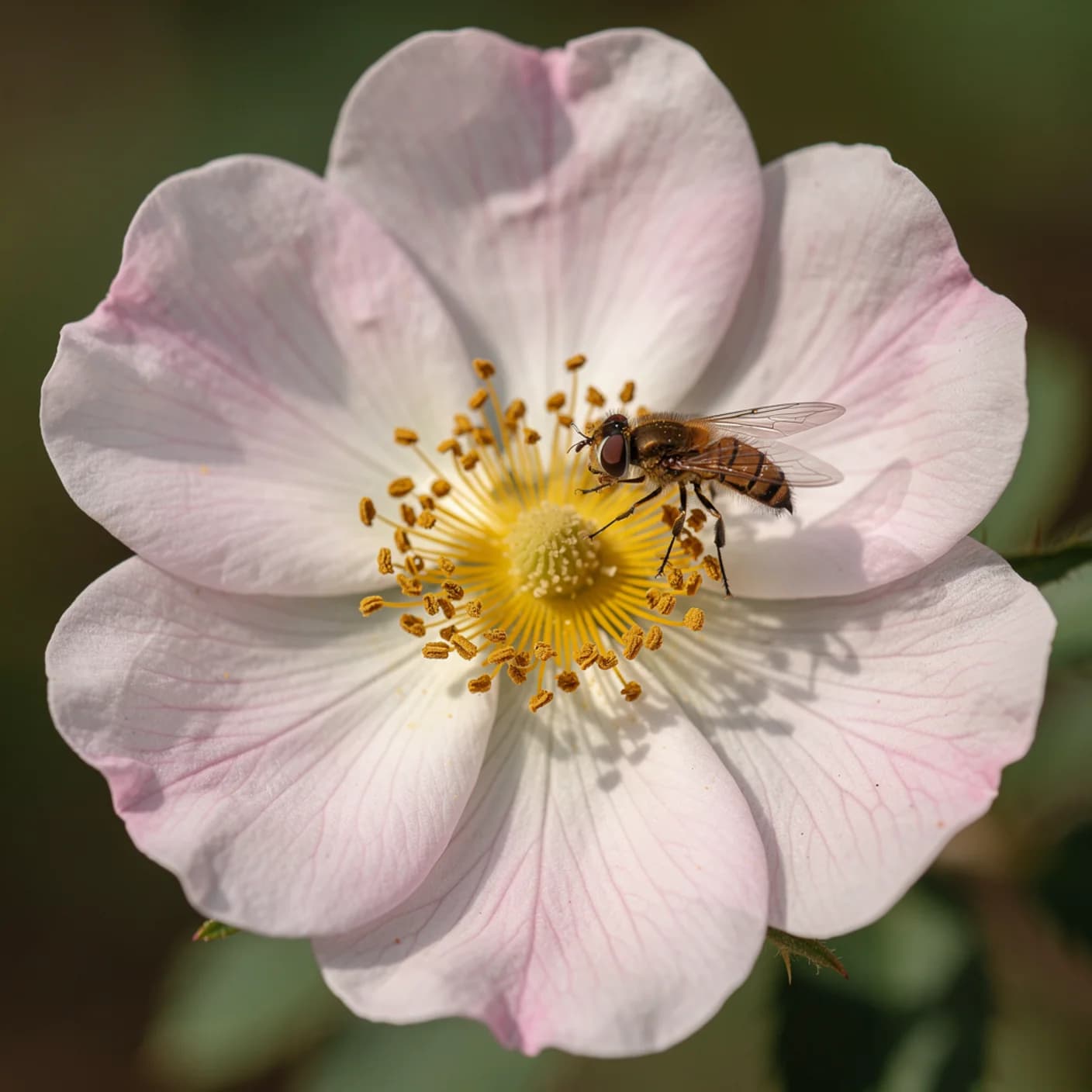
Dog Rose
Rosa Canina
“The hedgerow rose that makes cultivated ones look like they're trying too hard. Simple, scented, and followed by those gorgeous red hips in autumn.”
— ROSIE
Rosie's Take
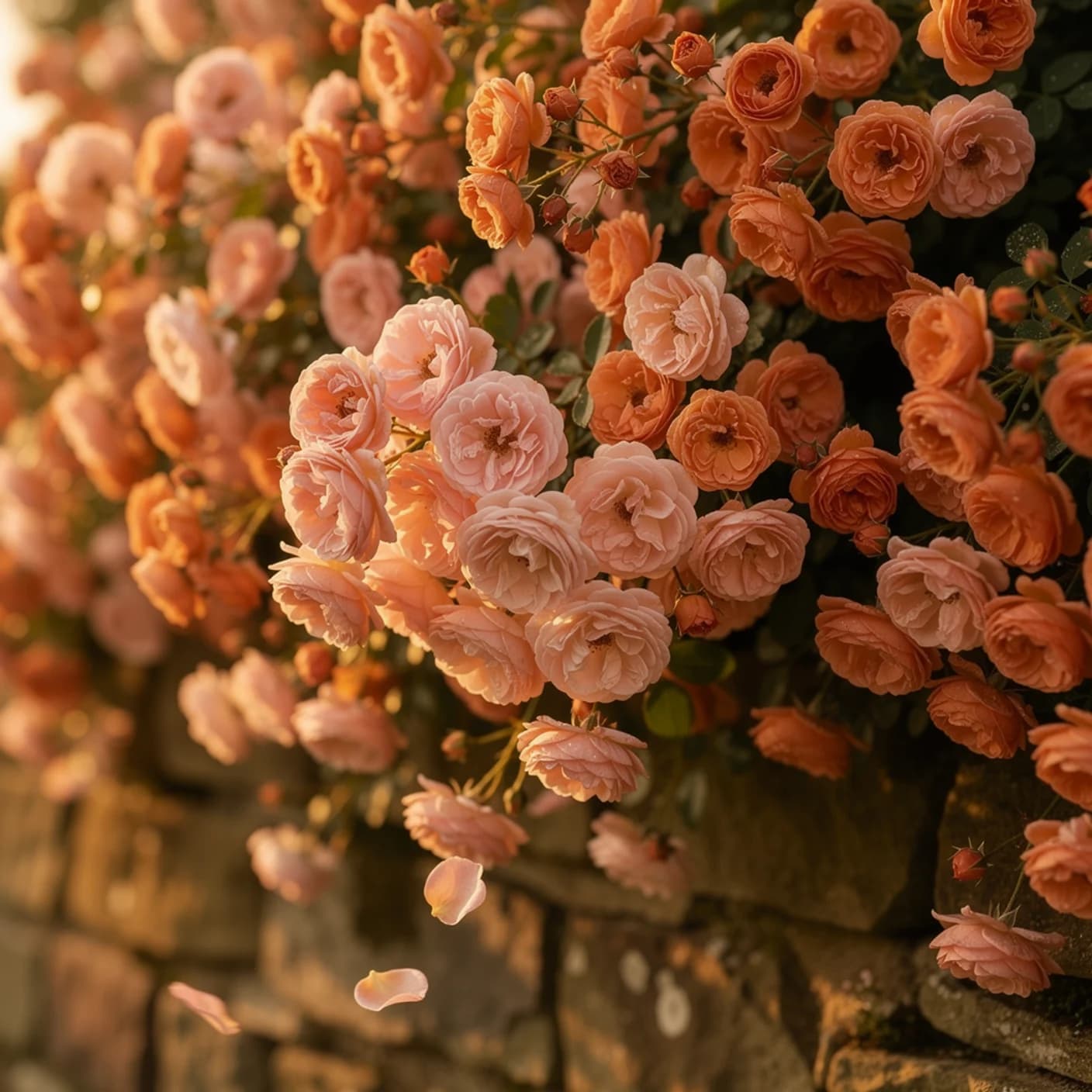
I know this is going to sound contrary, but some of my favourite roses aren't the cultivated ones. The wild dog rose — Rosa canina — is the one I look forward to seeing in the hedgerows every June, and I think it's more beautiful than most of the fancied-up garden varieties.
The flowers are simple — five petals, nothing double, nothing ruffled — in the palest, most delicate blush pink that fades to near-white as they age. Each one is barely there for a few days before the petals drop. But that simplicity is exactly the point. They look like someone drew the platonic ideal of a flower and left it at that.
The scent is light and clean — nothing like the heavy, old-rose perfume of a garden variety, more like fresh air with a suggestion of sweetness underneath. You catch it when you're walking past a hedge on a warm evening, and it's one of those scents that makes you slow down without quite knowing why.
The hips that follow in autumn are another reason to love them — those bright, glossy red fruits clustered along bare stems are some of the best things the hedgerow produces. They're packed with vitamin C and they look extraordinary in a winter arrangement with bare branches and dried seed heads. The dog rose gives you two completely different seasons of beauty, both of them effortless, and asks for nothing at all in return.
✿ From the folklore cabinet
The dog rose has been growing in British hedgerows since long before anyone thought to cultivate roses in gardens. The 'dog' in the name isn't an insult — it comes from the Old English 'dagga,' meaning dagger, referring to the thorns. Roman physicians used the roots to treat rabid dog bites, which gave it another canine connection. The rosehips were collected by schoolchildren during the Second World War to make vitamin C syrup.