Euphorbia
Characias Wulfenii
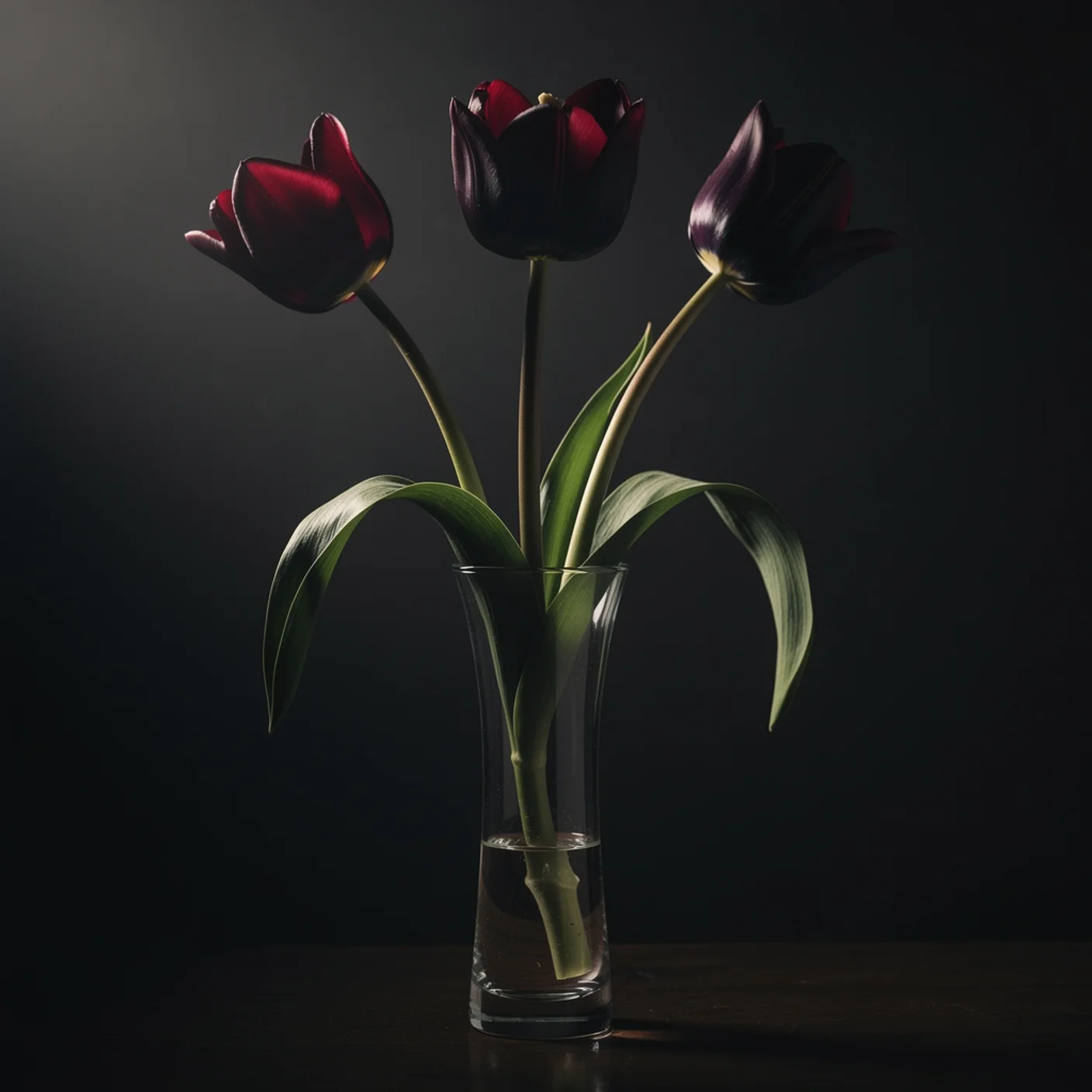
“Plant it where it catches the morning light and pair it with dark tulips. The acid green against near-black is one of spring's best tricks.”
— ROSIE
Rosie's Take
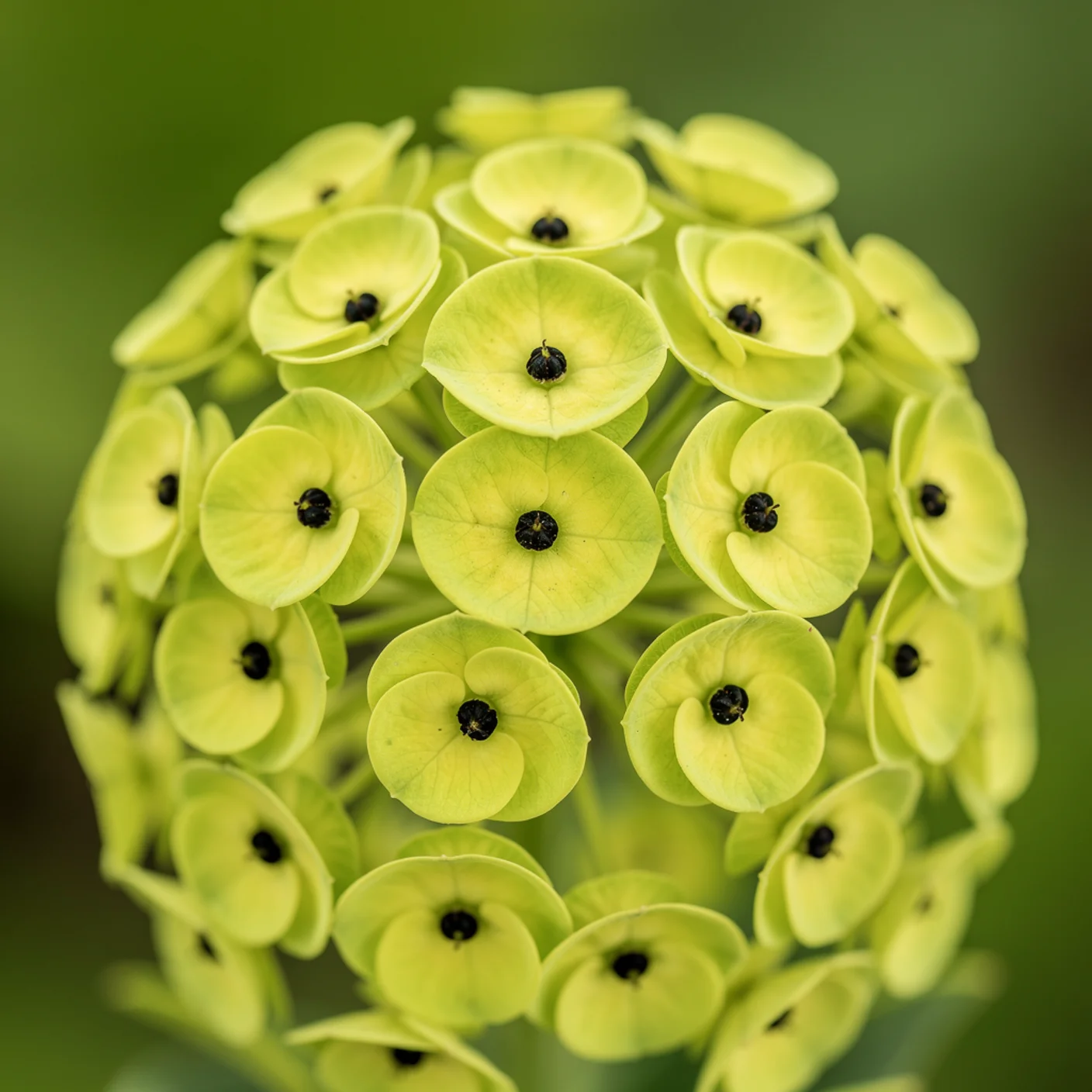
Euphorbia is the plant that taught me to love green flowers. For years I thought green wasn't a colour that flowers were allowed to be — flowers were meant to be pink or white or blue, and green was what the leaves did. Then I saw a mature Euphorbia characias Wulfenii in full spring glory and had to completely rethink my position.
Those enormous, cylindrical flower heads — dense columns of chartreuse-lime florets with dark, almost black centres — are unlike anything else in the garden. They glow. In late March and April, when the light is still low and golden, a euphorbia in full bloom looks like it's producing its own light. I once heard someone describe it as 'vegetable electricity' and I've never found a better phrase.
The architectural quality is extraordinary. Each flowering stem stands upright, topped with that dense, rounded cylinder of acid-green, looking for all the world like a modernist sculpture that happens to be alive. Against the blue-grey evergreen foliage, the effect is sophisticated, unusual, and impossible to ignore.
I grow mine at the corner of a path where it catches the morning light, and in spring it's the first thing I photograph. It pairs brilliantly with dark tulips — Queen of Night is the obvious choice, and the obvious choice is the right one here. Black-maroon against acid green. Trust me.
A warning: the milky sap is an irritant. Gloves when you prune. And the self-seeded babies pop up everywhere with the cheerful persistence of something that knows it's welcome. It is. Euphorbia earned its place in my garden the first spring it flowered, and it's never lost it.
Where to Buy
If you want to try euphorbia for yourself, here's where I'd point you:
We may earn a small commission from purchases made through our links, at no extra cost to you.
✿ From the folklore cabinet
Euphorbia is named after Euphorbus, physician to King Juba of Mauritania, who wrote about the medicinal properties of the milky sap around 50 BC. The sap has been used — carefully — as a purgative, a poison, and a fish-stunner across many cultures. I keep my relationship with it purely visual.