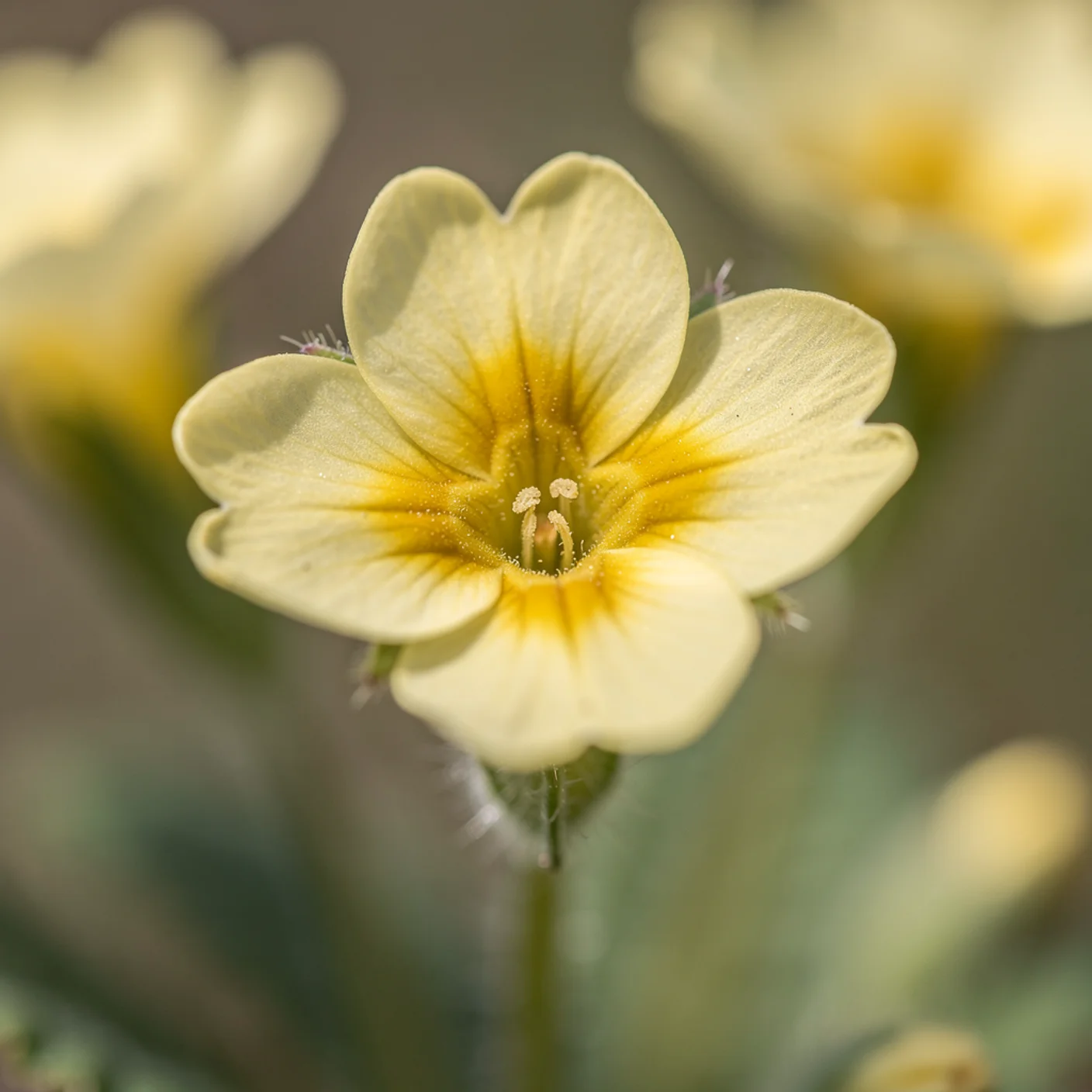
Primrose
Vulgaris
“The original spring flower. Nothing fancy, nothing forced — just a small yellow face that means everything is about to change.”
— ROSIE
Rosie's Take
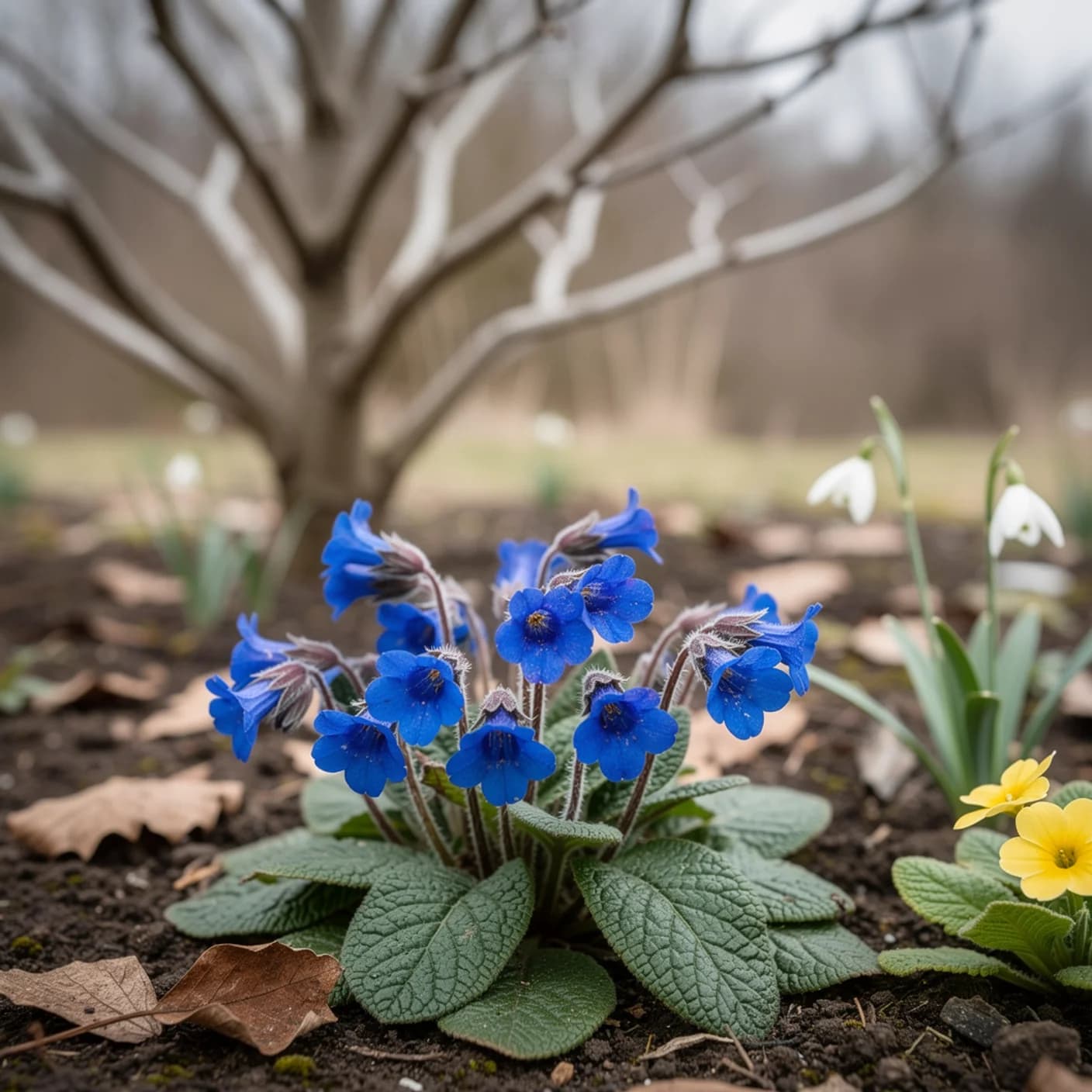
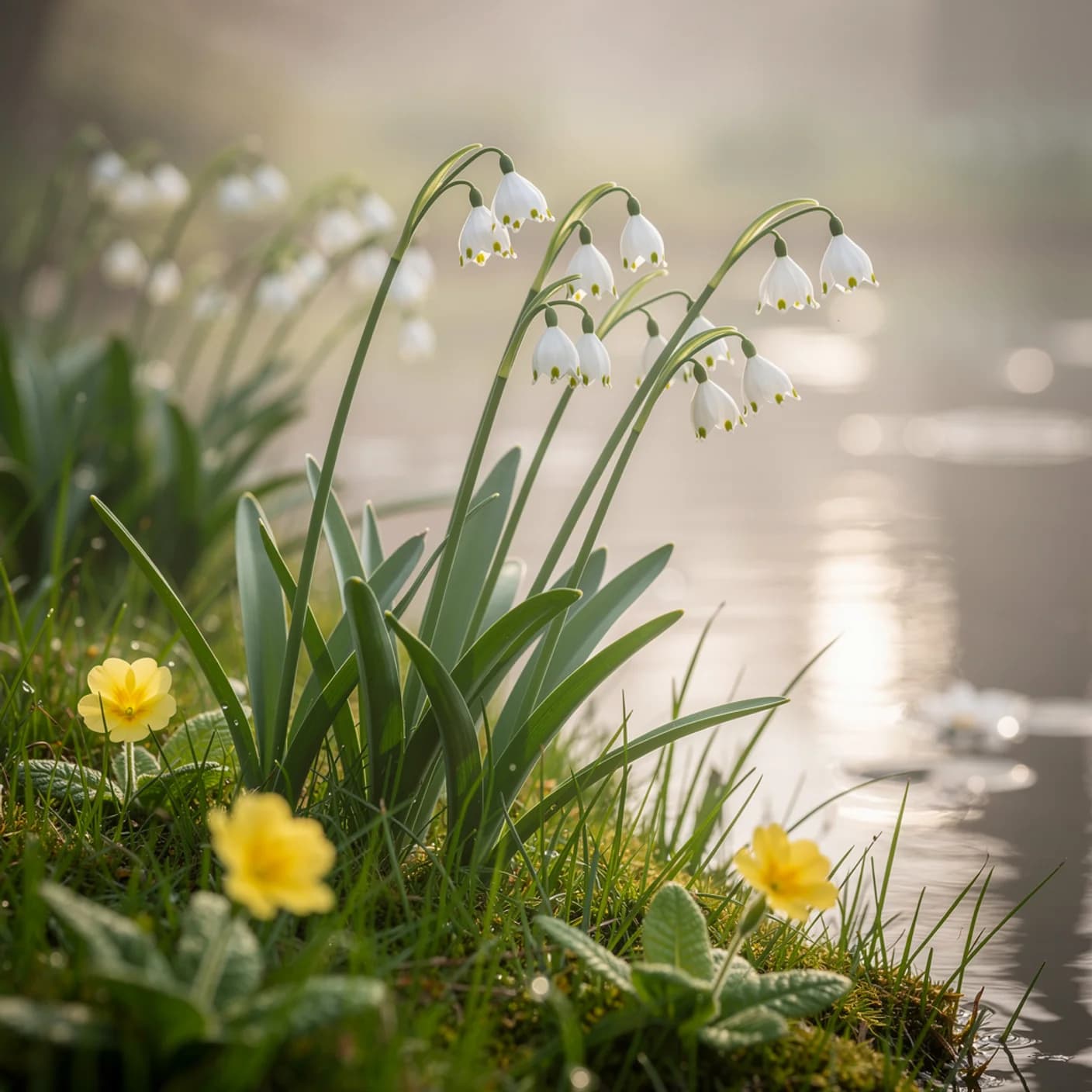
The first primrose of the year is one of those small, private events that I look forward to out of all proportion. It usually appears sometime in late February or early March — a pale, buttery-yellow face peering out of the leaf litter at the base of a hedge — and every time I see it I feel something shift. Spring is coming. The proof is right there.
Primula vulgaris is the native primrose, and it's about as far from the brash polyanthus bunches at the garden centre as you can get. Wild primroses are smaller, more delicate, and that colour — a soft, cool yellow with a darker egg-yolk centre — is one of the most specific and lovely things the plant kingdom produces.
I find them on lane banks and in light woodland, and I never pick them because there's something about seeing them where they've chosen to grow that feels essential to the experience. That said, a few primrose plants in a shady corner of the garden will naturalise beautifully and give you that same private thrill on your own doorstep.
The scent is a quiet thing — you have to get your nose right down to the flower — but it's there: a faint, clean sweetness that smells exactly like early spring feels. There's no substitute for it and no way to bottle it. You just have to kneel down on cold ground and breathe in.
Where to Buy
If you want to try primrose for yourself, here's where I'd point you:
We may earn a small commission from purchases made through our links, at no extra cost to you.
✿ From the folklore cabinet
The name 'primrose' comes from 'prima rosa' — first flower. In folklore, primroses were associated with fairy doorways, and picking them was said to open a path to the fairy realm. More practically, country people used the appearance of primroses as a signal that it was time to let the cows out to graze. I prefer the fairy version.