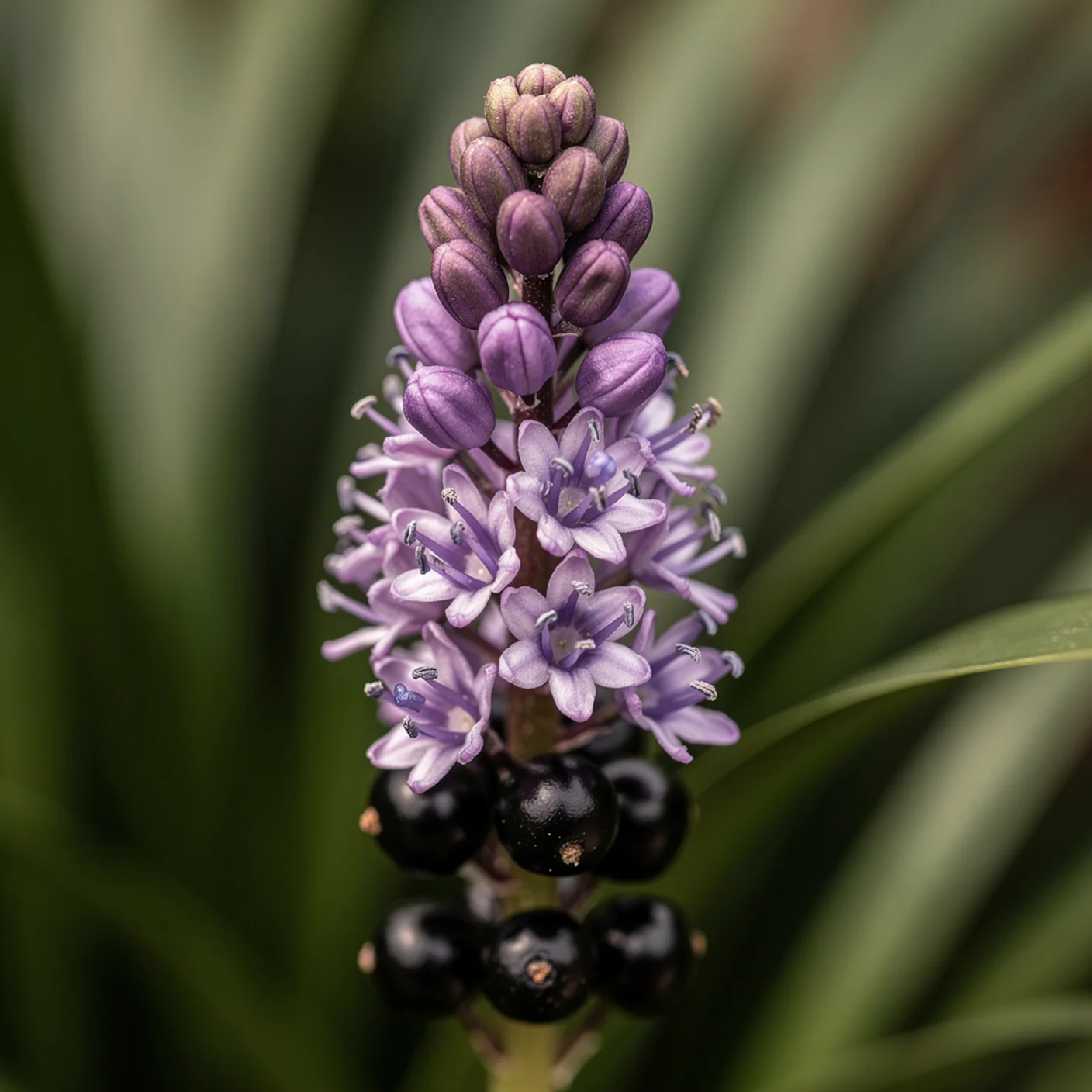
Liriope
muscari (Lily Turf)
“Autumn-flowering, shade-tolerant, evergreen ground cover with violet-purple flower spikes and black winter berries. Does everything well, asks for nothing, and nobody gives it the credit it deserves.”
— ROSIE
Rosie's Take
Liriope is the plant I recommend to people who say nothing flowers in shade in autumn. It does, quietly, without any fuss, producing spikes of tiny violet-purple flowers in September and October when the rest of the garden is winding down. The flowers look like miniature grape hyacinths — dense clusters of small, rounded buds on upright stems — which is why it shares the species name 'muscari.' But this is an autumn plant, not a spring one, and it flowers in the shadows that other plants avoid.
The foliage is the real year-round asset — arching, grassy, dark-green leaves that form dense, evergreen clumps. In winter, when the borders are bare, liriope sits there looking tidy and green and alive, doing the quiet work of ground cover while everything else has given up. The leaves are tougher than they look — leathery, resistant to slugs, unbothered by drought once established.
I grow it along the shaded edge of a path where it softens the hard line between stone and soil. It's one of those plants that you walk past a hundred times without noticing, and then one day in early October you realise the whole edge is studded with purple flower spikes and you wonder how you missed it. That's liriope's way — it doesn't announce itself. It just delivers.
After the flowers, it produces small, shiny, black berries that persist through winter — another quiet pleasure. I've seen liriope used brilliantly in Japanese gardens, where its restraint and year-round presence suit the minimalist aesthetic perfectly. But it's equally at home under a beech hedge in Suffolk or edging a patio in a Manchester terrace garden. It doesn't care where it is, as long as it's not waterlogged. The most underrated plant in British gardening, and I'll keep saying so until people listen.
Where to Buy
If you want to try liriope for yourself, here's where I'd point you:
We may earn a small commission from purchases made through our links, at no extra cost to you.
✿ From the folklore cabinet
Liriope is named after a nymph in Greek mythology — the mother of Narcissus, no less. The association with the most famously beautiful figure in Greek myth seems generous for such a modest plant, but perhaps that's the point — beauty doesn't always need to be obvious. In Japan, liriope (called 'yaburan') has been cultivated in temple gardens for centuries, valued for exactly the qualities British gardeners overlook: restraint, reliability, and quiet presence. It's a member of the asparagus family, which is one of those botanical facts that seems wrong until you look at the flower structure closely and realise the family resemblance was there all along.