Cotinus
Grace (Smoke Bush)
“The garden's most dramatic autumn moment. 'Grace' gives you purple summer leaves, smoky plumes, and then a final act of blazing scarlet that stops traffic.”
— ROSIE
Rosie's Take
Cotinus 'Grace' is the plant that makes other gardeners stop their car. I'm not exaggerating. In autumn, when the foliage turns from its summer purple to a blazing translucent scarlet-orange, backlit by low October sun, it is one of the most visually dramatic things any garden plant does. It glows. It actually glows, as though lit from within.
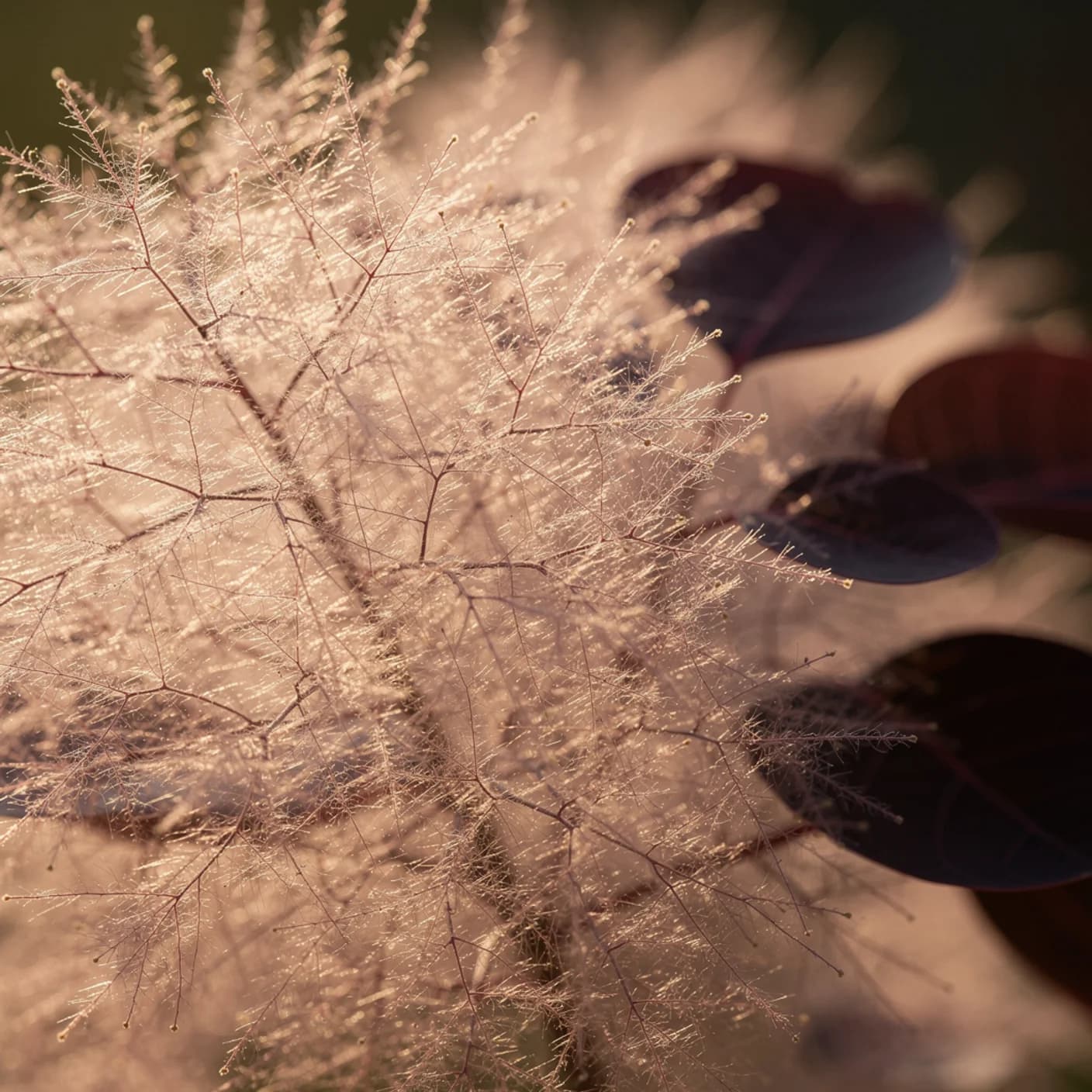
In summer, the large, rounded leaves are a deep plum-purple — handsome and structural, giving a dark anchor to a border. But the real show is the 'smoke' and the autumn colour. In midsummer, the plant produces panicles of tiny flowers that develop into feathery, plumy seed heads — a haze of pinkish-beige filaments that gives the entire shrub a soft, smoky outline. From a distance it looks like the bush is gently smouldering. It's one of the most beautiful optical effects in the plant world.
The foliage is gorgeous for cutting. A few stems of those round, purple leaves add depth and drama to any arrangement — they last well in water and provide a backdrop against which other flowers sing. In autumn, the turning leaves — scarlet, orange, gold, sometimes all on the same branch — are even better. A jug of cotinus foliage needs nothing else.
'Grace' is a big plant if you let it go — easily fifteen feet. I prune mine hard every other spring to keep it manageable and to encourage the biggest, most richly coloured leaves. Harder pruning means bigger leaves means more drama. Sometimes in gardening, as in life, being firm is the kindest thing you can do.
Where to Buy
If you want to try cotinus for yourself, here's where I'd point you:
We may earn a small commission from purchases made through our links, at no extra cost to you.
✿ From the folklore cabinet
Cotinus comes from the Greek 'kotinos,' an old name for the wild olive, though the resemblance is slight. The common name 'smoke bush' is universal and self-explanatory — those feathery plumes genuinely do make it look like the plant is producing smoke. 'Grace' is a hybrid between the European C. coggygria and the American C. obovatus, bred by the great plantsman Peter Dummer at Hillier Nurseries in Hampshire. He named it for his wife. The best plants, it seems, are often named for the people their breeders loved.