Joe Pye Weed
Eupatorium purpureum subsp. maculatum 'Atropurpureum'
“Defiantly tall, magnificently abundant, and covered in butterflies from August to October. Joe Pye Weed is for gardeners who aren't afraid of a plant that takes up serious space.”
— ROSIE
Rosie's Take
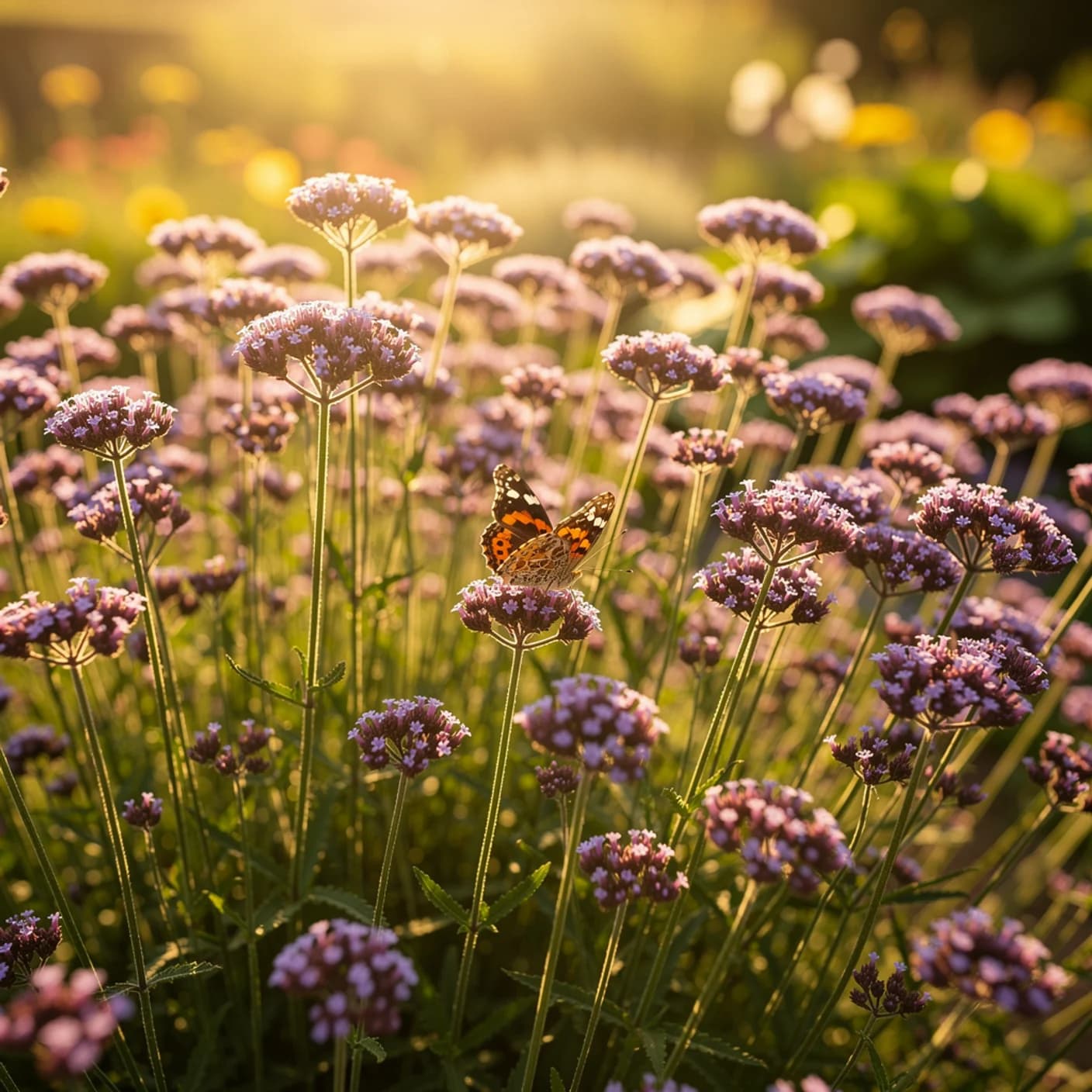
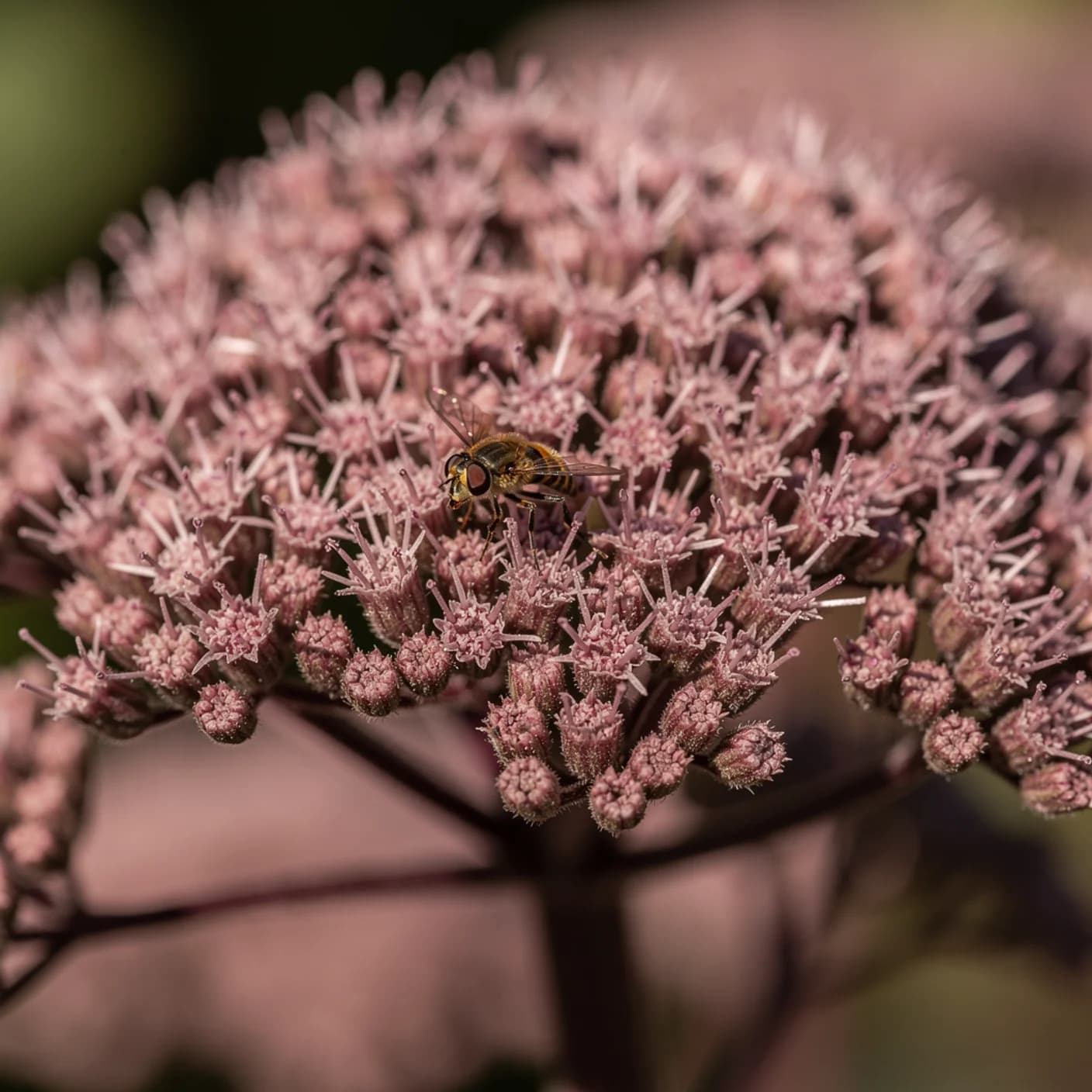
Joe Pye Weed is what happens when a plant decides to be magnificent and nobody can stop it. By late August, 'Atropurpureum' has reached seven feet tall — seven feet — with stout, wine-purple stems topped by enormous, domed flower heads the colour of dusty rose. Each flower head is a foot across, made up of hundreds of tiny, fuzzy, mauve-pink florets that attract every butterfly in the postcode. It's the skyscraper of the autumn border, and everything else has to look up.
The scale is the thing. In a garden culture obsessed with compact varieties and dwarf cultivars, Joe Pye Weed is refreshingly, defiantly tall. It doesn't apologise for taking up space. The stems are thick, straight, and flushed dark purple, which gives the whole plant an authority that smaller perennials can't match. When it's in full bloom with red admirals and peacock butterflies covering the flower heads, the effect is almost tropical in its abundance.
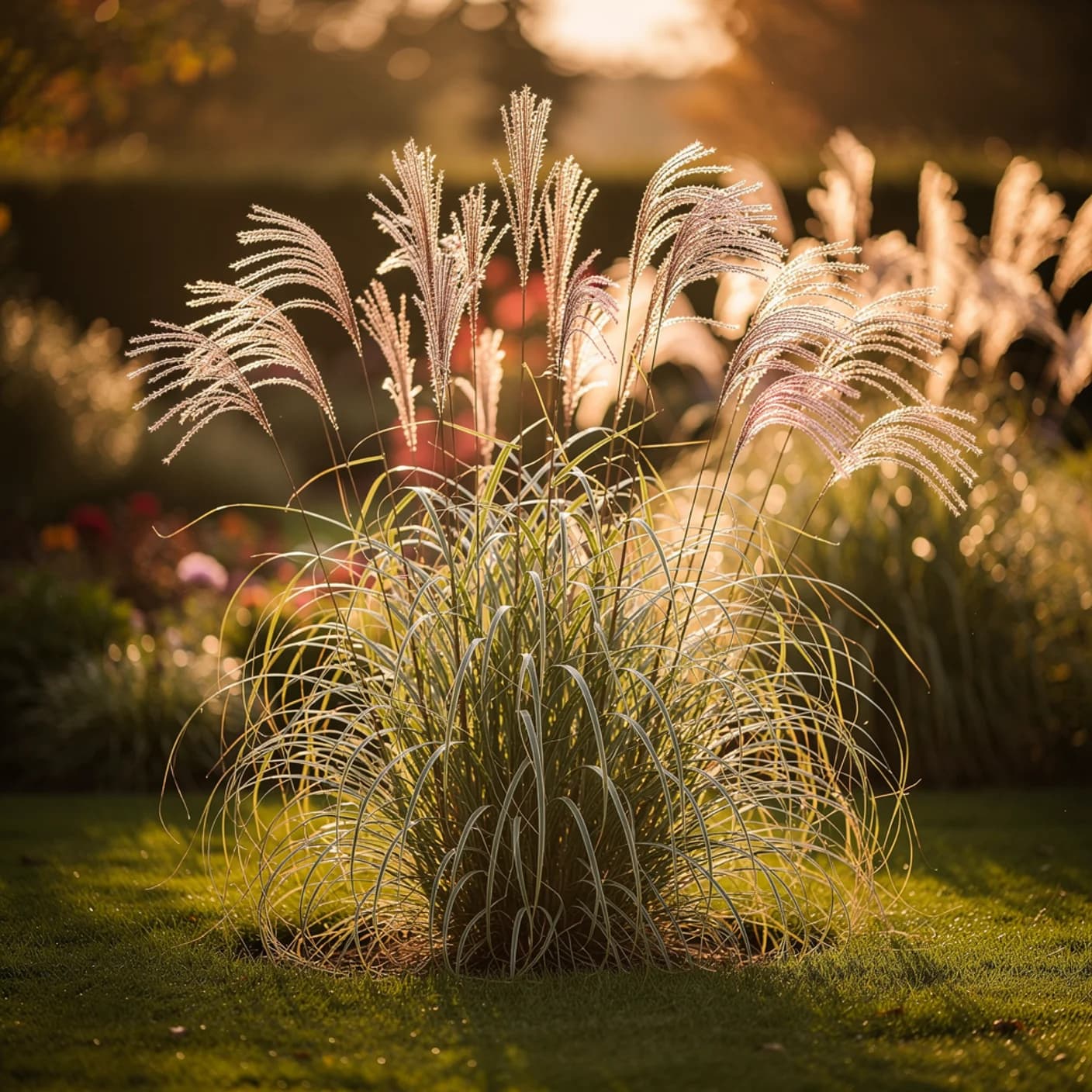
I grow mine at the back of a large border with tall grasses and late-flowering asters, and in September the combination is extraordinary — wine-purple stems, dusty-rose flower heads, feathery grass plumes, and a cloud of aster daisies. It's the prairie aesthetic that Piet Oudolf made famous, and it works because plants like Joe Pye Weed give it height and drama.
It needs space and moisture — in a small garden or dry soil, it'll flop and disappoint. But in a large border with decent soil, it's one of the most impactful perennials you can grow. The flower heads dry well too — cut them as they start to turn brown and they'll last through winter in a large floor vase, all that dusty-rose colour fading to a beautiful pale taupe. A plant that gives you four months of presence for the price of one planting.
Where to Buy
If you want to try joe pye weed for yourself, here's where I'd point you:
Also available as seeds — Eupatorium cannabinum - Kew Pollination Seed Collection →
We may earn a small commission from purchases made through our links, at no extra cost to you.
✿ From the folklore cabinet
Joe Pye was reportedly a Native American healer in New England who used the plant to treat typhus fever. Whether Joe Pye was a real person is debated, but the common name stuck, and it's one of the great names in gardening. The plant is native to eastern North America, where it grows in damp meadows and stream-sides. Eupatorium has been reclassified by botanists into Eutrochium, but nobody uses the new name because 'eupatorium' has been established for two centuries and 'eutrochium' sounds like a failed chemistry experiment. In American prairie-restoration planting, Joe Pye Weed is one of the key species — proof that the most beautiful gardens often start with the most native-looking plants.