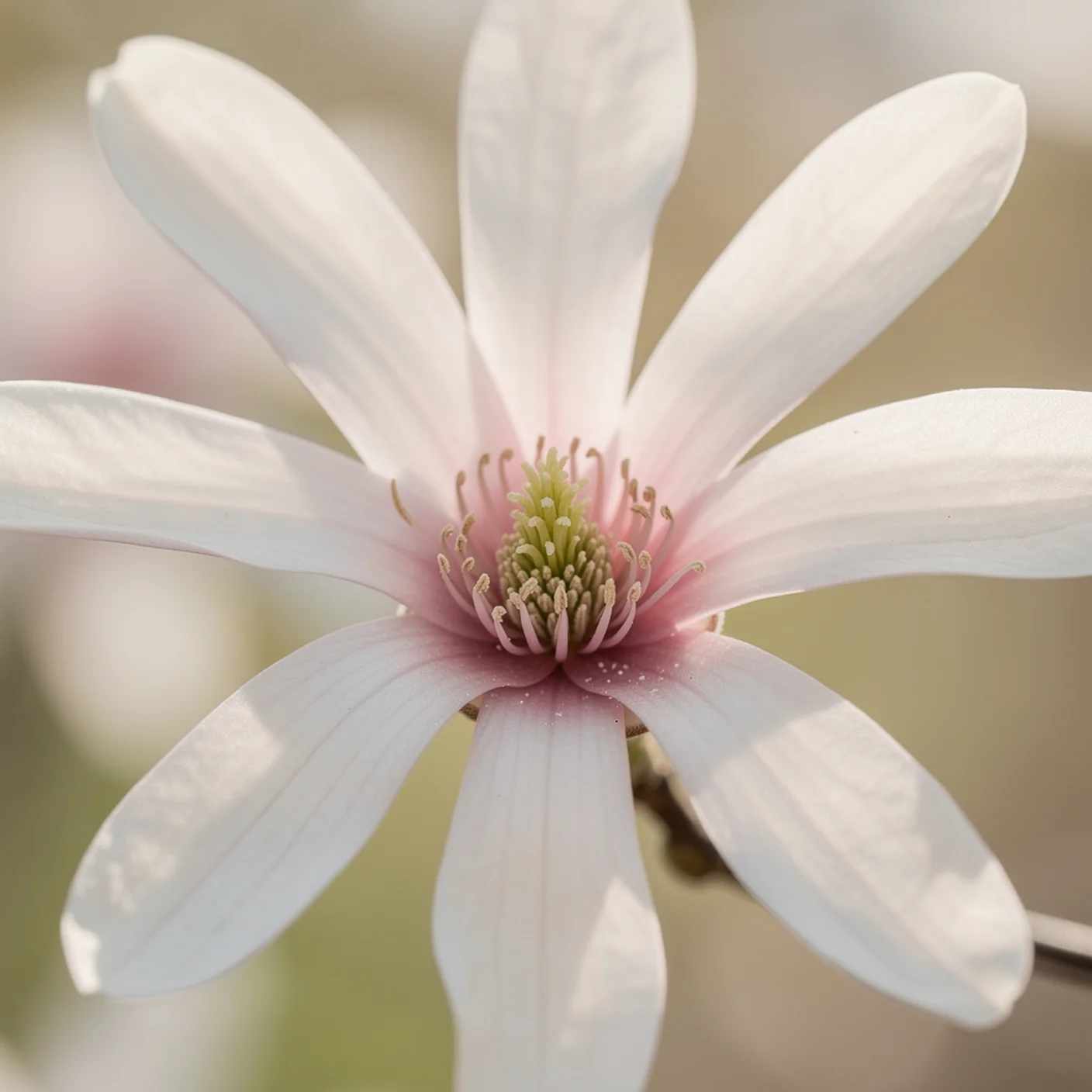
Star Magnolia
Stellata
“Spring's most elegant risk. When a star magnolia gets a frost-free March, there's nothing in the garden that comes close.”
— ROSIE
Rosie's Take
There's a moment in early spring — late March, usually — when magnolias suddenly appear on bare branches as if someone switched on the lights overnight. Star magnolia is my favourite of the lot. While its bigger cousins produce those heavy, goblet-shaped flowers, stellata gives you these delicate, star-shaped blooms with narrow, slightly twisted petals that look like they were folded from white tissue paper.
The flowers come before the leaves, which is what makes them so striking. One day you have a bare, grey-barked shrub; the next, it's covered in dozens of white stars, each one about the size of your palm. Against a dark wall or an evergreen hedge, the effect is genuinely breathtaking.
It's a smaller magnolia too — more shrub than tree — which makes it practical for gardens that can't accommodate the grand spreading canopy of a Magnolia soulangeana. I've seen stellata grown beautifully in large pots on terraces, which opens it up to people without borders to spare.
The only heartbreak is late frost. Those delicate petals brown at the first touch of cold, and a March frost after the buds have opened is genuinely painful to witness. But when it gets a clear run — a mild spell in late March with no late surprises — there are few sights in a spring garden that match it. You just have to be willing to take the gamble.
Where to Buy
If you want to try star magnolia for yourself, here's where I'd point you:
We may earn a small commission from purchases made through our links, at no extra cost to you.
✿ From the folklore cabinet
Magnolias are among the oldest flowering plants on earth — they evolved before bees existed, which is why their flowers are designed to be pollinated by beetles instead. Stellata comes from Japan, where it's called 'shidekobushi' and is considered a harbinger of spring. I think beetles had excellent taste.