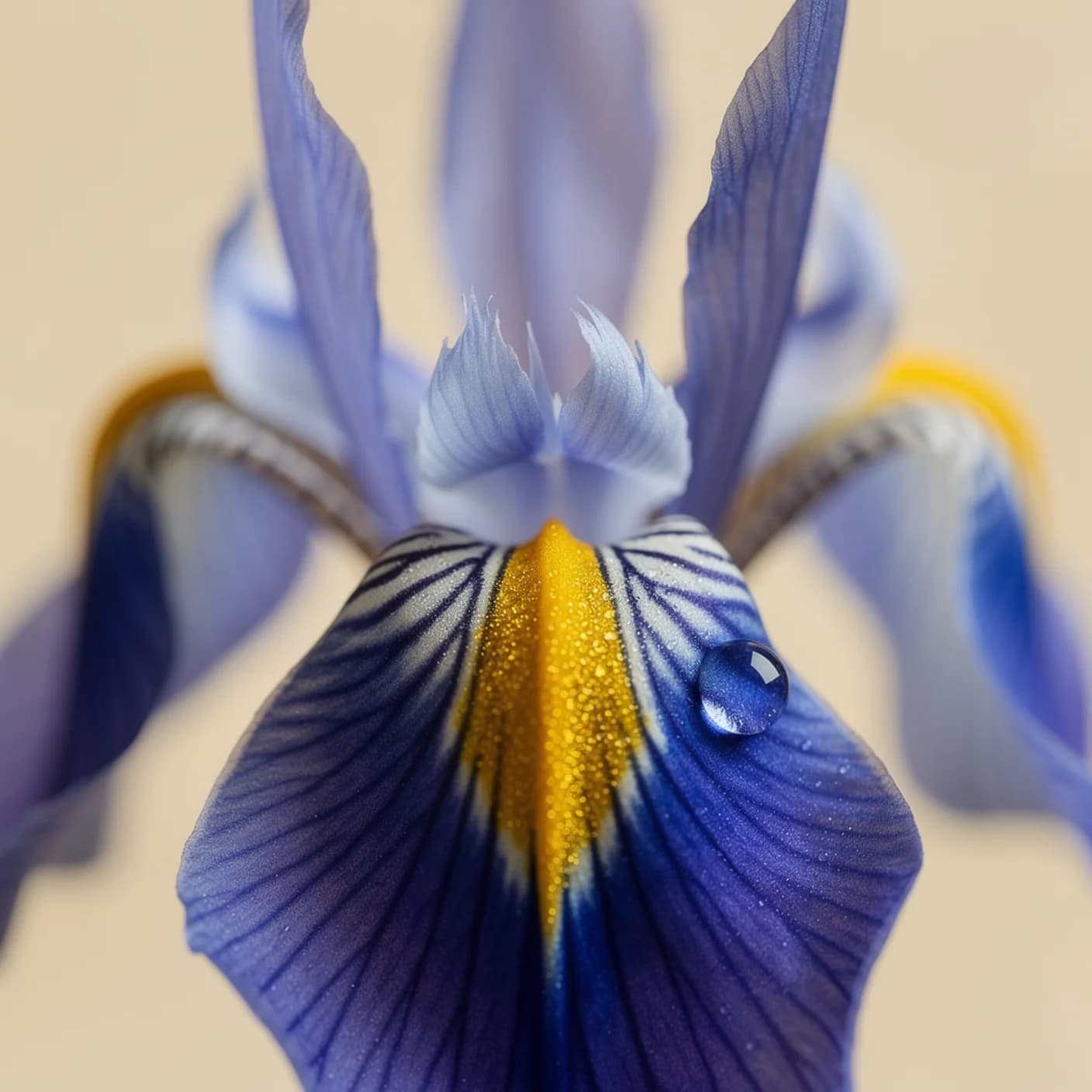
Iris reticulata
Harmony
“The cheapest thrill in spring gardening. Plant thirty bulbs in a pot by the back door in autumn and forget about them until February, when they'll stop you in your tracks.”
— ROSIE
Rosie's Take
There's a moment in late February — sometimes early March if the winter's been stubborn — when the first Iris reticulata 'Harmony' pushes through, and it is, honestly, one of the most disproportionately thrilling things in the garden calendar. This is a flower roughly the size of a fifty-pence piece, growing about four inches tall, and it has the visual impact of something ten times its size.
The colour is extraordinary. Royal blue with a bold flash of gold on the falls — that deep, saturated, almost jewel-like blue that photographs never quite capture. It's the blue of a summer sky concentrated into something you could hold between your thumb and forefinger. And it arrives when everything else is mud and bare stems and grey, which makes it feel like a small act of defiance.
I plant mine in clusters — twenty or thirty bulbs together in a shallow terracotta pot, because they're too small to make much impact scattered through a border. Clustered, they're a proper event. The pot sits by the back door where I pass it six times a day, and for those two weeks in late winter when they're in bloom, every single pass makes me stop. The scent is faint — you have to kneel down and get your nose right in — but it's there. A light, violet-like sweetness that rewards the effort.
The bulbs cost almost nothing. A bag of twenty from the garden centre in autumn sets you back a few quid. For the amount of joy per penny, I'd argue there's nothing better in the plant world. They're the kind of thing you buy once, forget about completely through autumn and winter, and then suddenly there they are again, reminding you that the year has turned.
Where to Buy
If you want to try iris reticulata for yourself, here's where I'd point you:
Also available as bulbs — Iris reticulata →
We may earn a small commission from purchases made through our links, at no extra cost to you.
✿ From the folklore cabinet
Iris reticulata is native to Turkey, the Caucasus, and northern Iran, where it grows in rocky, well-drained mountain slopes. The 'reticulata' in its name refers to the netted, fibrous coat around the bulb, which looks like a tiny piece of string netting. In the language of flowers, iris means 'message' — the goddess Iris was the messenger between gods and mortals, travelling on rainbows. I like thinking of these tiny February irises as the first message of the year: spring is coming, hold on.